



A booth can look flawless in a rendering and still fail check-in: missing paperwork, insufficient ballast, or a kit too heavy for the crew. This commercial 10x10 custom canopy tent buying guide starts with a practical conclusion: meet your venue's written requirements, then compare the frame, fabric, and transport specifications of the configuration you will receive. A "windproof" claim cannot replace that evidence.
For trade shows, farmers markets, and brand activations, check the entire booth package before approving artwork or a purchase order.
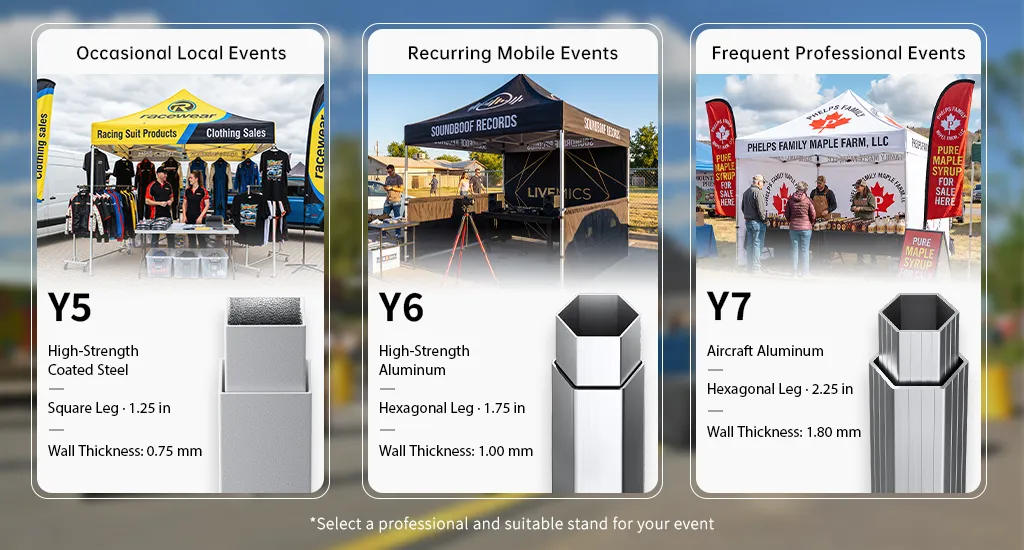
Which frame should you shortlist? Y5 for occasional local booths and a lower entry price; Y6 for repeated mobile events where listed frame weight matters; Y7 for frequent programs that can handle a heavier kit. Venue approval still depends on the exact roof, walls, anchoring, and documents.
Start with venue rules for fire resistance, ballast, and wind
Ask the organizer for its tent policy before selecting a frame. Record the footprint and height limit, ground surface, ballast per leg, staking permission, wind shutdown rule, sidewall restrictions, and flame-resistance standard. Check whether certificates require advance submission. Food vendors also need the cooking and clearance rules.
Rules vary: some organizers permit stakes on grass but prohibit them on pavement. Ballast, sidewall, and wind thresholds differ too. Get the organizer's numbers in writing, match them to the supplier's anchoring instructions, and keep both with the order. If no policy is published, ask what documents and securing method the organizer will approve before ordering.
Use these requirements to check every quotation for the roof, walls, frame, and weights.
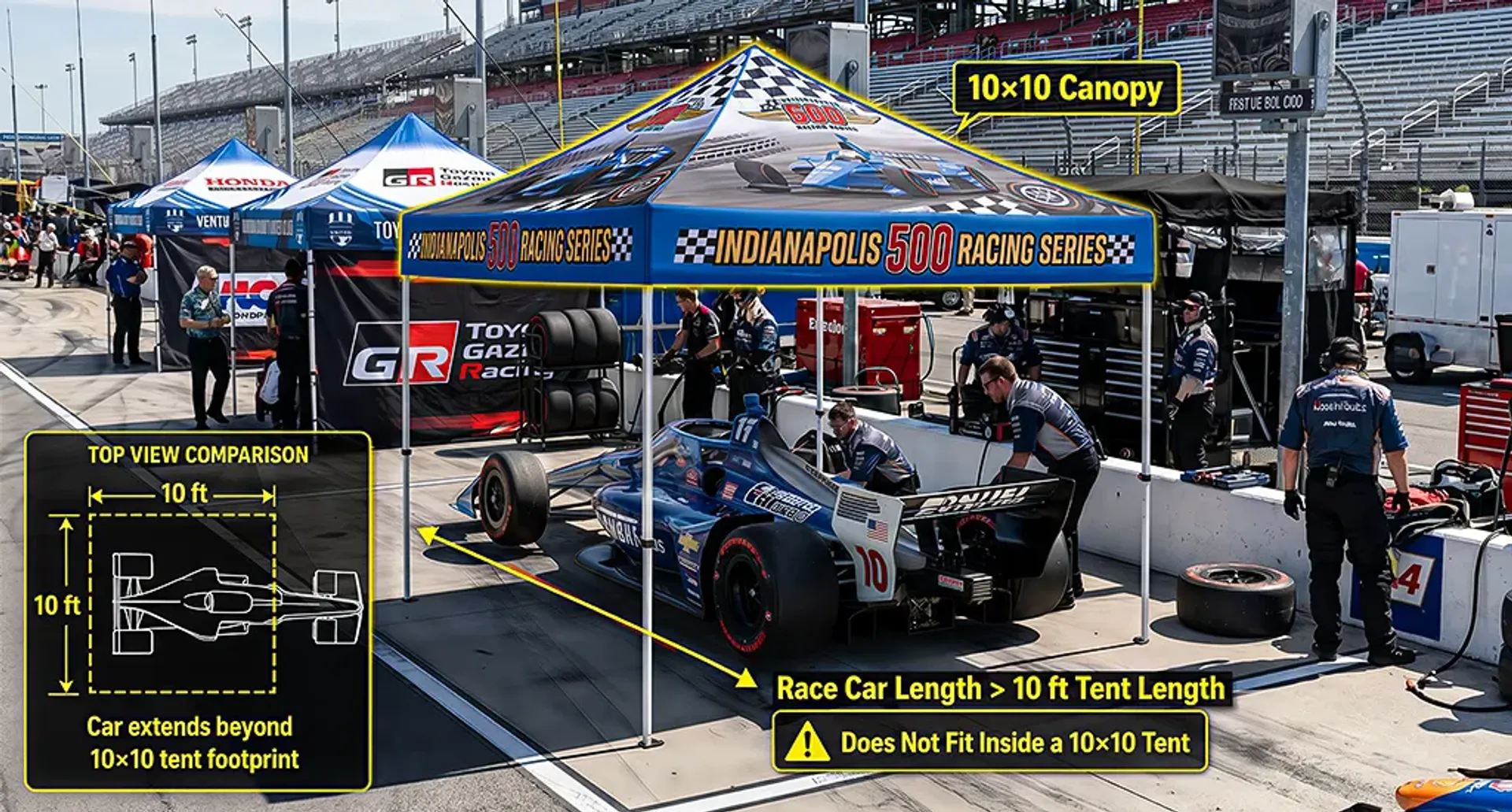
If your space allows flexible booth dimensions, evaluate usable counter and storage space across 10x10, 10x15, and 10x20 canopy footprints before committing to a single-bay frame.
Read a canopy frame specification like a purchaser
Profile width and wall thickness are separate measurements
Nominal leg width describes only the outside profile. It omits wall thickness, alloy, bracing, and connectors; frames with similar widths can differ. Ask where the supplier measured the leg wall, because calipers on the outside profile do not establish thickness.
A search for "heavy duty pop up tent 10x10" returns frames with different materials and wall thicknesses. Treat "heavy duty" as a claim to check against the actual frame specification, not a load rating.
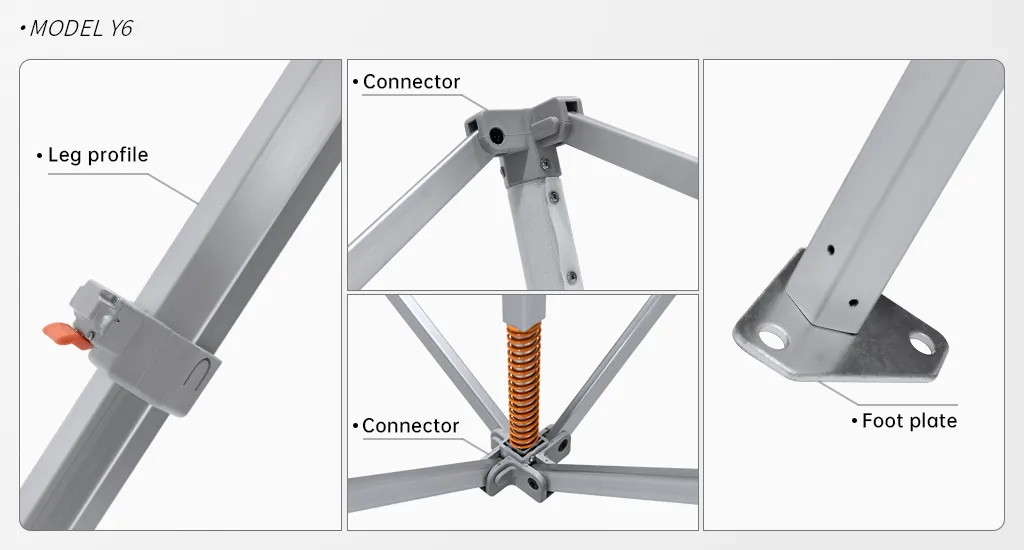
The official canopy tent frame specifications list Y5 as 1.25-inch square steel with a 0.75 mm leg wall, Y6 as 1.75-inch hexagonal aluminum with a 1.00 mm wall, and Y7 as 2.25-inch hexagonal aluminum with a 1.8 mm wall. Compare the exact series in each quote.
Inspect the parts that take repeated setup loads
Check trusses, corner joints, the center hub, height adjusters, foot plates, and roof attachments. A thick leg cannot rescue a cracked connector or a foot that cannot accept the required anchor. Ask whether legs, hubs, feet, and roof panels are individually replaceable.
Work through how to set up a canopy tent by yourself with the quoted frame and walls, then record where a second person is needed and whether the packed frame fits the vehicle. "Pop-up" does not promise one-person handling.
Which 10x10 configuration fits your event program?
Swipe horizontally to compare frame specifications →
| Your operating situation | Starting configuration | Frame Specs & Relative Budget Level | Decision gate before ordering |
|---|---|---|---|
| Occasional local markets or outreach; limited equipment budget | Y5 10x10 steel canopy configuration | Entry-level investment ($) · 1.25-inch square steel, 0.75 mm wall, 43.43 lb listed frame weight | Check the venue's anchoring and paperwork rules; quote the roof and walls separately. |
| Repeated events with a small transport crew | Y6 10x10 aluminum canopy configuration | Mid-tier commercial ($$) · 1.75-inch hexagonal aluminum, 1.00 mm wall, 36.6 lb listed frame weight | Confirm full-kit packed weight and a setup trial; a lighter listed frame is not a lighter complete booth. |
| Frequent corporate activations; room for a heavier kit | Y7 10x10 aluminum canopy configuration | Heavy-duty fleet investment ($$$) · 2.25-inch hexagonal aluminum, 1.8 mm wall, 61.1 lb listed frame weight | Confirm vehicle fit, crew, replacement parts, and the exact anchor plan. |
| Paved or wind-exposed venue, especially with sidewalls | No model is automatically approved | Frame series and leg size do not establish a safe operating mph or accepted ballast. | Match the supplier's documented setup to the organizer's written wind, anchoring, and fire requirements. |
The budget labels compare these three frames; they are not quotes. Specify roof fabric, coating, printing, sidewalls, and anchoring separately, because a frame choice does not select those items.
Before finalizing the wall layout, calculate how many tables fit under a 10x10 canopy while leaving space for customers and staff.
Turn the recommendation into a real configuration.
Match your event program to 10x10 custom canopy tent packages, then request a quote for the chosen frame, roof, print, walls, and anchoring accessories.
Specify the roof for rain, print quality, and replacement
600D describes yarn; PU coating and seams manage water
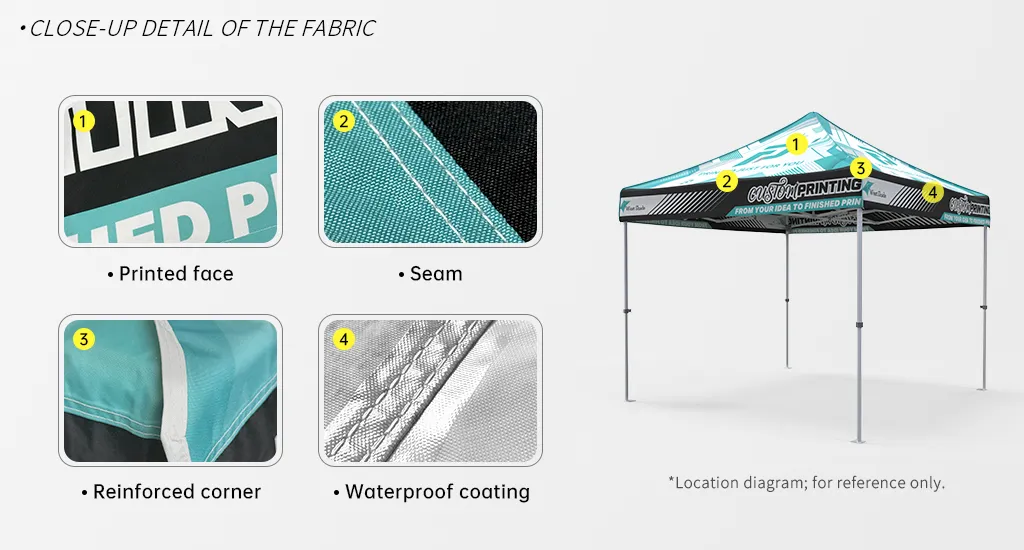
600D is a yarn-denier designation, not a waterproof rating. Compare denier when the underlying fibers and fabric construction are alike. A 600D polyester roof may withstand frequent handling, but denier alone does not establish water resistance, seam quality, colorfastness, or flame performance. A heavier yarn cannot compensate for weak corner stitching.
Request the fabric weave, denier, coating, water-column result, seam construction, and print method. A PU coating can form a water barrier, but needle holes and poor seams can still leak. Ask for seam photos and how the roof sheds water with walls installed.
Westshade's published specifications list 420D polyester, premium 600D polyester, and a separate PVC print option. Westshade also describes a 600D polyester option with PU coating. Have the quotation identify the chosen fabric, coating, and print process. A premium frame does not automatically select a premium roof.
Print the booth people will see, then plan for roof wear
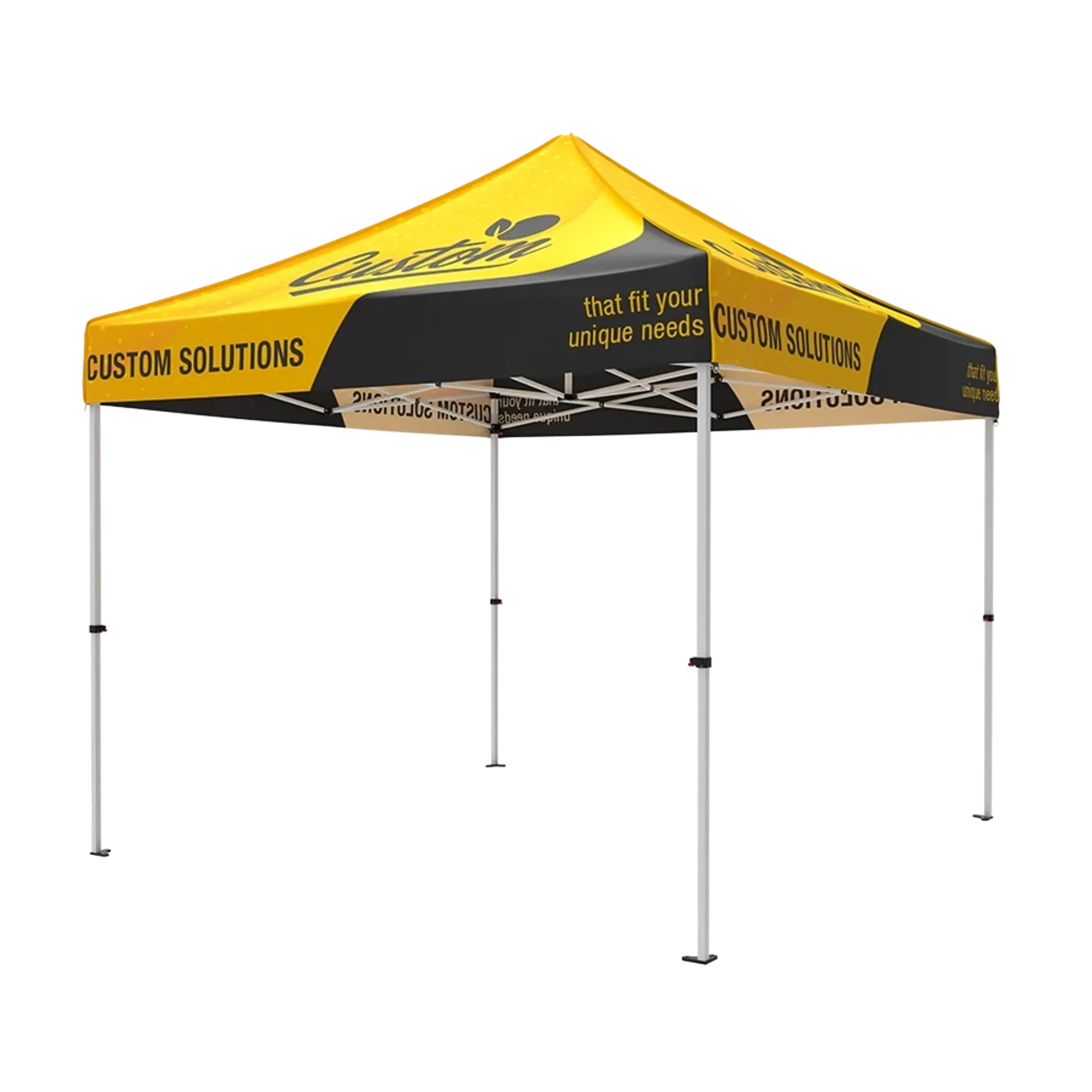
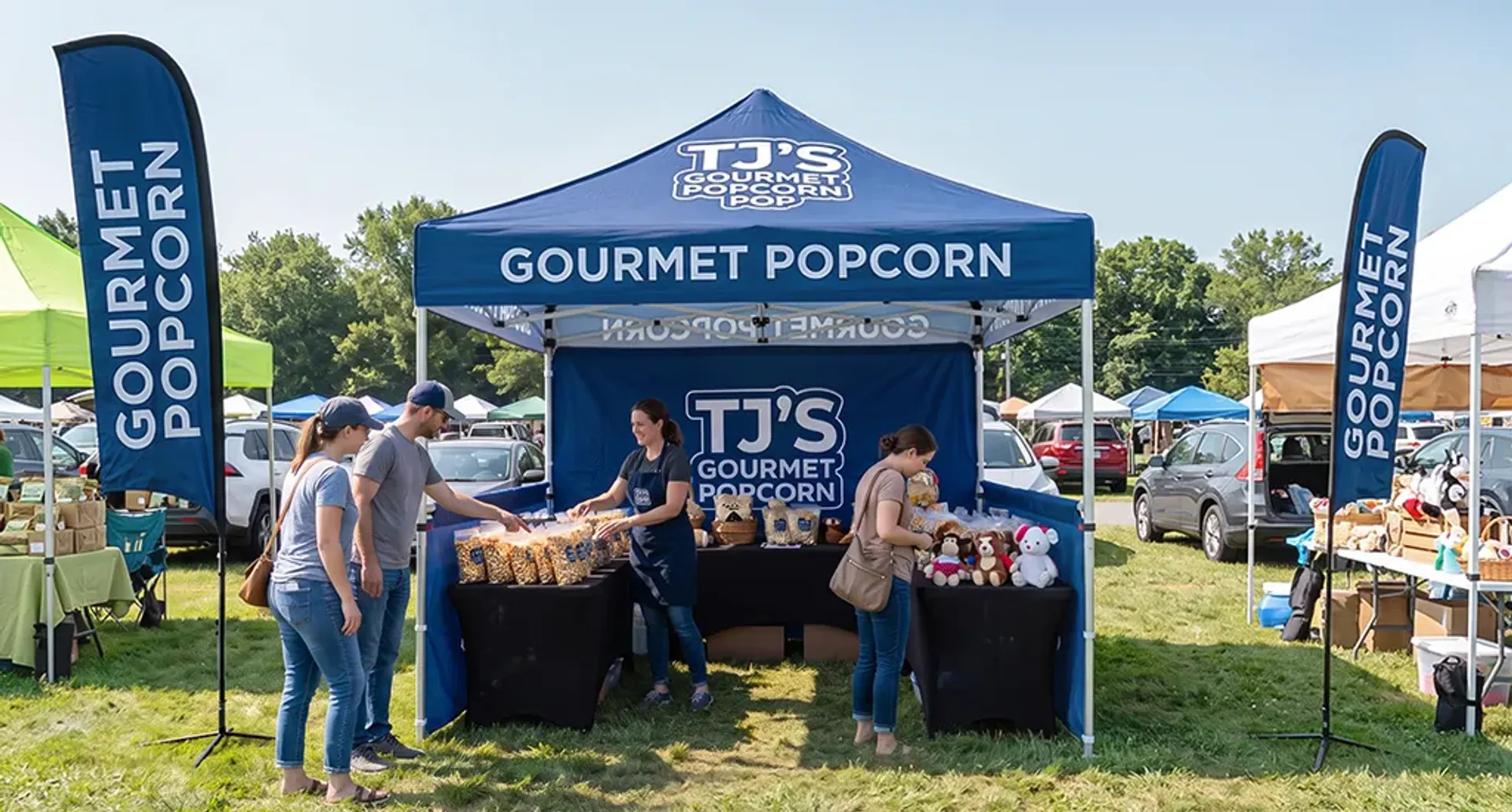
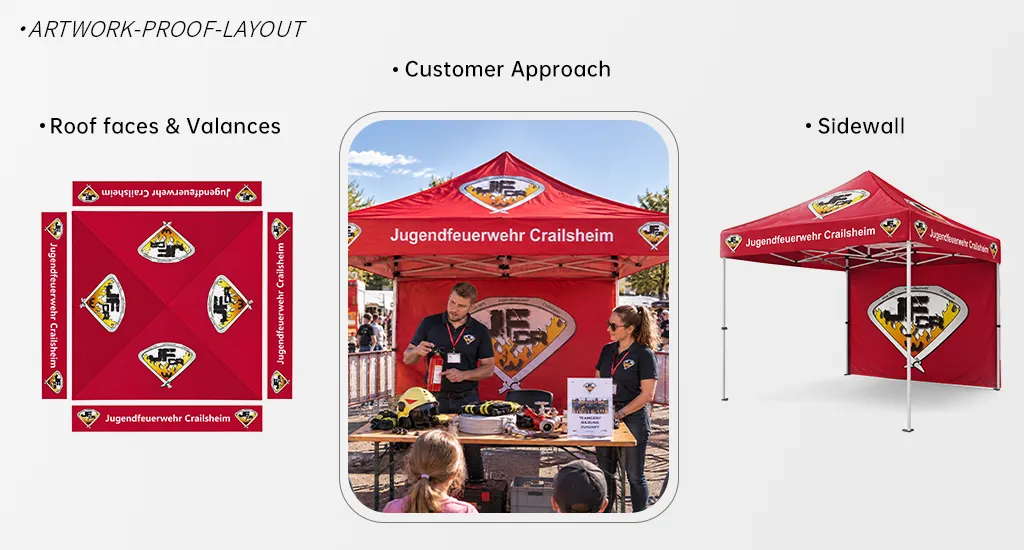
A listing for a "custom canopy with logo 10x10" should specify which roof faces, valances, and walls carry artwork. A logo on the mockup does not establish what the print price includes.
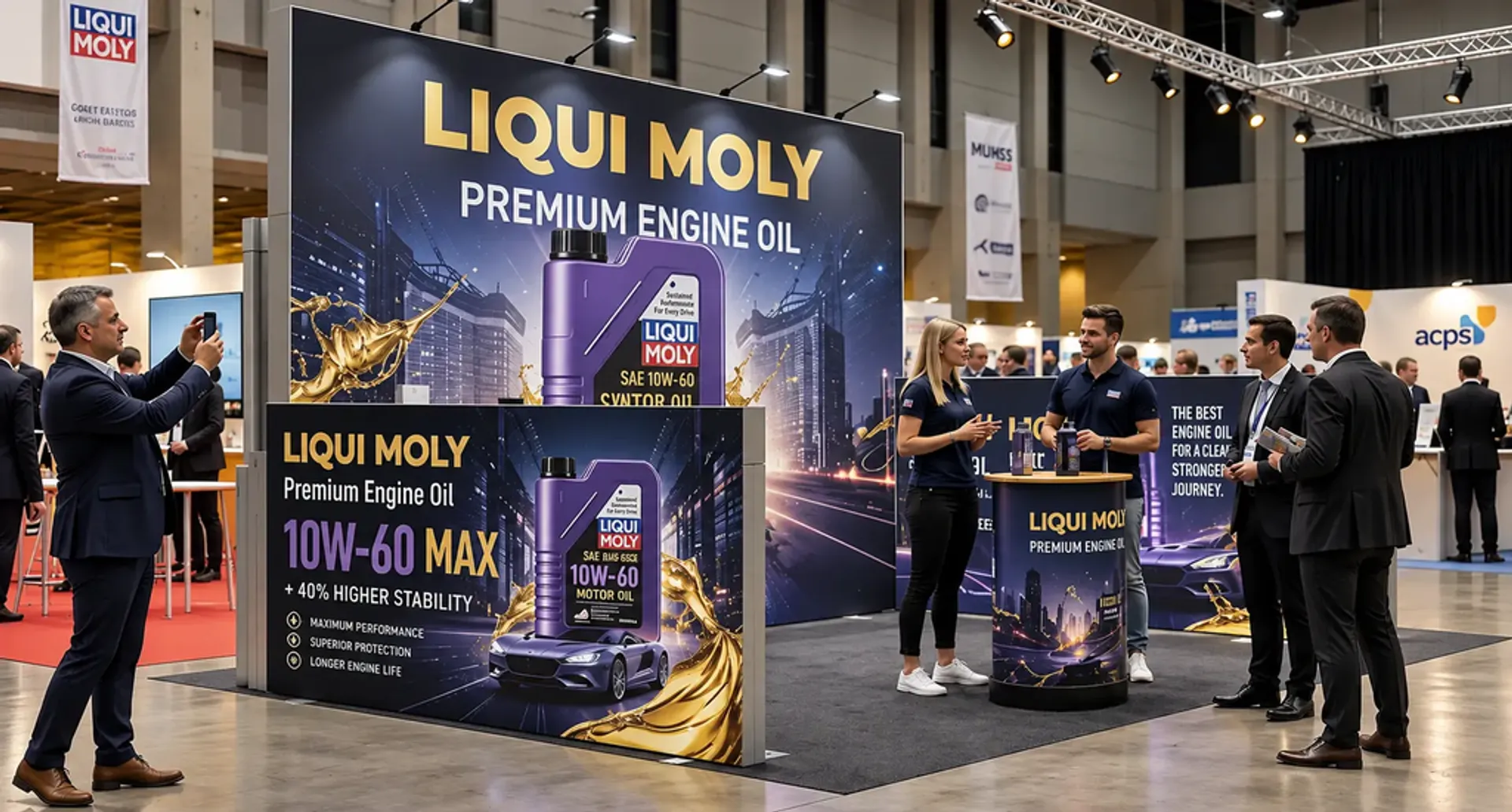
Map roof faces, valances, and walls in the custom canopy tent design tool before approving a scaled artwork proof, not a logo floating on a generic render. Check print visibility from the customer approach and whether sidewalls obstruct staff. Ask for print dimensions, safe areas, color process, and every printed surface.
Ask for the fabric and ink specifications of the exact print method in your quote, then check a production proof before approval.
Request roof warranty exclusions, replacement-top pricing, and lead time. Frequent folding stresses corners and print. Durability means the booth remains repairable across planned events.
Treat wind ratings as test conditions, not operating permission
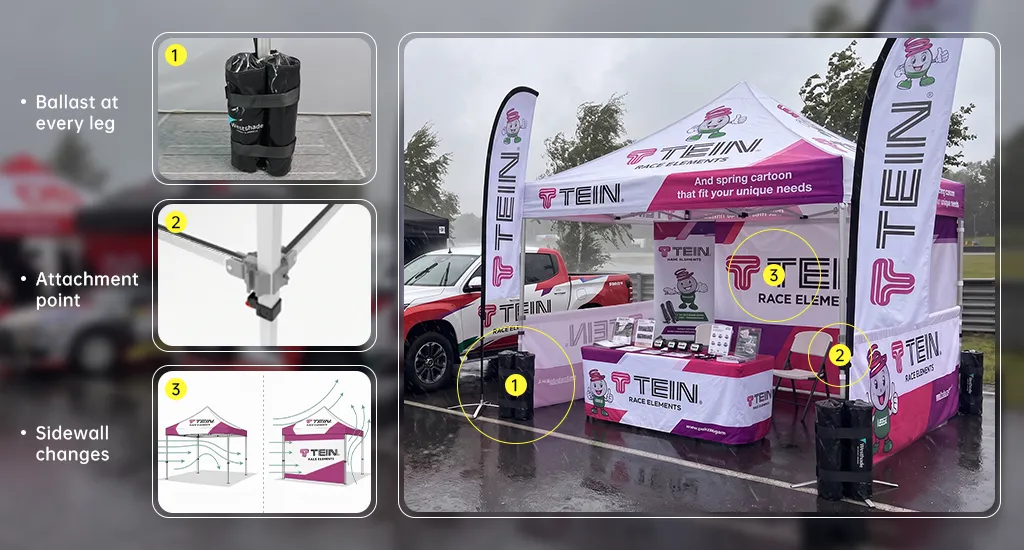
An advertised mph figure is meaningful only when its setup is disclosed. Ask whether it refers to a wind-tunnel test, a structural calculation, or an operating recommendation; whether the number is a gust or sustained wind; and what roof, walls, anchors, surface, and ballast were used. Sidewalls change the wind load. A hard-surface booth that cannot be staked needs a different securing plan from a grass booth, even with the same frame.
Keep two numbers separate: tested wind speed in mph, if documented, and operational shutdown speed in mph required by the venue or supplier. A controlled test uses a specific ballast, roof, wall layout, and wind direction; it does not prove a different setup is safe. Treat a headline mph figure without test conditions as unverified. Record the actual ballast and anchoring method so the event team does not apply a result to the wrong configuration.
Stakes, weight bags, plates, and water weights have different transport and setup demands. Match 10x10 canopy weights and anchors to the organizer's written ballast rule and the supplier's instructions for the quoted frame, roof, walls, and surface; an example weight is not a universal requirement.
Assign someone to monitor forecasts, remove walls, and close the booth under the more restrictive venue or supplier rule. Do not use an undocumented mph claim in the safety plan.
Check the venue's fire documentation requirement
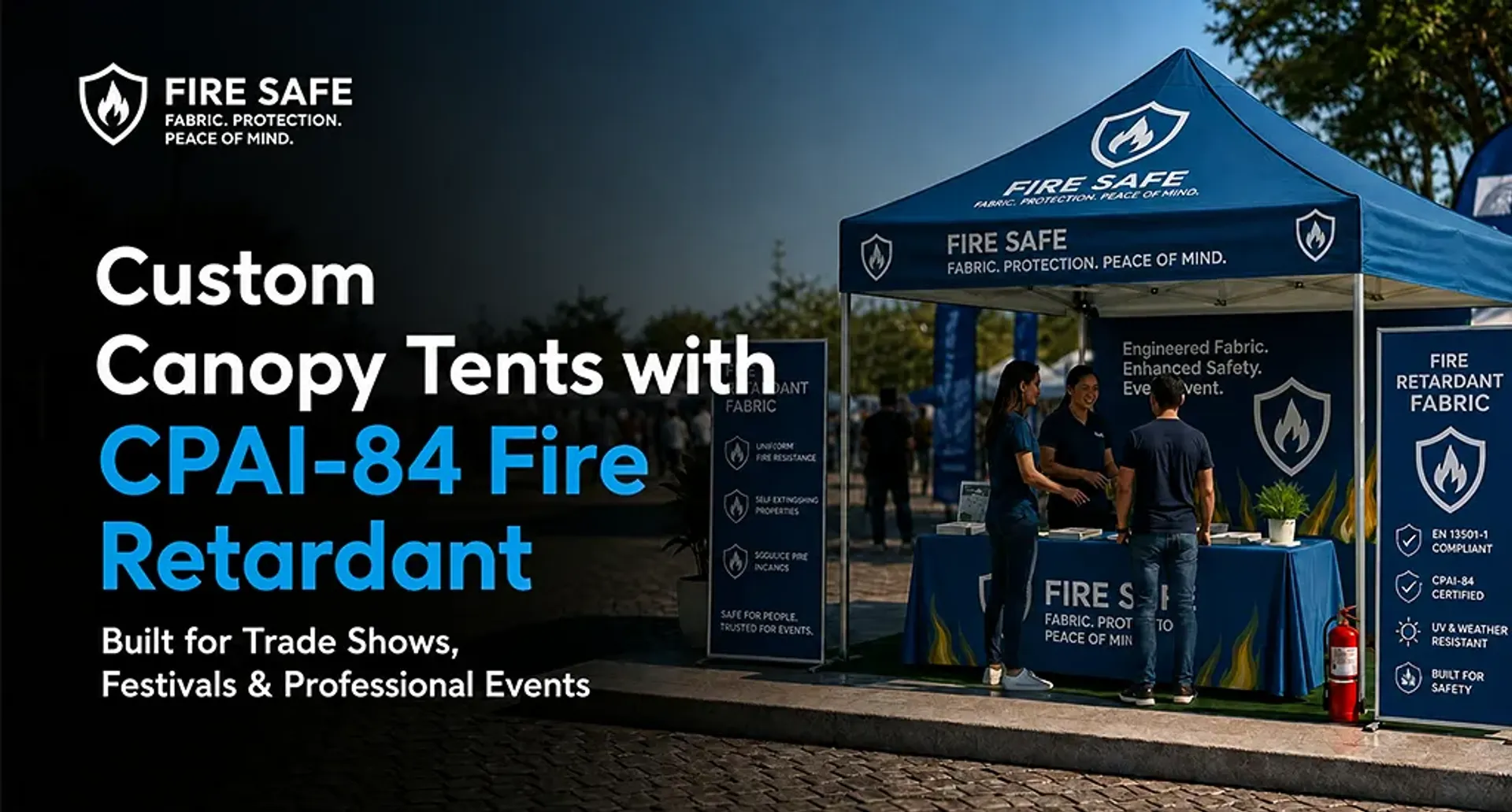
The phrase "flame retardant canopy tent" is not proof that the ordered roof and sidewalls meet the venue's rules. Verify the materials and evidence for the actual configuration.
CPAI-84 is a flame-resistance specification for camping-tent materials. NFPA 701 defines flame-propagation test methods for textiles and films. Neither name on a product page proves that the ordered roof and walls meet a venue's rules. Ask the organizer which standard and documents it accepts, then request a report identifying the exact quoted materials. The organizer may require advance review or a sewn-in label.
Do not assume CPAI-84 is sufficient everywhere. Some venues ask for NFPA 701 documentation or a particular state fire-marshal label, and cooking booths may face additional restrictions. The required standard, label, and supporting report are decisions for the organizer or local authority. Request the rule in writing and confirm whether it applies to the roof, sidewalls, or both. A certificate for one fabric should not be presented as proof for a different material in the same booth.
On-site fire inspection checkpoint
Before the booth ships, ask for a photo of any sewn-in label on the actual ordered fabric and a report or certificate identifying that material. Confirm with the organizer whether it accepts a permanent label, an on-site certificate, or both. Keep the approved evidence with the booth, where the setup crew can find it at check-in.
Before ordering for a regulated venue, confirm that the supplier can provide the required documents for the exact configuration and that the organizer accepts them. If that evidence is unavailable, do not describe the tent as compliant or assume the booth will be admitted.
Calculate setup weight as a workflow cost
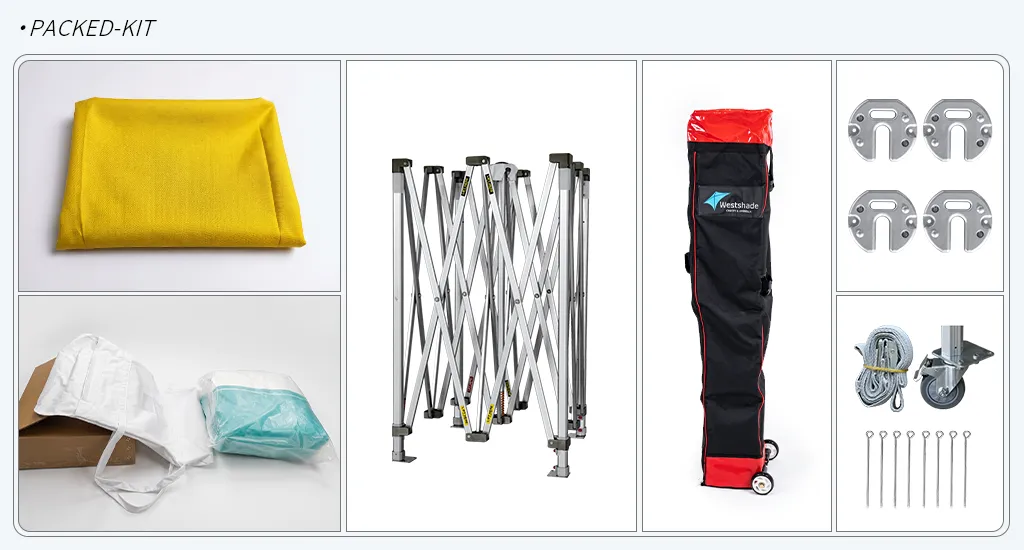
"Setup weight" can mean frame-only mass, shipping-carton mass, or the weight a staff member must lift after the roof, walls, weights, and case are packed. Ask for all three. Then list the number of pieces, longest packed dimension, wheeled-case design, and venue-required ballast that must travel in the same vehicle. Ballast is a site requirement, not a substitute for the supplier's safe setup instructions.
Map the loading path from vehicle to booth. A lighter frame may save weekly labor; a heavier one may suit a fixed installation. Test setup with the actual crew. Record setup time, awkward lifts, and pinch points.
A six-step procurement check before you approve the order
- Collect venue rules. Save the organizer's ballast, wind, fire, footprint, height, and cooking policies. Ask who signs off on documents.
- Define the use pattern. Estimate events per year, setup crew, transport distance, storage conditions, and whether the booth needs open or enclosed sides.
- Compare exact SKUs. Obtain outside leg dimension, wall thickness, frame and joint materials, foot design, warranty, and replacement-part availability for each quote.
- Specify the roof separately. Write the chosen denier, coating, print method, seams, wall configuration, and replacement-top price into the order. Request the full-kit packed weight and dimensions.
- Validate claims. Ask for wind-test conditions and a passing flame report for the actual roof and walls. Send the documents to the organizer when advance approval is required.
- Approve artwork and landed cost. Review a scaled proof and a quote including frame, print, walls, case, ballast, shipping, taxes, and lead time. Keep a copy of the approved configuration for reorders.
This process avoids a common buying error: comparing a low base price with a complete, event-ready package. Divide the full purchase and likely replacement costs by expected events, not by the number of square feet under the roof. An inexpensive frame that misses a market, needs replacement after a few outings, or demands a second vehicle can cost more per usable event.
Frequently asked questions
How much does it cost to make a custom 10x10 tent?
A commercial custom 10x10 canopy typically costs between $585 and $1,900+, depending on frame alloy, wall configuration, and print coverage. Entry-level steel kits (such as the Y5) start at $585, balanced mid-tier aluminum setups (Y6) begin at $1,036, while heavy-duty hex aluminum fleet packages (Y7) start at $1,528 (or $1,904 with three full printed sidewalls). Because freight, ballast weights, and custom graphics directly change the total landed cost, always request an itemized quote based on your venue's mandatory anchoring rules.
Which 10x10 canopy is the best quality?
For an occasional local booth, start by evaluating Y5; for repeat events with a small transport crew, compare Y6; for frequent programs that can move a heavier kit, evaluate Y7. Those are operating matches, not a universal quality ranking. Check the quoted frame's connectors, foot plates, roof coating, seams, spare parts, and full-kit weight. If the venue imposes wind or fire rules, request documents for the exact setup before treating any model as suitable.
What's the life expectancy of a 10x10 canopy?
No verified lifespan in years follows from a 10x10 footprint. Westshade's frame comparison lists warranties of 1 year for Y5, 5 years for Y6, and 10 years for Y7; a warranty is not a service-life forecast. Event frequency, wind exposure, anchoring, folding, drying before storage, and spare parts affect longevity. Check the frame and printed roof warranties separately, inspect joints and fabric after each season, and budget for replaceable roof panels before replacing a serviceable frame.
A consistent canopy tent cleaning and storage routine helps protect the roof and frame between events.
Ready to turn the checklist into a booth design?
Bring your logo, venue requirements, and preferred frame and fabric specifications to shop custom 10x10 canopy tent packages. Request a free 3D design proof; Westshade states that it emails the proof within 24 hours. Its 10x10 artwork template is also available for layout planning.