



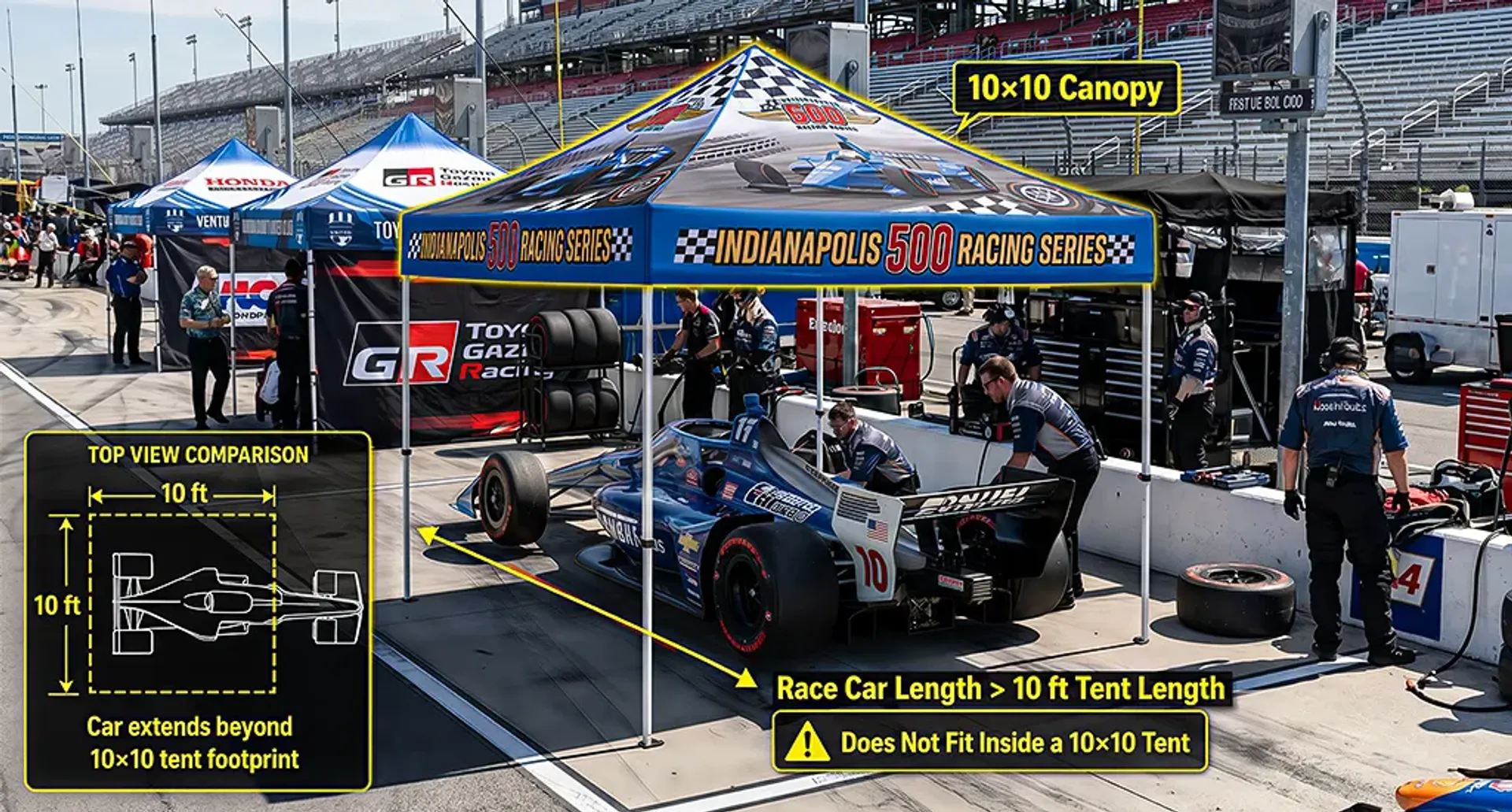
If you are shopping for a canopy tent for auto detailing, racing support, or outdoor vehicle work, one of the first questions you will probably ask is whether a standard 10x10 canopy is large enough to fit a car.
At first glance, it seems possible. A 10x10 custom canopy tent looks spacious when it is empty, and for general outdoor events it provides plenty of coverage. But a standard passenger car is significantly longer than a 10x10 canopy footprint. Even if part of the vehicle can sit under the tent, there is usually not enough room left for movement, equipment, or comfortable working access around the car. That becomes a major issue for mobile detailing businesses, racing teams, and anyone trying to create a functional automotive workspace outdoors.
This is why canopy size matters much more in automotive applications than it does in standard vendor or event setups.
Why a 10x10 Canopy Tent Cannot Fit a Car
A standard 10x10 canopy tent provides 100 square feet of coverage, but the actual usable workspace is smaller once the frame structure and leg positions are taken into account. More importantly, most vehicles in the U.S. are simply too large for this footprint. A typical sedan is usually around 15 to 16 ft long, which already exceeds the full length of a 10x10 canopy. This means a vehicle cannot fully fit underneath the structure, even before considering door clearance or workspace around the car. 10x10 canopy tents are much better suited for vendor booths, registration stations, or promotional displays than full vehicle-based workspaces.
| Vehicle Class | Typical Length | Typical Width |
| Compact Car | 12–14 ft | ~6 ft |
| Sedan | 14–16 ft | ~6-6.5 ft |
| SUV | 16–18 ft | ~6.5-7 ft |
| Full-Size Truck | 18–22 ft | ~7-8ft |
Why Automotive Work Requires Larger Custom Canopy Tents
The biggest difference between a standard event canopy and an automotive canopy setup is the amount of functional workspace required around the vehicle.
In most automotive environments, the vehicle itself is only one part of the setup. There also needs to be enough room for equipment storage, technician movement, product organization, and customer interaction. Once all of these elements are added together, compact canopy sizes start feeling restrictive very quickly.
Mobile detailing businesses face this issue constantly. Water tanks, generators, extension cords, and detailing equipment all compete for limited space around the car. Racing teams encounter similar challenges when crew members, spare parts, and tools all need to operate within the same covered area.
Larger custom canopy tents solve these problems by creating a more organized and efficient workspace. Instead of forcing equipment into a cramped area, they provide enough room for smooth workflow and safer movement around the vehicle.
10x15 Pop Up Tent Size Explained
A 10x15 custom pop up tent sits between compact 10x10 setups and larger 10x20 structures, making it a popular middle-ground option for users who need additional space without moving to a full commercial-sized canopy.
The extra five feet may not sound significant at first, but in practice it creates noticeably better flexibility for layout and organization. There is more room for equipment placement, side movement, and temporary storage, which helps reduce the crowded feeling commonly experienced under a 10x10 canopy. For many users, this size also offers a good balance between portability and workspace.
However, a 10x15 canopy still has limitations for larger automotive workflows. Once a vehicle, equipment, and multiple workers share the same area, the space can begin to feel tight again. Larger SUVs, trucks, or multi-step detailing operations may still require more clearance than this size can comfortably provide.
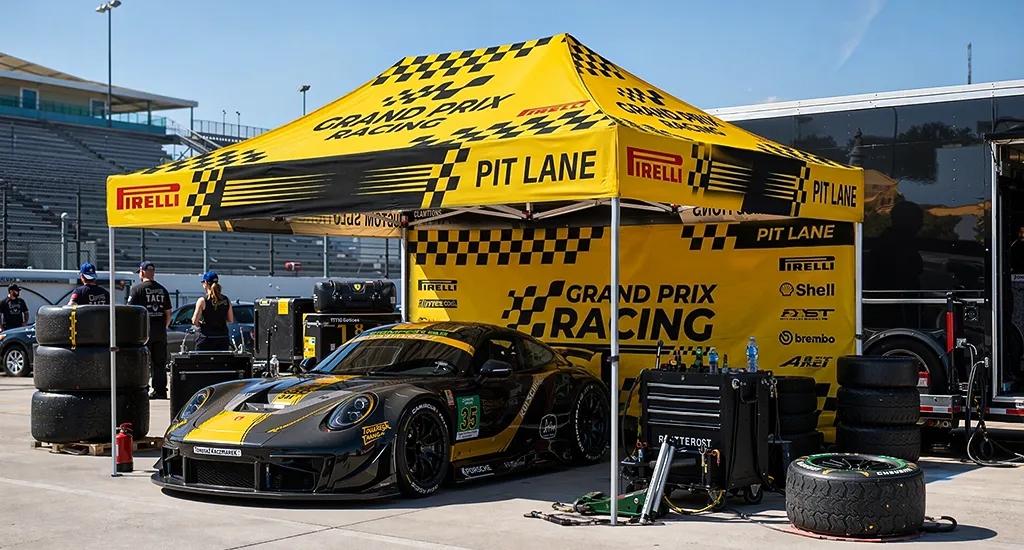
More spacious option: 10x20 Custom Canopy
A 10x20 custom tent provides double the length of a standard 10x10 setup, which completely changes how the space functions for automotive applications.
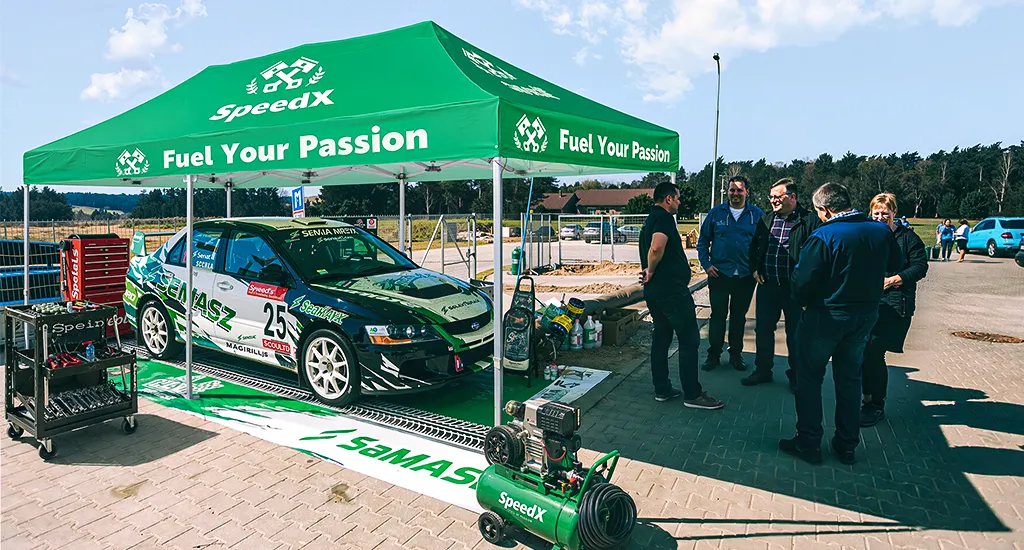
With this additional space, most sedans can fit comfortably underneath the canopy while still leaving room for technicians, equipment, and movement around the vehicle.
This creates a much more practical working environment for outdoor automotive operations. Instead of constantly working around space limitations, technicians can move more naturally while organizing tools, lighting, hoses, and detailing supplies more efficiently.
This is why 10x20 canopy tents have become one of the most common choices for professional automotive setups that require both vehicle coverage and functional workspace.
|
Feature
|
10×10 Canopy Tent
|
10×15 Canopy Tent
|
10×20 Canopy Tent
|
|
Net Weight
|
44 Lbs | 56 Lbs | 77 Lbs |
|
Space
|
100 sq. ft. | 150 sq. ft. | 200 sq. ft. |
|
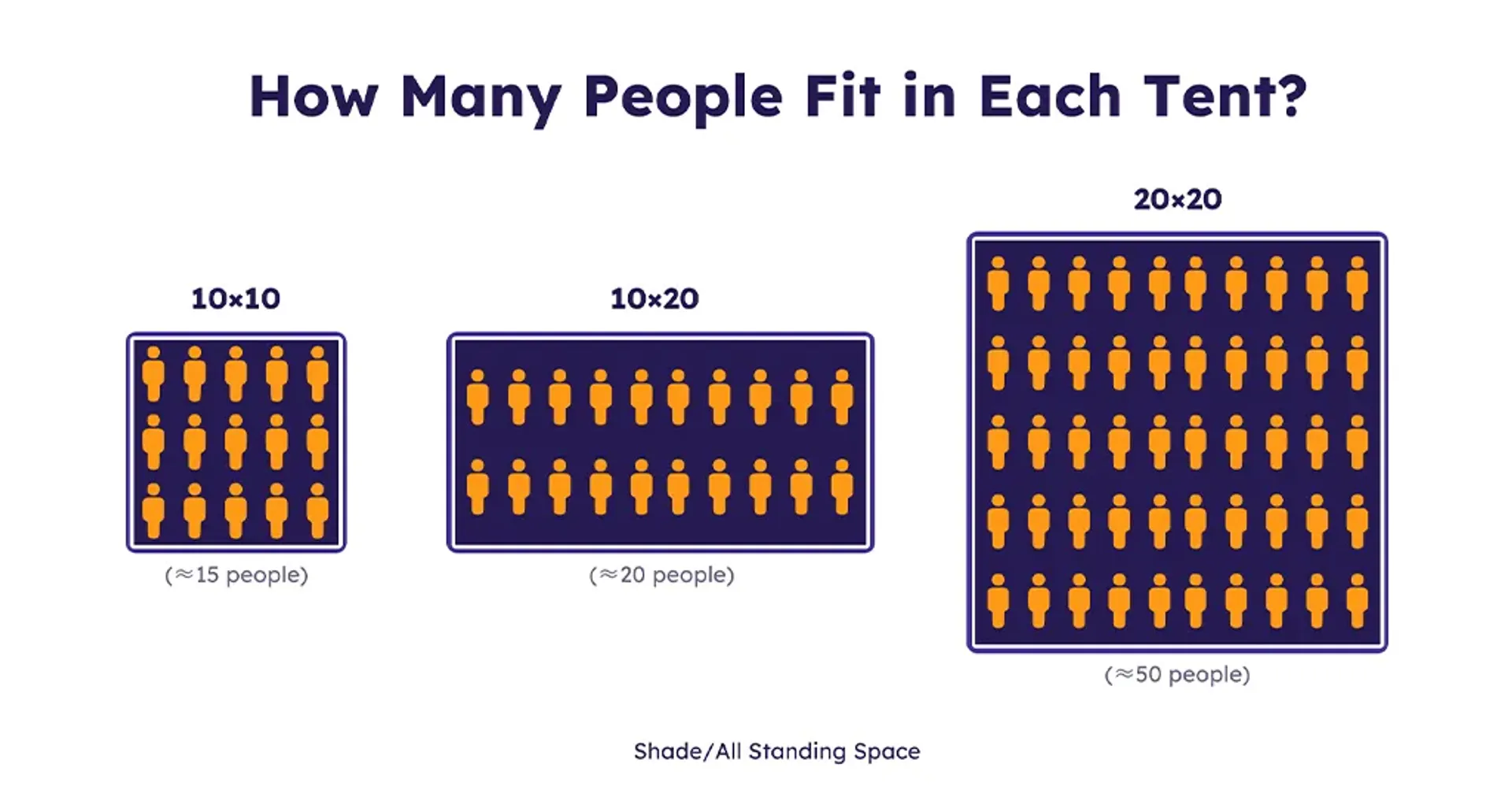
People Capacity
|
12 | 18 | 24 |
|
Max Portability
|
Excellent | Very Good | Good |
|
Setup Requirements
|
1–2 people | 2 people | 2-3 people |
Conslusion
Choosing the right canopy tent depends less on whether a vehicle fits underneath and more on how the space functions in real use.
A 10x10 canopy tent works best for vendor booths, small displays, or temporary setups where no vehicle access is needed. It is lightweight, portable, and easy to set up.
A 10x15 canopy tent provides extra working room and better flexibility, making it a mid-size option for users who need more space without upgrading to a full commercial setup.
A 10x20 canopy tent is the most practical choice for full automotive workflows, offering enough space for vehicle access, equipment setup, and smooth movement around the car.
In automotive use cases, workspace efficiency is just as important as vehicle fit. A cramped setup quickly reduces productivity, organization, and overall workflow performance. If your current setup feels too cramped, contact us professional team to create a custom canopy tent solution built for your automotive workspace.