



An inflatable tent that loses pressure does not always have a puncture.
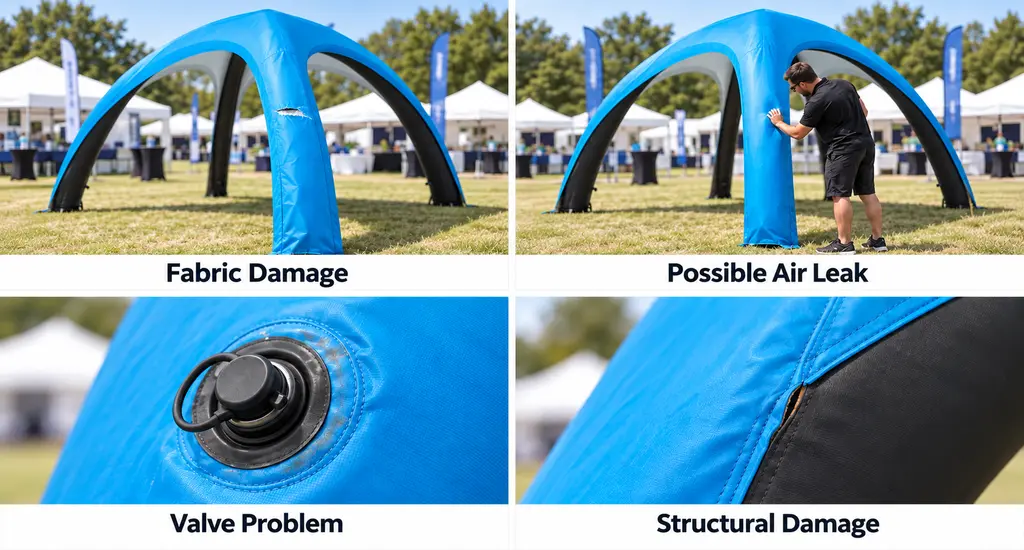
The problem may come from:
- A small hole in the air-holding structure;
- A valve or connection issue;
- Damage near a seam;
- Or a tear in the outer fabric that does not affect air retention.
Before applying any repair material, the most important step is identifying what part of the inflatable tent is actually damaged.
A repair method that works for one component may not work for another. Understanding the difference between outer fabric damage, air leaks, and structural issues can help prevent incorrect repairs and unnecessary replacement.
This guide explains how to identify common inflatable tent problems, determine whether a repair may be possible, and know when professional support is needed.
First, Identify What Part Of The Inflatable Tent Is Damaged
Commercial inflatable tents typically include different layers and components that serve different purposes.
The outer fabric provides protection, branding visibility, and resistance against everyday use.
The internal air-holding structure maintains pressure and helps support the tent shape.
Because these parts have different functions:
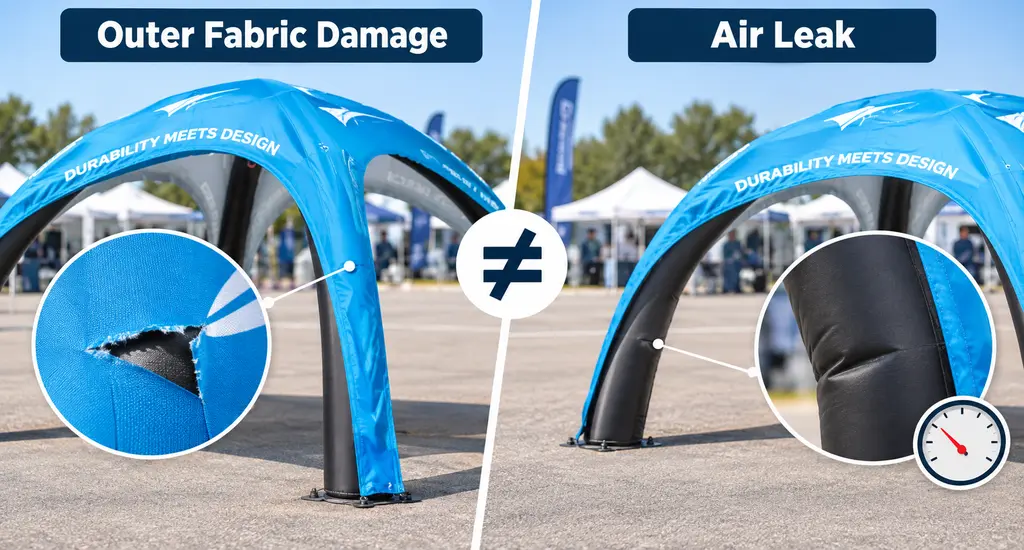
A tear in the outer fabric does not always mean the tent is leaking.
A leaking air chamber may not always be visible from the outside.
Before repairing, identify where the problem is located.
| What You Notice | Possible Cause | Recommended Action |
|---|---|---|
| The printed fabric is scratched or torn, but the tent still holds pressure | Outer fabric damage | Inspect the affected area and confirm whether the internal structure is affected |
| One section gradually becomes softer | Air leak, valve issue, or connection problem | Locate the source of pressure loss before attempting repair |
| Air escapes near a valve area | Valve sealing or connection issue | Avoid applying patches directly over the valve |
| Air escapes along a seam or the structure cannot maintain its shape | Structural damage | Stop using the tent and seek professional evaluation |
If an inflatable tent loses stability during an event, prioritize safety first. Keep people and equipment away from the structure and remove it from use if it can no longer maintain proper support.
How To Find A Leak In An Inflatable Tent
1. Check The Valve And Setup Condition
Before searching for a puncture, start with the simplest possible causes.
Check:
- Whether inflation valves are properly closed;
- Whether there is visible damage around valve areas;
- Whether pressure loss started after setup, transportation, or contact with a sharp object.
Environmental changes can also affect how an inflatable tent feels.
For example, cooler temperatures may cause a tent to feel softer even when there is no damage.
A small change in firmness does not always indicate a leak.
2. Inspect The Air Structure And Connection Areas
Move the tent to a clean area away from sharp objects.
Then check:
- Which section loses firmness first;
- Whether you hear escaping air;
- Whether damage appears near areas with repeated friction or stress.
Pay attention to:
- Connection points;
- Areas that fold frequently;
- Sections exposed to contact during transportation or setup.
Avoid adding excessive pressure to make a leak easier to find. Overinflation can place additional stress on damaged areas.
3. Confirm And Mark The Leak Location
If the leak is not immediately visible, further inspection may help identify the source.
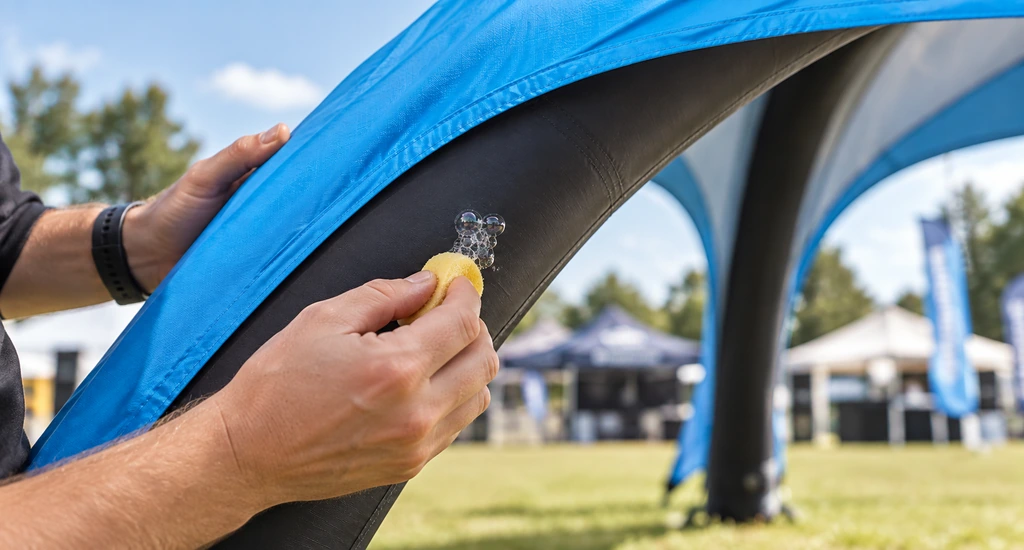
After confirming that the method is suitable for your tent material, a small amount of mild soapy water may help reveal escaping air through visible bubbles.
Once the location is identified:
- Mark the area;
- Take clear photos;
- Record where the damage occurred.
If you cannot identify the source of the leak, avoid:
- Covering a large area with adhesive;
- Using random tape as a permanent solution;
- Applying an incompatible patch.
Incorrect repairs may make future assessment more difficult.
Can You Repair A Small Inflatable Tent Puncture Yourself?
A small puncture may be repairable when it is:
- Limited in size;
- Easy to access;
- Located away from important structural areas.
However, before attempting any repair, confirm:
- Which material is damaged;
- Whether the repair material matches that surface;
- Whether the damage is suitable for a simple repair.
Different parts of an inflatable tent may require different solutions.
For example:
- A repair for an internal air-holding component;
- A repair for an outer fabric cover;
are not necessarily the same process.
Avoid using:
- Ordinary tape;
- Unverified patches;
- Incorrect adhesives.
A temporary solution may not create a reliable repair and could make the damage harder to evaluate later.
What To Consider Before Repairing A Small Puncture
If the damage is suitable for repair, the general process includes:
1. Release Air Pressure
Reduce pressure in the affected area before repair.
A flat repair surface helps ensure better access to the damaged section.
2. Prepare The Damaged Area
The repair area should be:
- Clean
- Dry
- Free from debris
Use only cleaning methods and repair materials appropriate for the specific material.
3. Use A Compatible Repair Method
The repair material must match the damaged surface.
Follow the recommended repair process for that material, including any required bonding and waiting time.
4. Test Before Returning To Use
After repair:
- Reinflate the tent;
- Confirm that pressure is maintained;
- Check that the structure returns to its normal shape.
If air loss continues, do not simply add additional patches without identifying the actual cause.
What If The Outer Fabric Has A Tear?
Outer fabric damage is one of the most visible issues on an inflatable tent.
It may happen because of:
- Contact with rough surfaces;
- Transportation damage;
- Long-term outdoor exposure.
However:
An outer fabric tear does not automatically mean the inflatable tent has an air leak.
First determine whether:
- The tent can still maintain pressure;
- The internal air-holding structure is affected.
If the damage is limited to the outer cover, inspect:
- Whether the tear is expanding;
- Whether it is near an attachment point;
- Whether it affects the protective function of the fabric.
A cosmetic fabric repair and an air leak repair solve different problems.
When Should You Contact WestShade Instead Of Repairing It Yourself?
Professional evaluation is recommended when:
- Air escapes from a seam;
- A valve area continues leaking;
- The structure changes shape unexpectedly;
- The tent cannot maintain normal pressure;
- The tear is large or continues spreading;
- A previous repair does not solve the problem;
- You cannot determine which component is damaged.
When requesting support, provide:
- Product information;
- Photos of the damaged area;
- A description of when the issue occurred;
- Details about how the tent was used.
This information helps determine the appropriate next step.
Frequently Asked Questions
What information should I provide when asking for inflatable tent repair support?
Provide photos of the damaged area, details about when the issue occurred, and information about the tent and how it was used. This helps determine the appropriate next step.
Should I repair a damaged inflatable tent before storing it?
Yes. Any known damage should be documented and addressed before the next event. Storing a damaged tent without evaluation may make the issue harder to identify later.
Are inflatable tent repairs permanent?
A properly matched repair method can restore certain types of damage, but the result depends on the location, material, and severity of the issue. Always test the tent before using it at an important event.
How can I extend the lifespan of my inflatable tent after a repair?
A proper repair can restore certain types of damage, but long-term performance also depends on regular inspections, careful handling, and proper maintenance between events. Follow our inflatable tent maintenance guide for routine care recommendations.
Proper Diagnosis Leads To Effective Repair
Repairing an inflatable tent starts with understanding the actual cause of the problem.
Before attempting any repair, identify whether the issue involves the outer fabric, air-holding structure, valve, or another component. A correct diagnosis helps prevent ineffective repairs and ensures the right solution is applied.
Every inflatable tent issue is different, and the best repair approach depends on the material, damage location, and severity of the problem. If you are unsure about the condition of your tent or need help identifying the right next step, the WestShade team is available to provide professional guidance and support.