




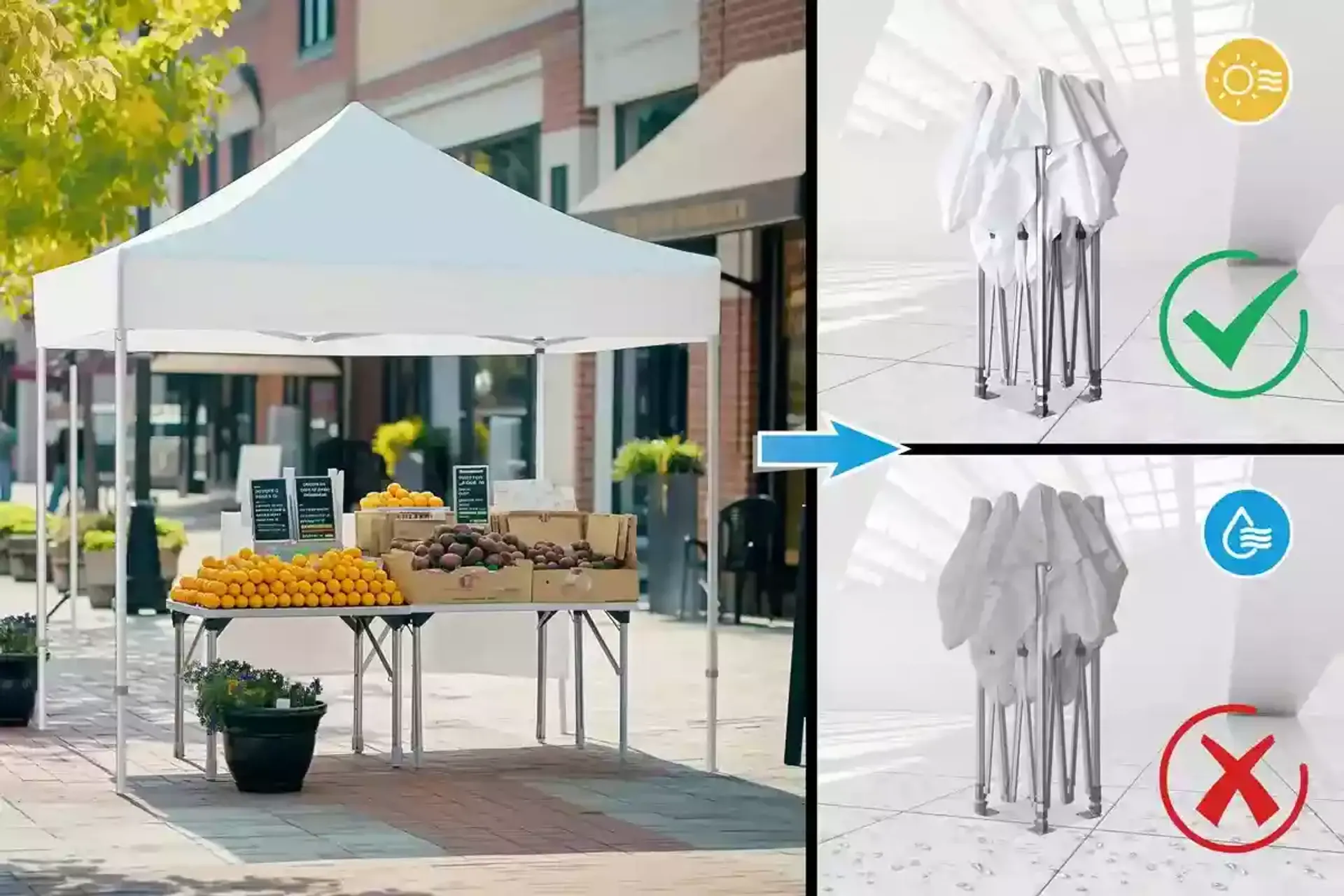
Properly packing and storing your canopy tent is essential if you want it to last for years. Most damage doesn't actually happen while the tent is standing; it occurs during packing and storage. If you’ve ever struggled to force a jam-packed bag shut or discovered "mystery mildew" at the start of a new season, this guide is for you. Following the right steps can prevent unnecessary damage and costly replacements.
Clean the Tent Off
Before you even think about packing up your tent for storage, you must start by thoroughly cleaning it. This equipment has seen its fair share of dirt throughout the year, not including other forms of debris like sticky tree sap or the always-unfortunate bird droppings. If stored dirty, these stains will only worsen and may cause long-term damage by the time you bring the tent back out in spring.
Fortunately, plenty of tent cleaning products exist for you to spray onto your canopy that will do a good job of cleaning off the dirt and debris. If you don’t have access to any of these specialty cleaners, water mixed with mild, non-detergent soap will also work well. However, tree sap will be a bit more troublesome. You’ll need to ensure it’s completely dry before using mineral oil or an alcohol-based product like wet wipes to get the sap off your canopy.
Regardless of your chosen cleaning method, you must ensure that the tent is completely dry afterward. Any leftover water residue could become the catalyst for mold or mildew while in storage, which will be much more difficult to clean off in the spring.
Don’t forget to clean the other parts of the tent as well, not just the canopy top. If you have any sidewalls, follow the same process as above. For the metal poles, though, you don’t have to do too much. Simply run some water over them to remove any stuck-on dirt and leave them out to air-dry for a bit.
Check for Any Damages
While cleaning or drying your canopy tent, take the time to inspect it closely for damage. Small rips and tears can be hard to spot from a distance, so run your hands over the canopy and sidewalls to catch weak spots. Even minor cuts can grow larger over time, so it’s best to patch or repair them right away.

Be sure to check the poles for damage, too. These will be much easier to spot. Tiny dings won’t be anything to worry about, but if any of them have a large dent or start, you’ll need to do something about it. Unfortunately, metal poles are difficult to bend back into place. Even if you do, it probably won’t be a permanent fix. The best thing you can do here is to replace your damaged poles.
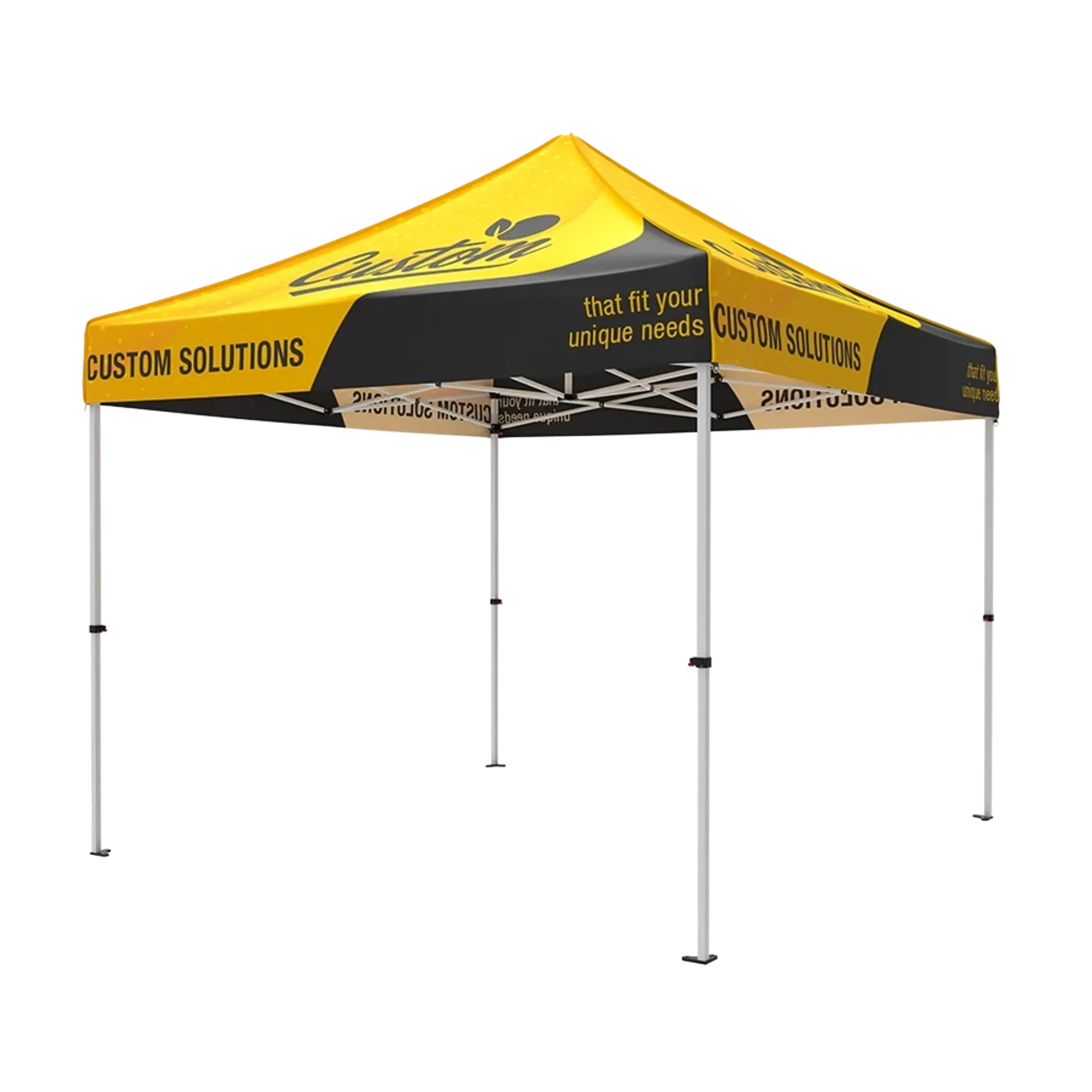
If too many parts of your tent are past the point of repair, it might be better to buy a new one before next year. At WestShade, we offer a wide selection of durable custom pop-up canopies, whether you need a replacement canopy roof or a completely new tent. With multiple sizes and customization options available, you can easily find the perfect fit for your next event.
Step-by-Step: How to Pack a Canopy Tent Without Damage
Now that your canopy tent is clean, dry, and fully prepared, follow these steps to pack it safely and protect it from damage.
Step 1: Remove All Accessories
Before folding, remove all detachable accessories such as sidewalls, weights, stakes, ropes, and banners.
Step 2: Collapse the Frame Safely
If possible, work with a partner to collapse the frame. Press the thumb buttons or pull the pins on each leg to lower the height. Then, standing on opposite sides, slowly bring the outer trusses together by taking small steps toward each other. If you’re alone, you can still collapse the frame carefully by following the same steps. Just take extra care to avoid pinching fingers or bending joints.
Step 3: Fold the Canopy Fabric Properly
While many people leave the canopy top on the frame when packing, removing it can also help prevent friction tears during transport. And if you won’t be using the tent again for a long time, it’s best to remove the canopy entirely to prevent fabric deformation and prolong its lifespan. If you remove it:
1. Lay it flat on a clean surface;
2. Fold along the natural seams, keeping edges aligned;
3. Avoid sharp creases or tight folds to protect the fabric.
Step 4: Pack Everything Neatly
Pack the collapsed frame and fabric into its storage bag. If your bag has a separate compartment for the fabric, place the folded or rolled canopy fabric there. If not, carefully lay the fabric on top of the frame inside the bag.
If you choose to leave the canopy attached to the frame, simply wrap the folded tent with the protective bag. Westshade’s tent protection bags are designed to stand upright, with a wider top and a narrower bottom, so you don’t need to lift the tent frame to complete the packing process.
Make sure that stakes, heavy weights, and other accessories are stored separately in small pouches to prevent them from scratching the frame or puncturing the canopy.
Choose a Good Storage Spot
The final step is choosing a safe place to store your canopy tent. Avoid damp areas like basements, which can introduce moisture, mold, and mildew. Unheated garages or sheds are also poor choices. Since exposure to freezing temperatures can make fabric brittle and cause cracks over time.
The best option is a cool, dry indoor space such as a closet or dedicated storage room. Store the tent in an accessible spot rather than burying it under other items. This way, you’ll avoid digging it out.
Common Packing and Storage Mistakes to Avoid
Here are some common mistakes that can shorten the lifespan of your canopy tent if not avoided:
1. Packing the canopy tent while it’s still damp can trap moisture inside the fabric, leading to mold, mildew, and unpleasant odors.
2. Forcing the frame and fabric into the storage bag can put excessive stress on the structure, resulting in bent legs, damaged joints, or torn bags.
3. Storing uncleaned stakes, weights, or other hardware together with the canopy fabric increases the risk of scratches, punctures, and fabric wear.
4. Leaving a packed canopy tent in a vehicle for extended periods exposes it to heat and humidity, which can accelerate material deterioration.
5. If your storage bag has cinch straps, avoid over-tightening them. Excessive tension can compress the tent too tightly and gradually warp the frame.
Conclusion
Taking an extra ten minutes to pack your canopy tent correctly is an investment in its lifespan. Following careful packing steps and storing it in the right environment can prevent common damage caused by moisture, improper folding, and rough handling.
If it’s time for an upgrade, WestShade offers a wide range of durable, high-quality pop-up canopies in various sizes, with customizable options to suit any business or event. Whether you need a standard custom tent 10x10 or a larger custom canopy 10x20, WestShade has the perfect solution to make your setup easy and reliable year after year. Check it out and get the perfect fit for your next event.










)