




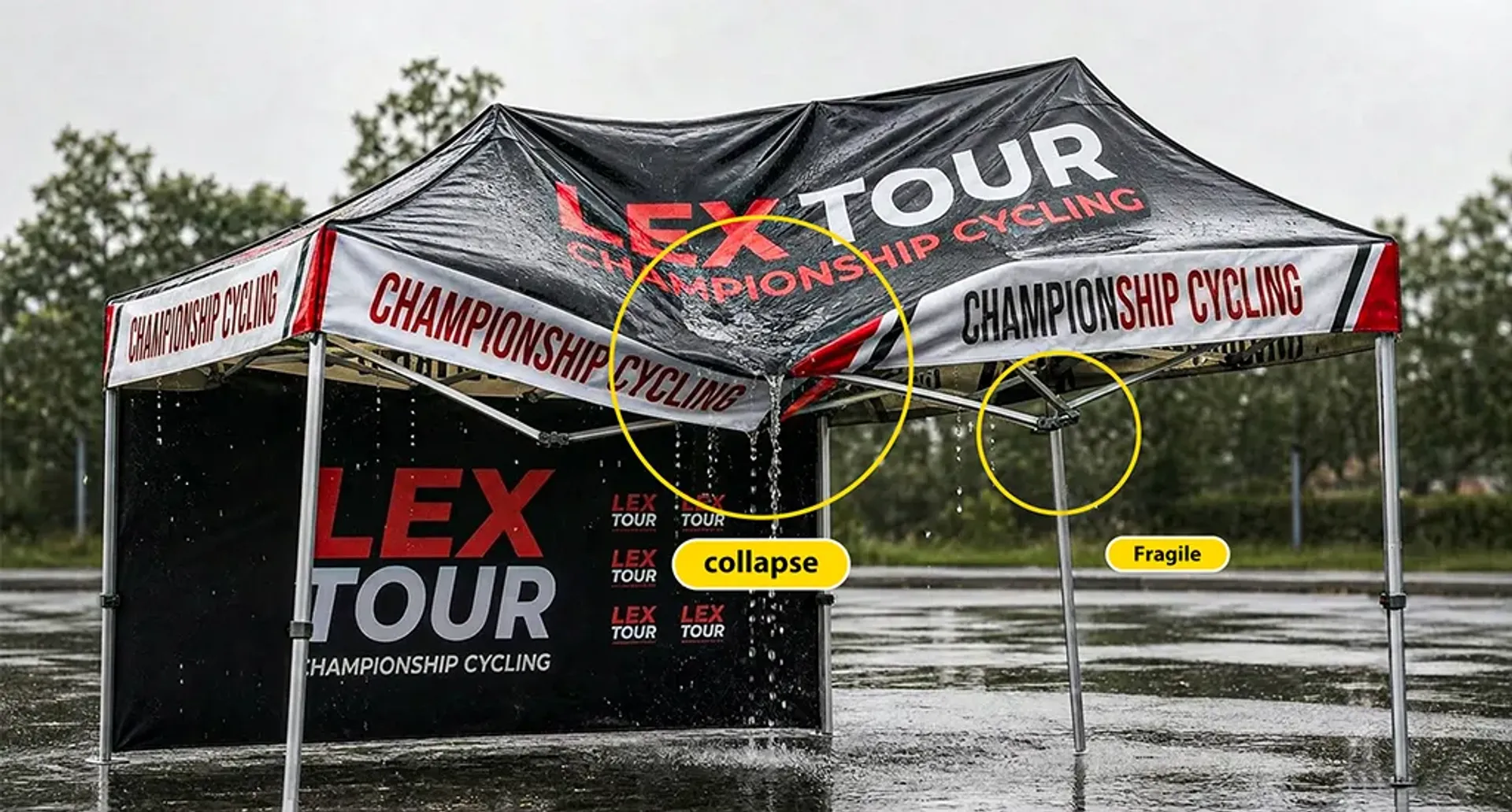
Outdoor events do not stop when the weather changes. Whether you are using a custom canopy tent for a trade show or farmers market, rain pooling can quickly turn a professional setup into a frustrating disaster. A sagging roof filled with water not only looks bad, but also increases the risk of frame damage, leaking fabric, and complete canopy collapse. The good news is that rain pooling is usually preventable. In most cases, the problem is not the rain itself — it is the canopy structure, roof tension, or setup method.
Why Rain Pooling in Canopy Tent Can Ruin Your Outdoor Event
Many people underestimate how damaging standing water can be on a canopy roof. Even lightweight rainwater becomes extremely heavy once it starts collecting in the center of the canopy top. This added weight stresses the frame, stretches the fabric, and weakens the entire structure. For businesses using a custom printed canopy tent, water pooling can also damage brand presentation during outdoor promotions, vendor fairs, sports events, and trade shows.
Common problems caused by rain pooling include:
-
Sagging canopy roofs
-
Pop-up tent frames
-
Torn canopy fabric
-
Water leaking onto products or electronics
-
Unsafe overhead water buildup
-
Poor-looking event presentation
Most people assume rain pooling only happens during storms or extreme weather. In reality, even light rain can create pooling problems if the canopy roof lacks proper support and tension.
What Really Causes Water to Pool in a Canopy Tent
Most canopy pooling problems come from structural weaknesses, poor setup conditions, or low-quality materials. Understanding the real cause is the first step toward preventing it.
The Roof Starts Sagging Under Weight
When the canopy top is not pulled tightly across the frame, the fabric naturally dips downward. As rain starts collecting in that low area, the additional weight pulls the roof even lower.
This creates a cycle:
-
The roof slightly sags
-
Water begins collecting
-
Water weight increases pressure
-
The roof sags further
-
More water accumulates
Eventually, the canopy roof behaves like a bowl holding gallons of water. Once water starts collecting, the pressure increases rapidly. Even a small amount of standing water adds significant downward force to the frame and fabric.
Poor Setup Conditions Make Pooling Worse
-
Uneven Ground Creates Low Points
If one side of the tent sits lower than the other, rainwater naturally flows toward the lowest section of the canopy roof.
-
Incorrect Frame Locking Reduces Roof Stability
Partially locked trusses or improperly extended legs reduce overall roof tension and structural support.
-
Loose Corner Straps Allow Fabric Movement
Loose straps prevent the canopy top from staying tight during rain or wind exposure.
-
Mismatched Canopy Tops Create Uneven Tension
Using the wrong replacement canopy top often creates wrinkles and loose sections that immediately trap water.
Low-Quality Materials Fail Faster in Rain
Material quality plays a major role in long-term canopy performance. Cheap fabric often stretches after becoming wet, reducing roof tension and increasing sagging.
Common Problems with Low-Quality Popup Canopies:
-
Thin polyester fabric stretches easily
-
Weak truss systems bend under pressure
-
Low-cost stitching loosens over time
-
Plastic connectors weaken structural support
As the canopy tent ages, worn tension components make pooling problems even worse.
Two Structural Features That Actually Prevent Rain Pooling
A Professional Roof Tension System
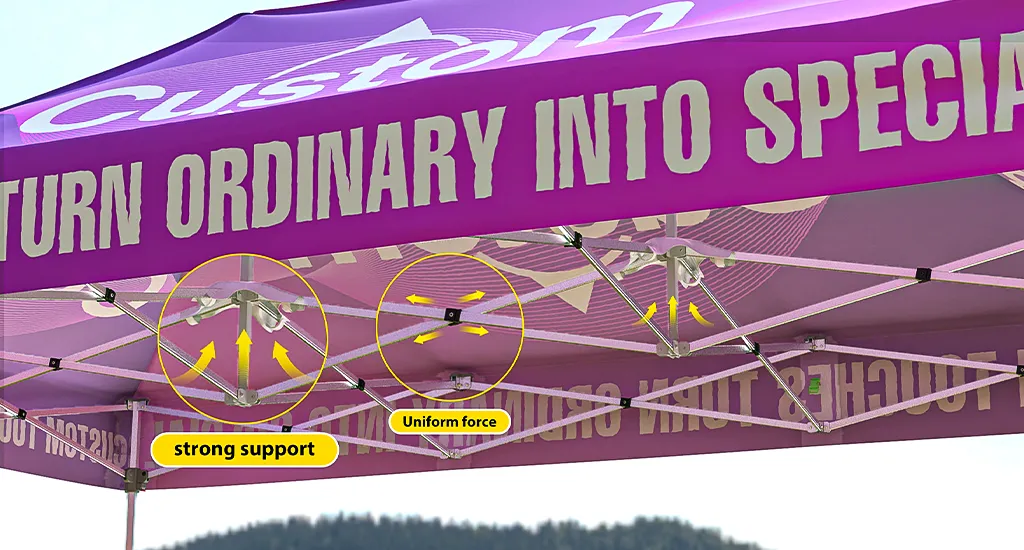
The most important feature of a rain-resistant canopy tent is a strong roof tension system. Different frame materials affect the sturdiness of pop-up tents and how well the canopy roof unfolds.
How Commercial Canopy Tension Systems Work
Professional canopy frames use:
-
Cross-truss pressure distribution
-
Reinforced roof peak support
-
Strong corner tension points
-
Even outward fabric pull
Together, these elements help the canopy roof maintain its shape during rain exposure.
Why Tight Roof Geometry Prevents Water Collection
A properly tensioned canopy creates natural water runoff. Instead of forming a low center point, the roof stays elevated so rainwater slides toward the edges automatically.
Waterproof Fabric That Maintains Structural Tension
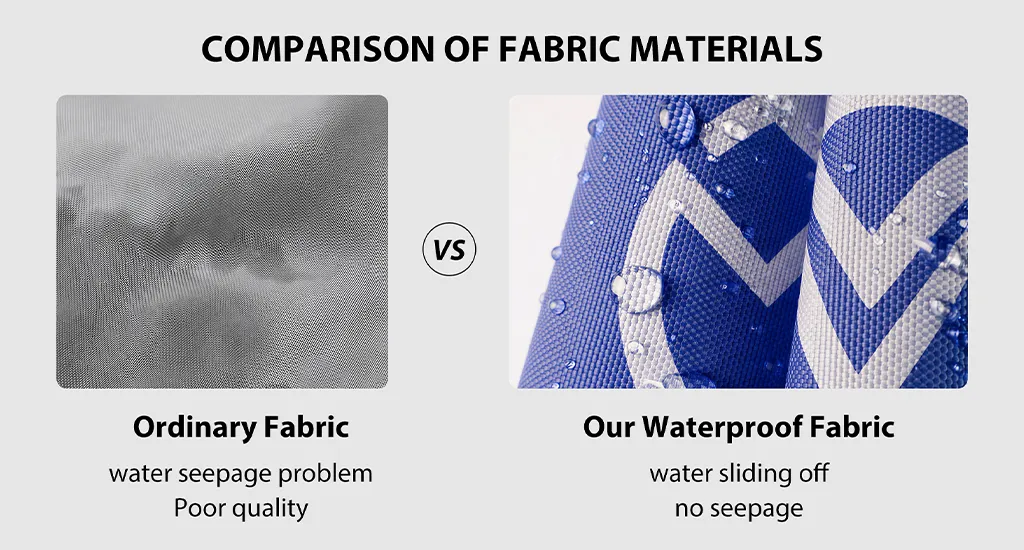
Waterproofing is just as important as roof tension when preventing rain pooling on a canopy tent. A high-quality waterproof fabric helps rain slide off the canopy surface instead of soaking into the material and adding extra weight. Low-quality fabric may still leak, absorb moisture, or become heavier during extended rain exposure. As the material stretches and sags, water runoff becomes less effective, making pooling problems worse over time.
WestShade custom canopy tents typically use:
-
Heavy-duty polyester fabric
-
Multi-layer waterproof coatings
-
Reinforced stitching
-
UV-resistant surface treatments
-
Higher tension resistance under wet conditions
Together, these features help the canopy roof stay dry, stable, and resistant to sagging during outdoor use.
5 Quick Fixes to Stop Rain from Pooling on Your Canopy Right Now
If water is already starting to collect on your canopy roof, these quick fixes can help immediately.
Tighten All Corner Straps
This is the fastest way to improve roof tension and reduce sagging. Always tighten each corner evenly.
Adjust the Canopy Height to Create a Slope
Lowering one side slightly helps rainwater drain faster. This is a common technique used for outdoor vendor tents and camping setups.
Reinstall the Tent on Level Ground
Uneven surfaces create natural collection points for standing water.
Reinforce Loose Connection Points
Check all frame joints, trusses, bolts, and roof attachment points. Weak connections reduce overall roof support.
Replace Worn Fabric or Tension Components
Older canopy tops lose elasticity over time. Replacing stretched fabric and worn straps often improves roof performance immediately.
Why Pooling-Free Canopies Matter for Events
Trade Shows & Outdoor Promotions
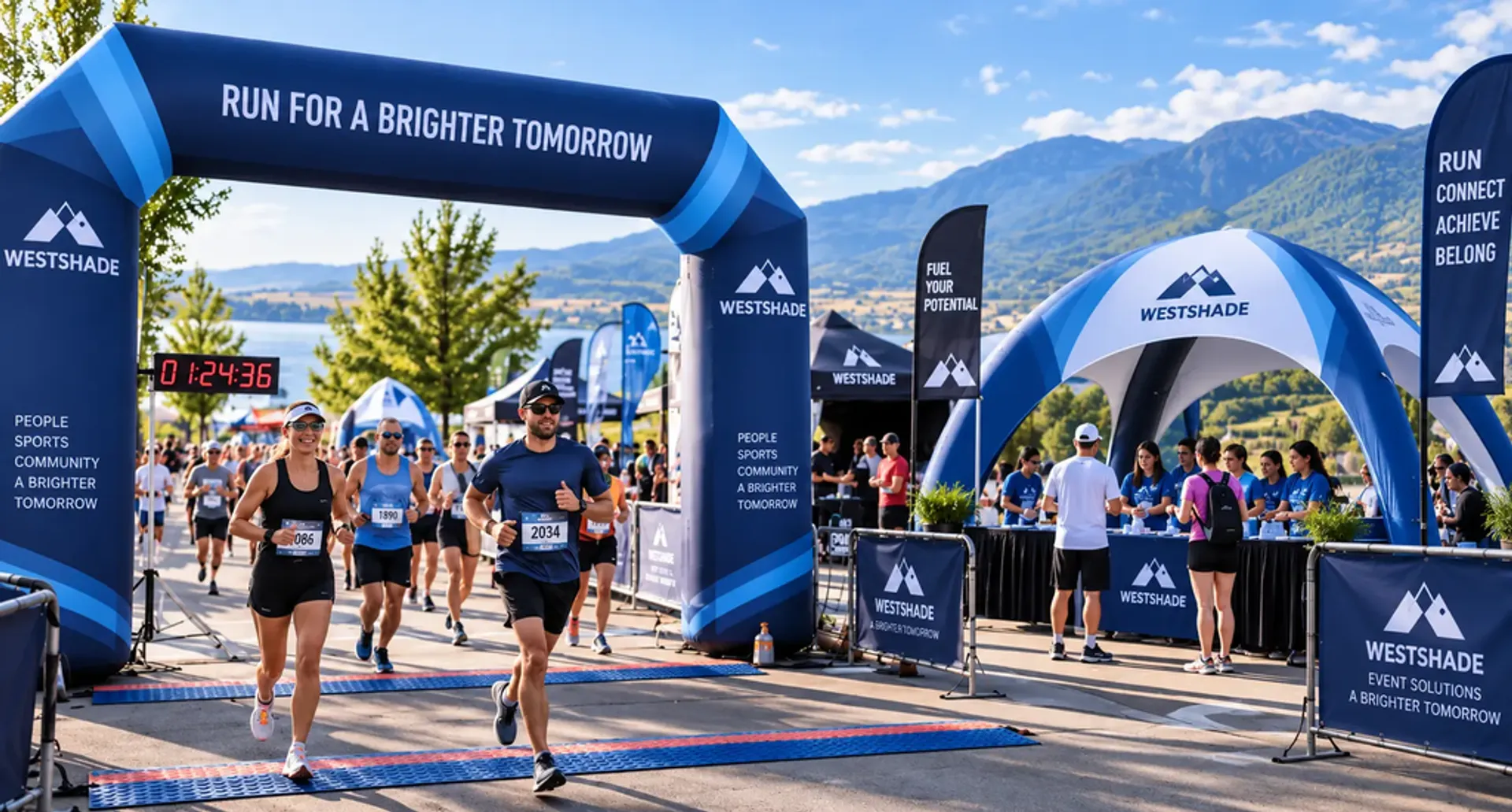
A clean, stable custom printed canopy tent creates a more professional brand image during sports competition or outdoor events. Customers notice when a booth stays dry and organized during poor weather.
Long-Term Cost Savings
Preventing pooling reduces structural stress, helping extend the lifespan of both the canopy fabric and frame.
Conslusion
Rain pooling is not simply caused by bad weather. In most cases, it happens because the canopy roof lacks proper tension, structural support, or durable waterproof fabric. Once the canopy top begins to sag, even light rain can create standing water that adds extra pressure to the frame and fabric over time.
The best way to keep rain from pooling on a canopy tent is to combine a strong roof tension system, high-quality waterproof fabric, and proper setup on level ground. A well-designed pop-up canopy tent should naturally direct water off the roof instead of allowing it to collect in the center. Whether you use your canopy for trade shows, outdoor promotions, or sporting events, investing in a commercial-grade canopy with reliable structural support and weather-resistant materials will help keep your setup dry, stable, and professional in all weather conditions.
If you are looking for durable outdoor custom canopy tent solutions built for long-term performance, explore WestShade collection of heavy-duty popup tents for your next event.






)