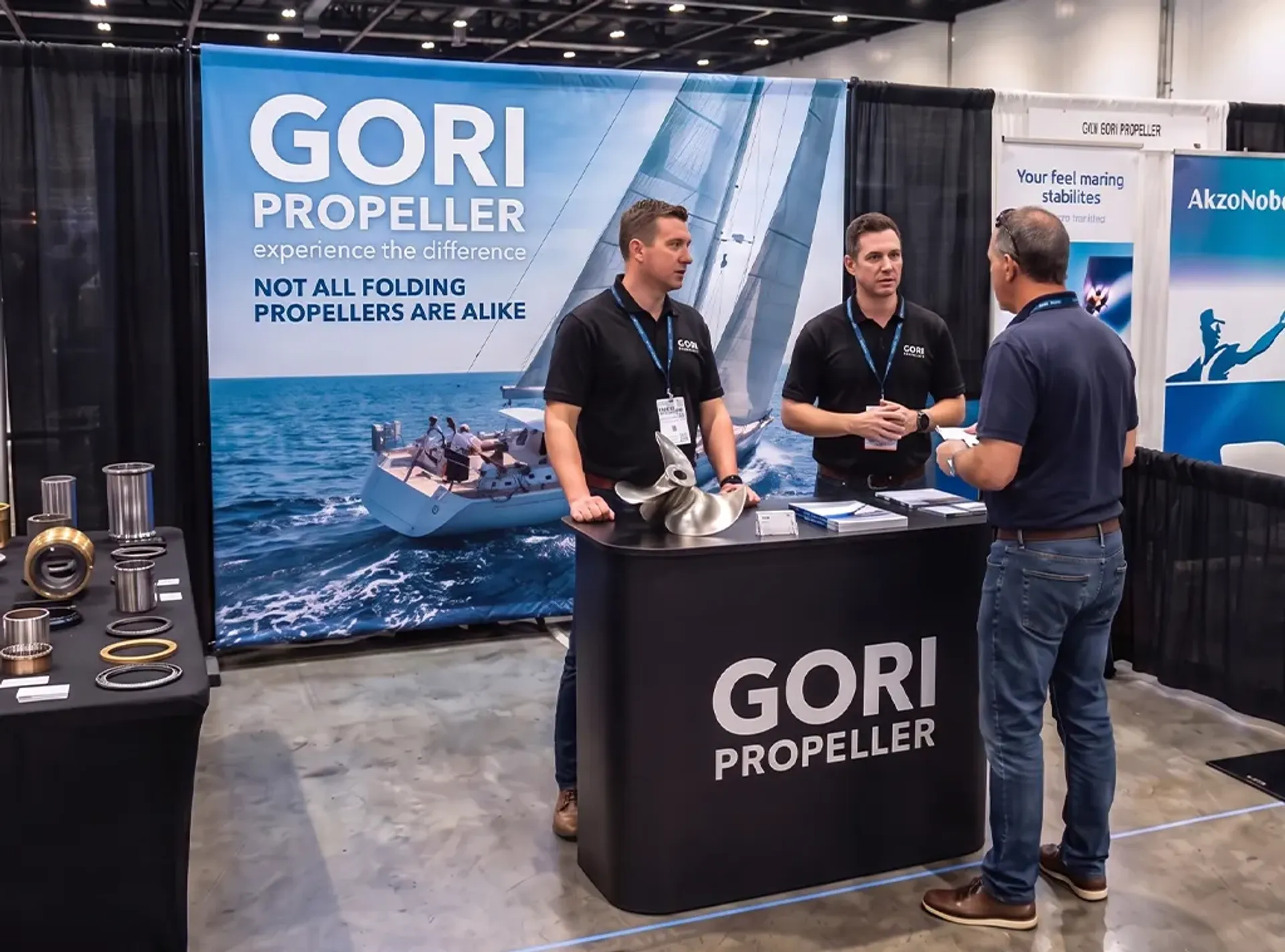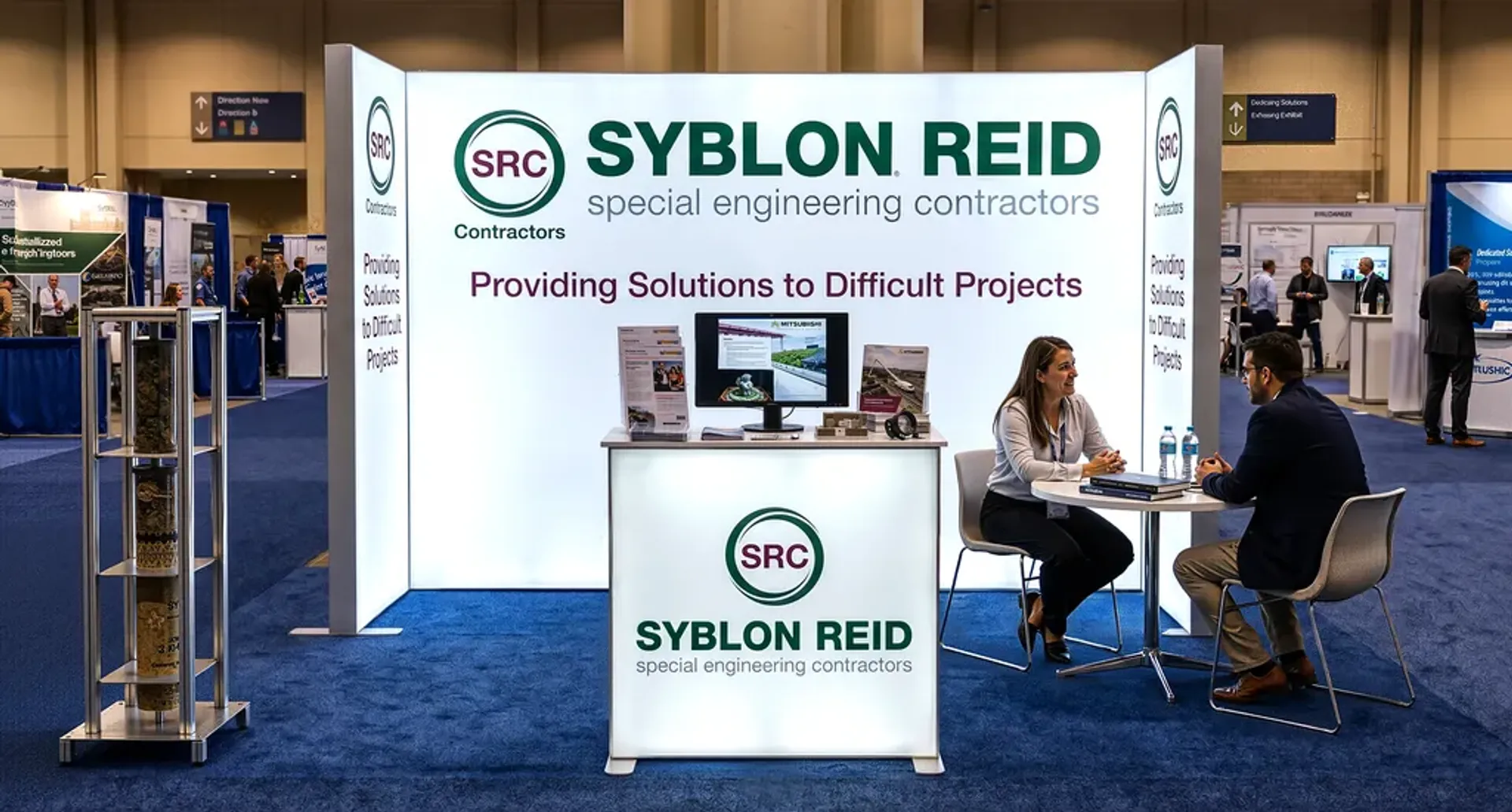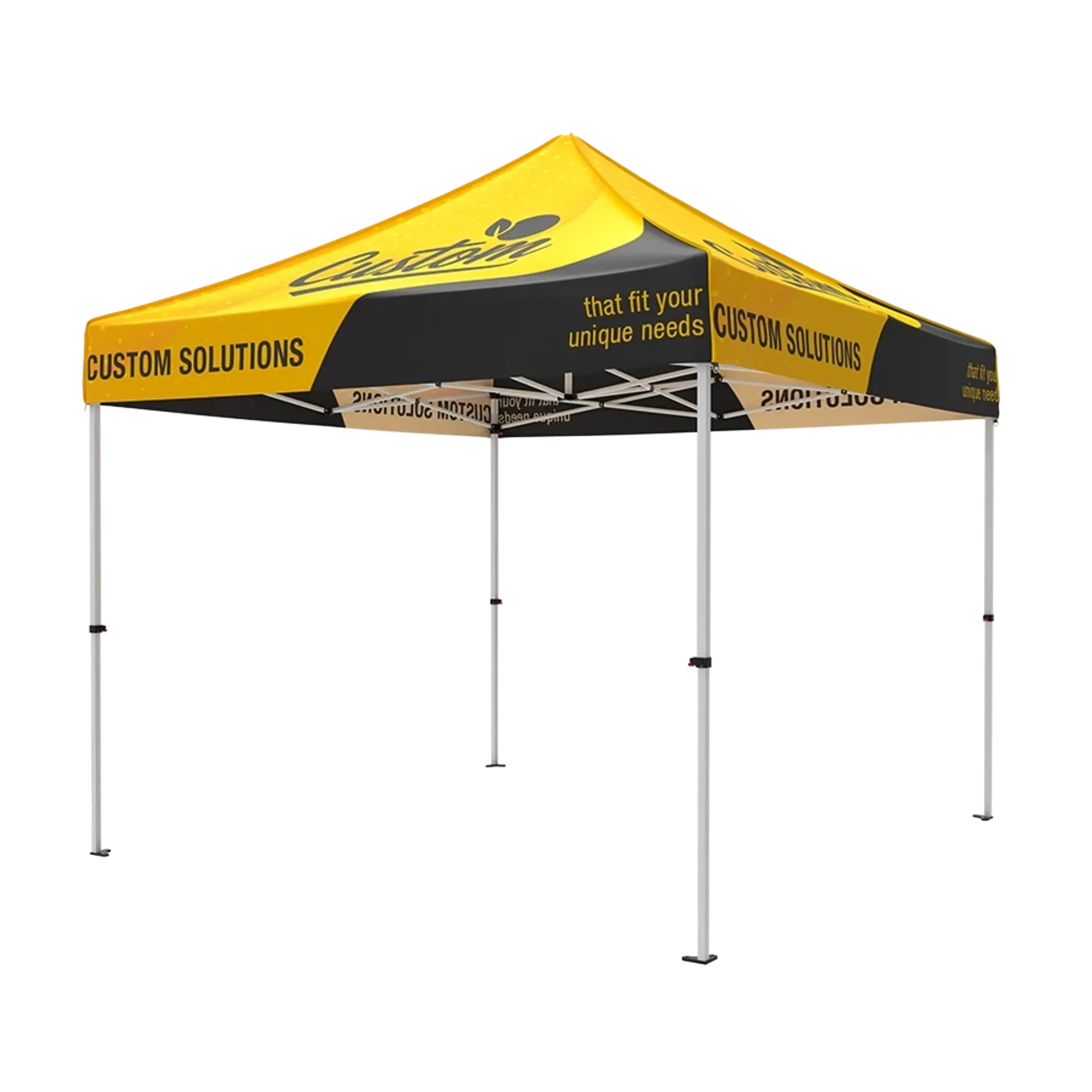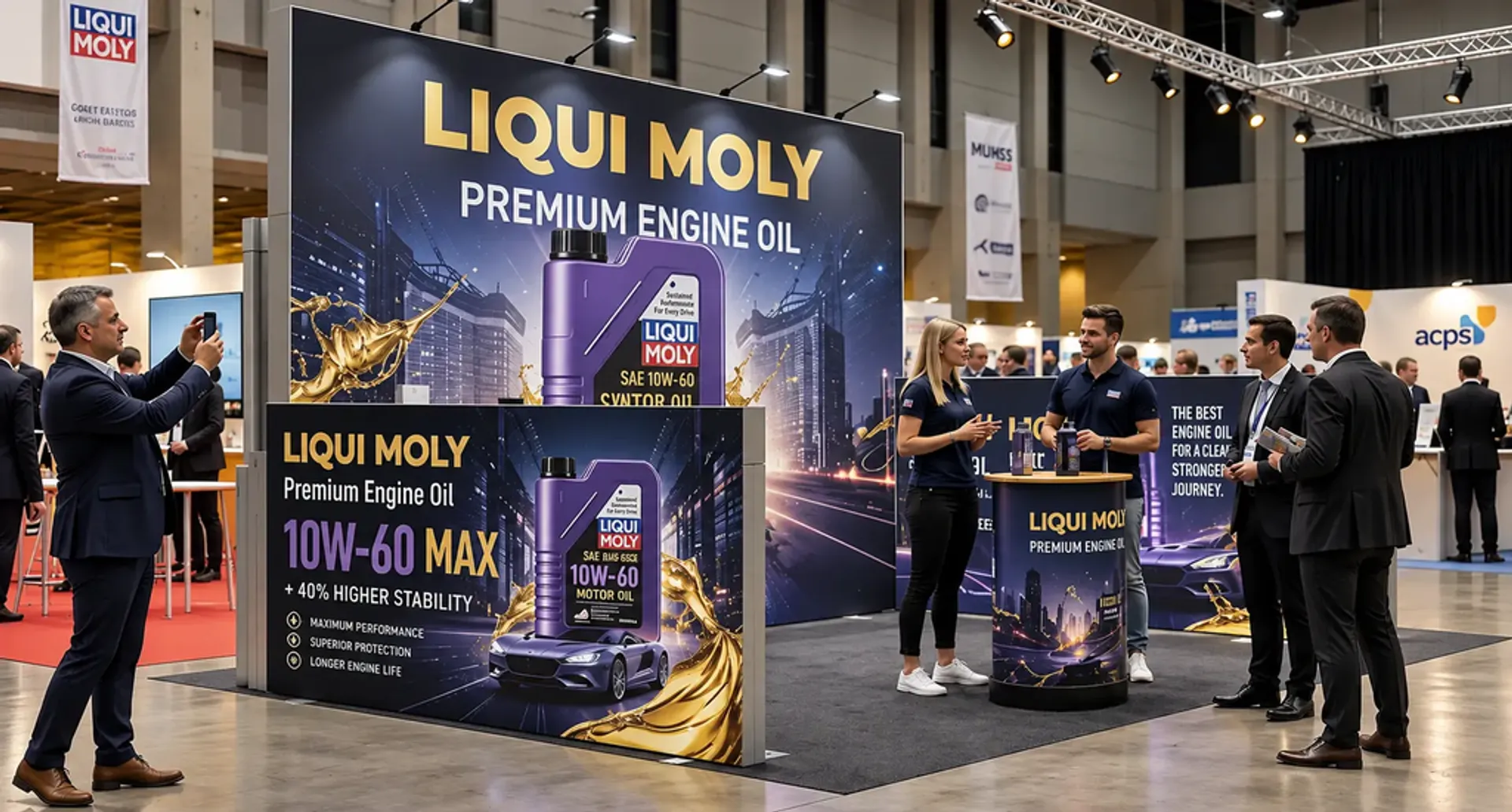




Choosing between single-sided and double-sided printing may seem like a small detail, but it can affect how your trade show display works in the space, how many directions your message can reach, and how much you invest.
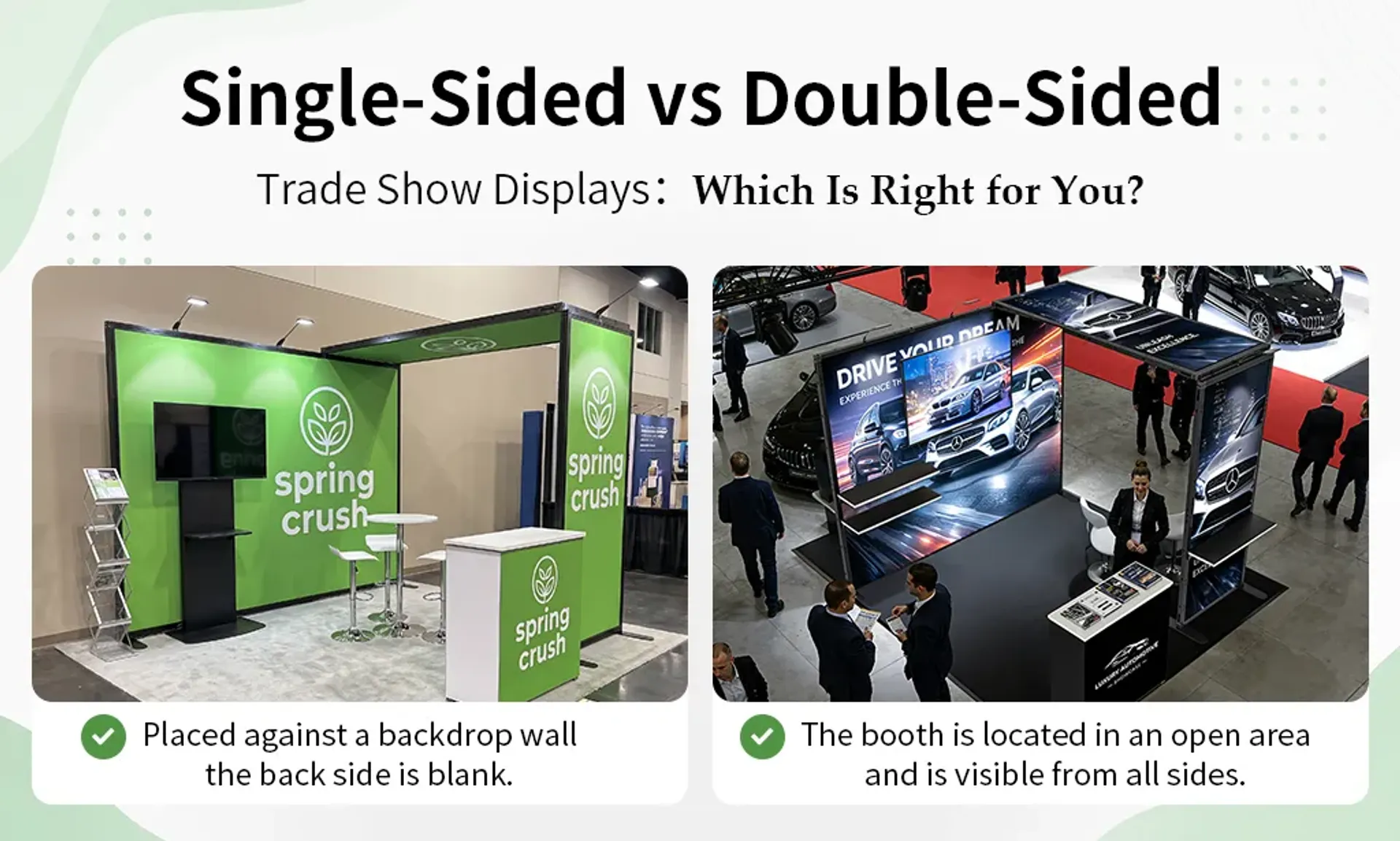
The quick answer is simple: choose single-sided printing when the display is primarily viewed from one direction; choose double-sided printing when attendees can see or approach the display from both sides. The better choice depends on your booth location, traffic flow, artwork needs, and plans for future events.
What Is a Single-Sided Trade Show Display?
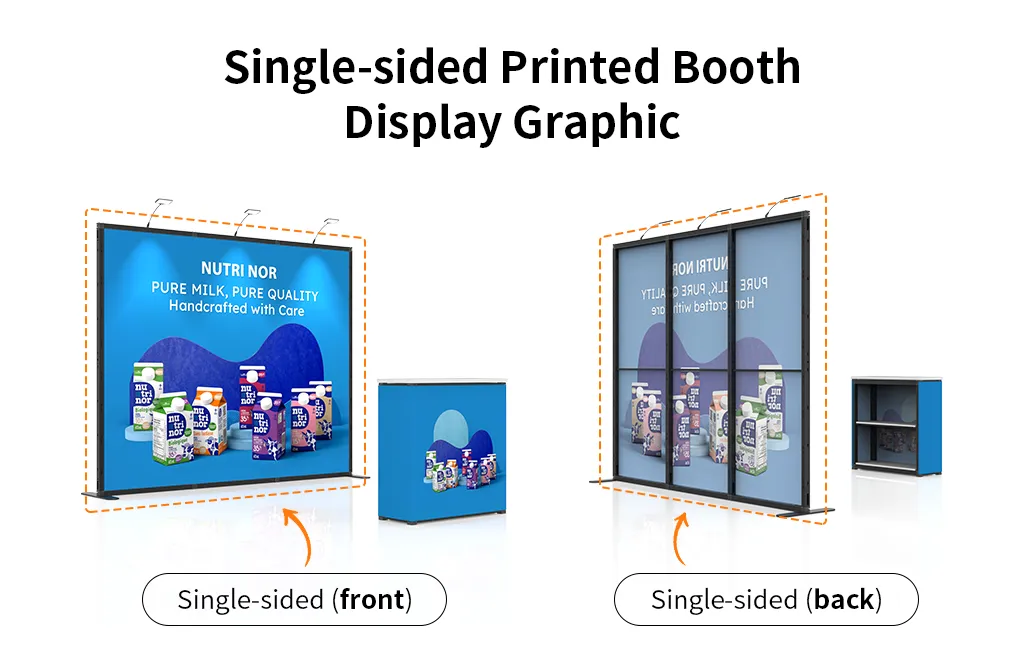
A single-sided trade show display features a custom graphic on its primary viewing side. It is designed to face the aisle or main visitor approach, while the reverse side is not used as a second custom graphic surface.
Single-sided printing is usually a practical choice when the back of the display faces:
-
A venue wall
-
Pipe and drape
-
Another booth boundary
-
A storage or staff-only area
-
A larger booth structure that hides the reverse side
If visitors will not see the back, paying for a second custom graphic may add little value.
What Is a Double-Sided Trade Show Display?
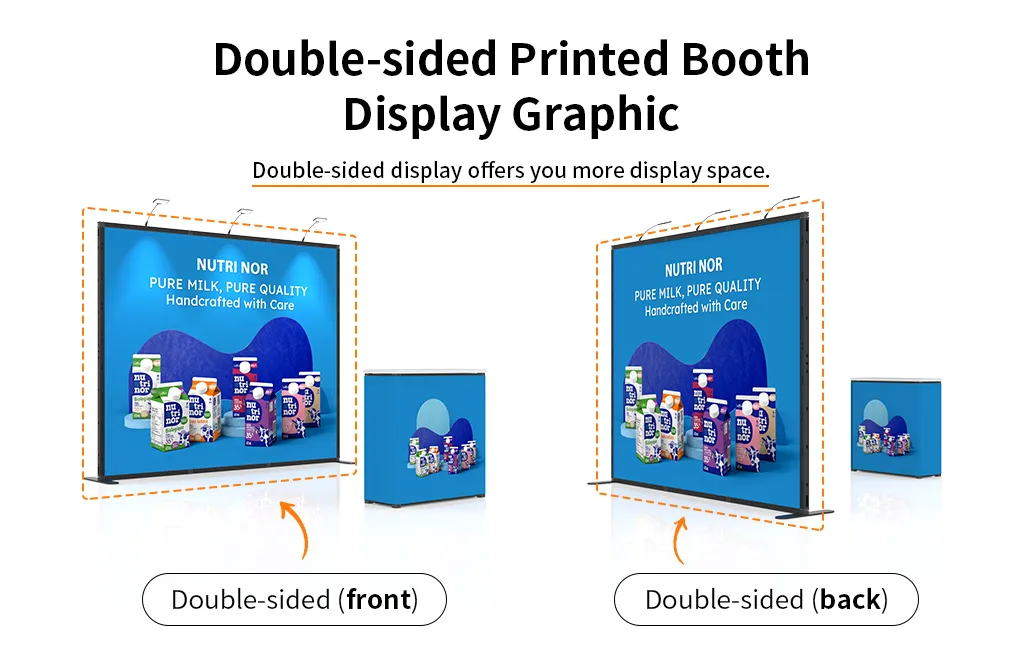
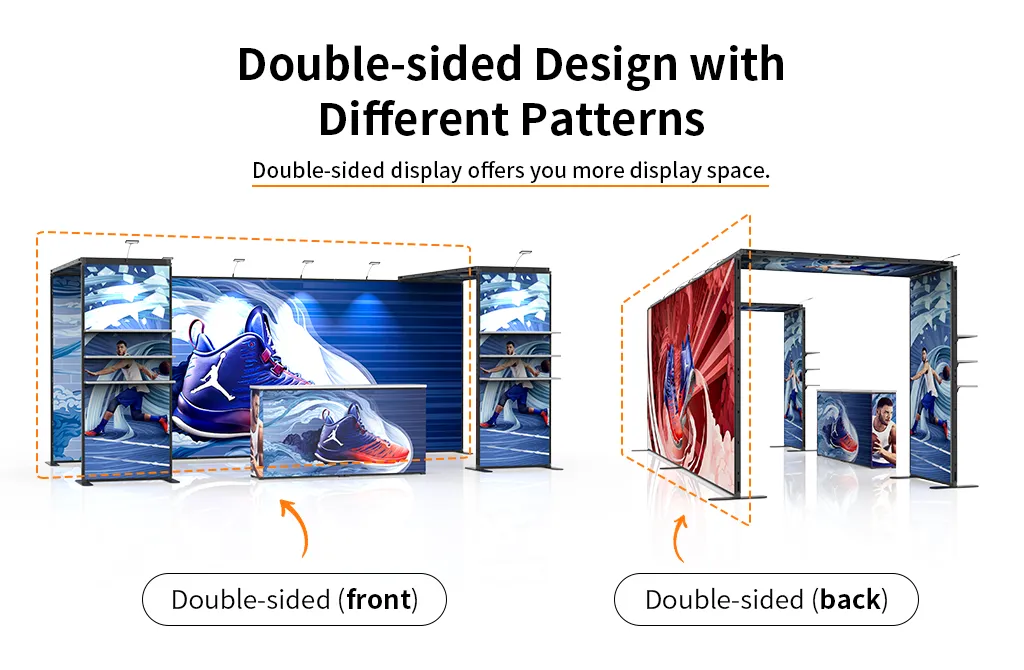
A double-sided trade show display features custom graphics on both visible faces. Depending on the display system and artwork requirements, the two sides can use the same design or communicate different messages.
This option works well when the display is freestanding, positioned between traffic paths, or used in an open booth where attendees can see both sides.
Instead of leaving the reverse face unused, double-sided printing turns it into another opportunity to attract attention, communicate information, or guide visitors through the booth.
Single-Sided vs. Double-Sided: Quick Comparison
| Factor | Single-Sided Printing | Double-Sided Printing |
|---|---|---|
| Visibility | One primary viewing direction | Two viewing directions |
| Best Placement | Against a wall or booth boundary | Freestanding or open layouts |
| Artwork | One main design | Same or different designs on each side |
| Cost | Lower initial printing cost | Higher cost for additional printed coverage |
| Planning | Simpler artwork approval | Requires a purpose for both faces |
| Future Flexibility | Best for consistent front-facing use | More flexible for changing booth layouts |
| Best For | Wall-facing displays and backwalls | Open or multi-directional displays |
The key question is not whether two printed sides are better than one. It is whether the second side will be seen often enough to support your event goal.
When Should You Choose Single-Sided Printing?
Your Display Faces One Main Direction
If your display is positioned against a back wall, pipe and drape, or another booth boundary, attendees will primarily see the front.
The same applies when your booth has one dominant visitor approach and your counter, demo area, and staff are positioned to direct attention toward one graphic face.
In these situations, single-sided printing lets you focus your budget on the surface that receives the most exposure.
The Reverse Side Will Be Hidden
A display may sit in front of storage, equipment, curtains, or another structural element. If the reverse side cannot be seen by attendees, a second custom graphic is unlikely to generate meaningful additional exposure.
You Are Working With a Tighter Budget
For a first event or a limited campaign, single-sided printing can keep the initial investment focused on the most visible area.
It can be especially practical when your booth layout is fixed and you know the display will consistently be used in a front-facing position.
When Is Double-Sided Printing Worth It?
The Display Is Freestanding
A display placed in the center of a booth, near an entrance, or between two activity zones may be visible from both sides.
Double-sided printing prevents the reverse face from looking unfinished and allows the same structure to communicate with visitors approaching from different directions.
You Have an Island or Peninsula Booth
Open booth layouts can attract visitors from several aisles. A double-sided display can face two traffic streams, allowing one structure to work harder without adding another frame.
Before ordering, map the surrounding aisles and identify what attendees will see as they enter, pass, and leave your booth.
You Want Different Messages for Different Moments
Both sides do not have to perform the same job.
One face can attract attention from the aisle with a short brand message, while the other supports conversations inside the booth with product benefits, a demo schedule, or a QR code.
For example:
-
Aisle-facing side: "Launch Faster With Brand"
-
Interior-facing side: Three product benefits and a demo QR code
This approach can be more effective than simply duplicating the same artwork on both sides.
The Display Will Be Reused in Different Layouts
Frequent exhibitors may move the same display between inline, corner, peninsula, and open event spaces.
Double-sided printing can provide more placement flexibility when the reverse face may be visible at a future show. The additional upfront investment may make more sense if the display is intended for repeated use across different booth configurations.
The Display Serves as a Divider or Wayfinding Feature
Freestanding fabric walls can separate meeting, demo, or product areas.
Printing both sides allows each face to serve a different function. One side might identify a presentation area while the other directs visitors toward check-in, product displays, or sales staff.
Do Both Sides Need the Same Artwork?
Not necessarily. Repeating the same design reinforces brand recognition and simplifies artwork approval, while different artwork allows each side to serve a distinct audience or purpose.
Use the Same Design When:
-
Both aisles attract similar visitors
-
Brand recognition is the main goal
-
The display may be rotated between different events
-
You want a consistent visual from either direction
Use Different Designs When:
-
One side faces the aisle and the other faces the booth interior
-
Different visitor groups approach from each direction
-
One side focuses on awareness while the other supports conversion
Even when the artwork differs, keep the colors, typography, logo treatment, and overall visual style consistent. Both faces should still feel like parts of the same booth.
Common Buying Mistakes to Avoid
Avoid these common mistakes when choosing between single- and double-sided printing:
-
Choosing double-sided printing when the back is not visible: You may pay for additional graphics that receive little or no exposure.
-
Choosing single-sided graphics for an open booth: Visitors approaching from behind may see an unbranded surface.
-
Using identical artwork when different messaging would be more useful: Two sides can serve different stages of the visitor journey.
-
Placing essential content where counters, shelves, or people will hide it: Design around the actual booth environment, not just the flat artwork template.
-
Assuming double-sided printing means double-sided illumination: Printing and lighting are separate considerations for backlit displays.
-
Designing before confirming the correct product template: Final dimensions, finishing, and graphic construction should be confirmed before artwork is approved.
Choose the Right Trade Show Display for Your Booth
The right printing configuration depends on more than the display itself. Your booth layout, visitor flow, branding goals, and future use should all influence the decision.
Single-sided printing can be an efficient choice for front-facing displays, while double-sided printing can create additional branding opportunities in open and multi-directional spaces. The goal is not to choose the option with more graphics, but to choose the option that makes better use of the space.
Need help matching printing, display style, and booth layout? Explore WestShade's trade show booth solutions and request a free design or quote for your next event.
FAQs
What trade show booth size should I choose?
Start with your event's assigned booth space. 10x10 booths work well for standard inline spaces, while 10x20 booths offer more room for product displays, demonstrations, meetings, and visitor areas.
How long does it take to set up a trade show booth?
Setup time depends on the booth system and configuration. Fabric displays are generally quicker to assemble, while larger modular and backlit booths may require more time for frames, graphics, lighting, and accessories.
Can I reuse my trade show booth at future events?
Yes. Modular trade show booths are designed for repeated use and can often be transported, stored, and reconfigured for different events. Consider portability, storage, and future booth sizes when choosing your system.
Can I see my booth design before placing an order?
Yes. WestShade provides free 3D design mockups so you can preview your booth layout and branding before production. You can provide your logo, artwork, or ideas for the design.