



Planning an outdoor sports event means creating a temporary venue almost from scratch.
A running race may need registration, staff operations, hydration, first aid, sponsor activations, and a clearly marked start and finish. A tournament may need team areas, information points, equipment storage, and places where athletes can get out of the sun between games.
The challenge is not simply deciding what equipment to bring. It is turning an open field, parking lot, park, or street into a site where participants immediately understand where to check in, where to wait, where to get help, and where the main event activities happen.
That is why temporary structures, including an outdoor event tent, can play an important role in sports event planning.
Here is how to decide what your event actually needs—and where inflatable tents and arches make sense.
1. Start With the Functional Areas Your Event Needs
Before choosing tents, signs, tables, or displays, map the activities that will happen on event day.
Most outdoor sports events need some combination of these areas:
| Functional Area | What It Needs to Support |
|---|---|
| Registration | Check-in, bib pickup, participant questions |
| Event Operations | Staff, timing, radios, paperwork, equipment |
| Athlete / Team Area | Waiting, preparation, shade, equipment |
| Hydration / Recovery | Water, rest, post-event recovery |
| First Aid | Medical support and easy identification |
| Start / Finish | Timing, participant flow, event identification |
| Sponsor Activation | Brand engagement, giveaways, product displays |
Once these areas are identified, ask which can operate in the open and which need a defined temporary space.
For example, a community soccer tournament may use an open hydration station with tables and coolers, while team check-in and event operations may need covered areas where staff, paperwork, electronics, and supplies remain throughout the day.
A road race creates different requirements. Registration may need to process hundreds of participants in a short period, while the start and finish areas need to be recognizable from much farther away.
Start with the function. The equipment decision comes next.
2. Why Inflatable Tents Work Well for Outdoor Sports Events
Traditional event equipment often solves one problem at a time: a table creates a work surface, a sign gives directions, and a barrier controls movement.
A sports event inflatable tent can solve several problems at once.
Shelter: Staff, athletes, electronics, registration materials, and supplies may spend hours outdoors. A covered station creates a more practical working area.
Visibility: In a large park or open event site, participants need recognizable landmarks. A distinctive tent makes registration, information, first aid, or another important station easier to locate.
Organization: A temporary structure creates a clear boundary around a functional area. Instead of several tables and boxes scattered across an open space, staff have a defined station.
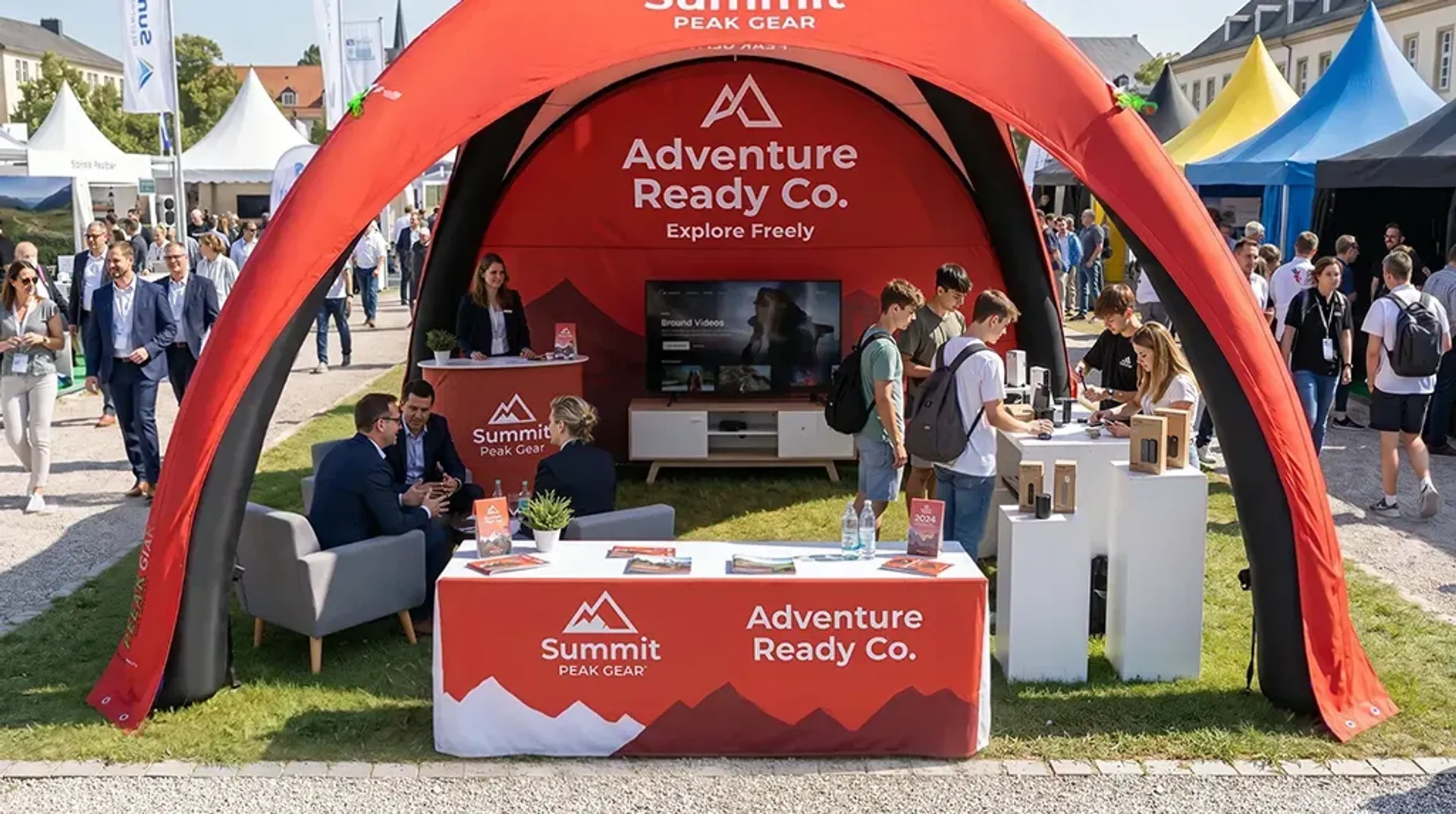
Branding: A custom inflatable tent for events can integrate event or sponsor graphics into the structure itself, reducing the need to rely entirely on separate backdrops and signs.
Consider a weekend running event using a public park. Without a defined registration structure, participants may see several tables, sponsor displays, and volunteers but still be unsure where to check in. A recognizable branded tent gives organizers a simple reference point:
"Registration is at the blue event tent."
The structure is doing more than providing shade—it is helping the temporary venue make sense.
3. Where Should You Use Inflatable Tents and Arches?
Not every area needs an inflatable structure. Prioritize locations where shelter, visibility, branding, or clear zone identification matters.
Registration and Information
An inflatable tent can provide room for tables, staff, participant materials, and check-in equipment while creating a visible arrival point.
For a 5K or community race, for example, organizers could place the registration tent near the participant entrance, with the front kept open for check-in and supplies stored behind staff. Participants can immediately identify where their event experience begins.
Athlete and Team Areas
At tournaments or outdoor competitions, teams may spend considerable time waiting between activities.
A sports event tent can establish a designated team or athlete area with space for seating, hydration, equipment, and temporary shelter.
Event Operations
Timing crews and event staff often need radios, laptops, schedules, power equipment, and storage. A dedicated tent separates this equipment from participant-facing areas and gives staff a consistent operating base.
Sponsor Activations
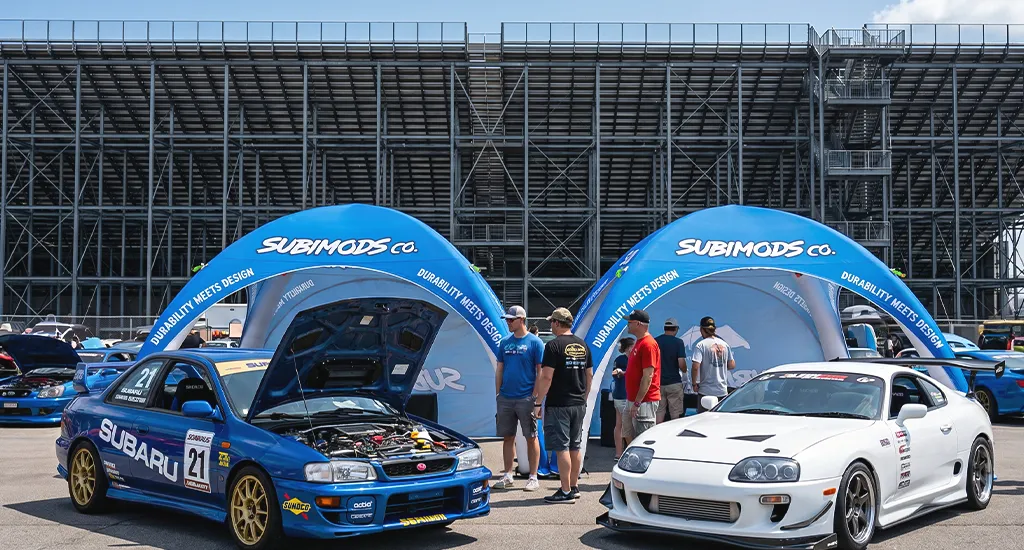
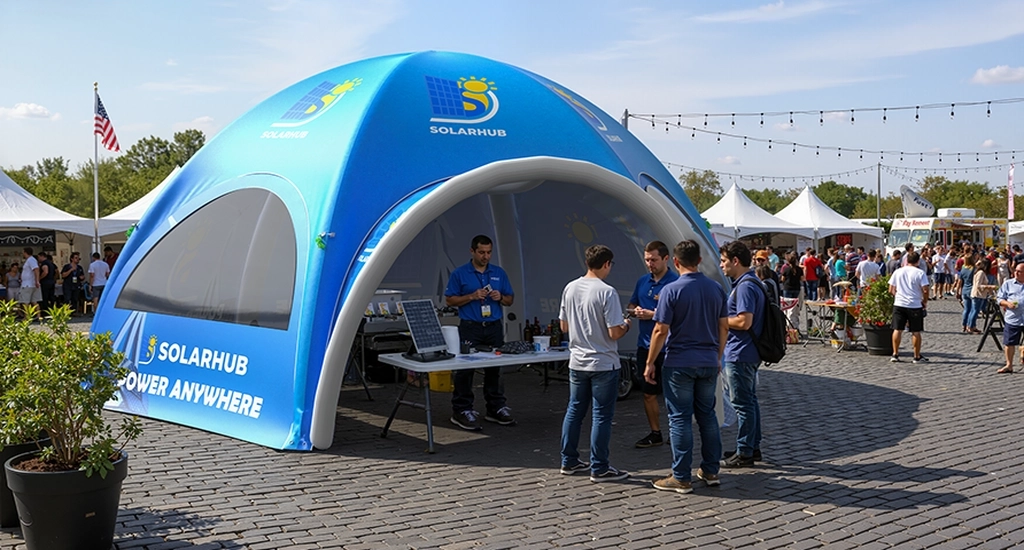
For a sponsored cycling event or branded sports competition, a custom inflatable structure can create a more identifiable activation area while still providing usable space for tables, products, staff, and visitor interaction.
Start and Finish
Running and cycling events have a different requirement at the start and finish: long-distance visibility.
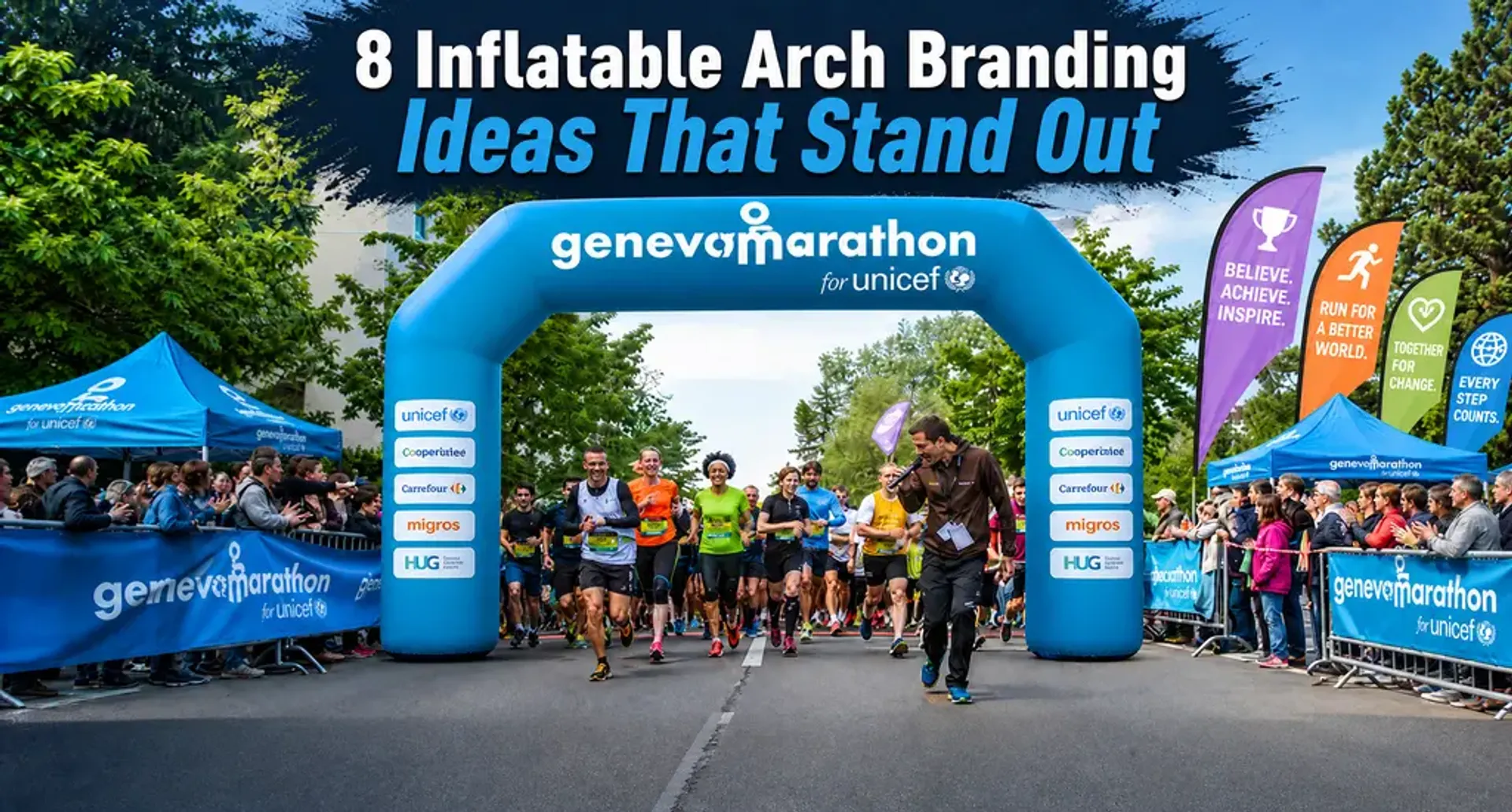
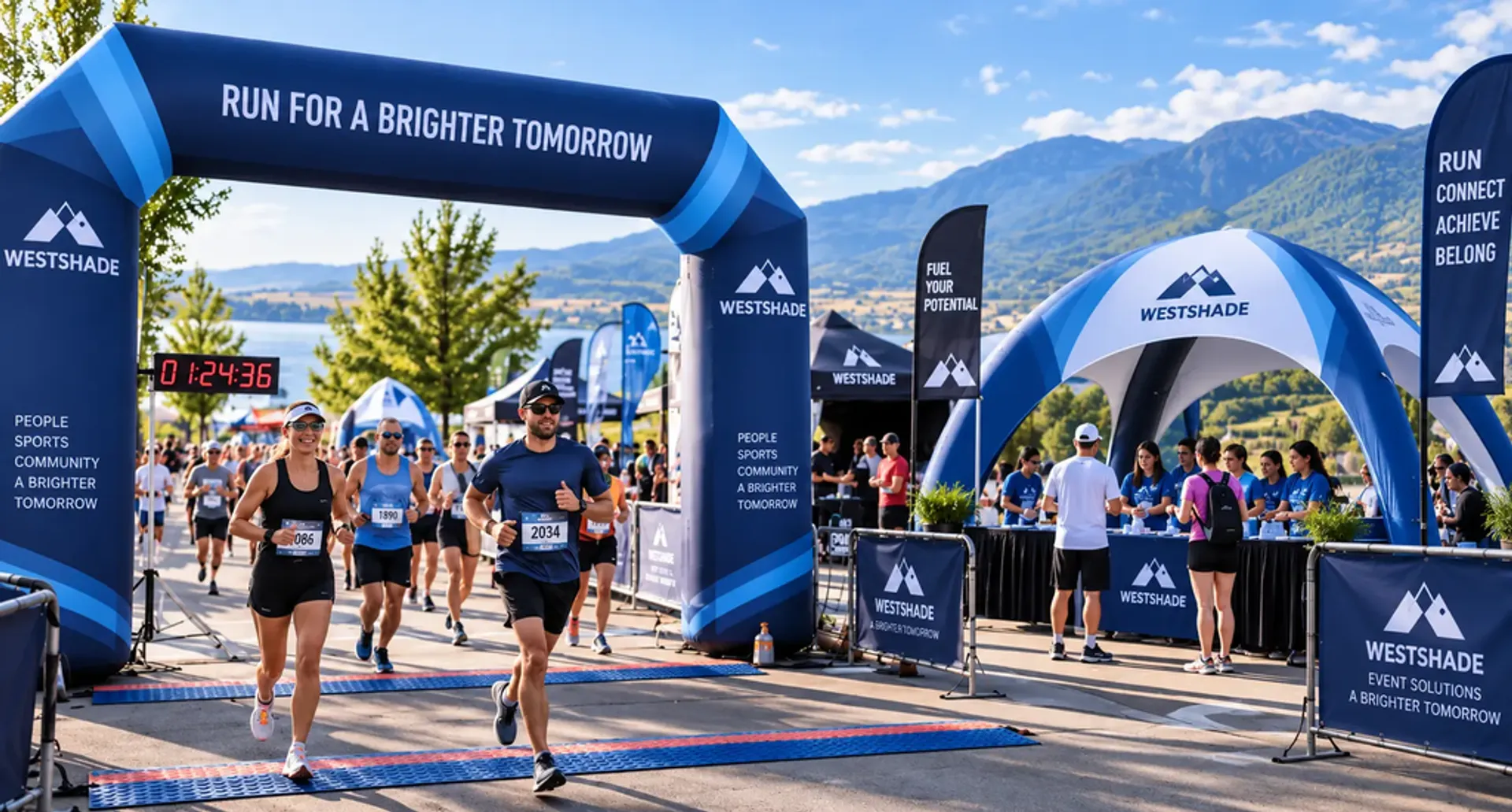
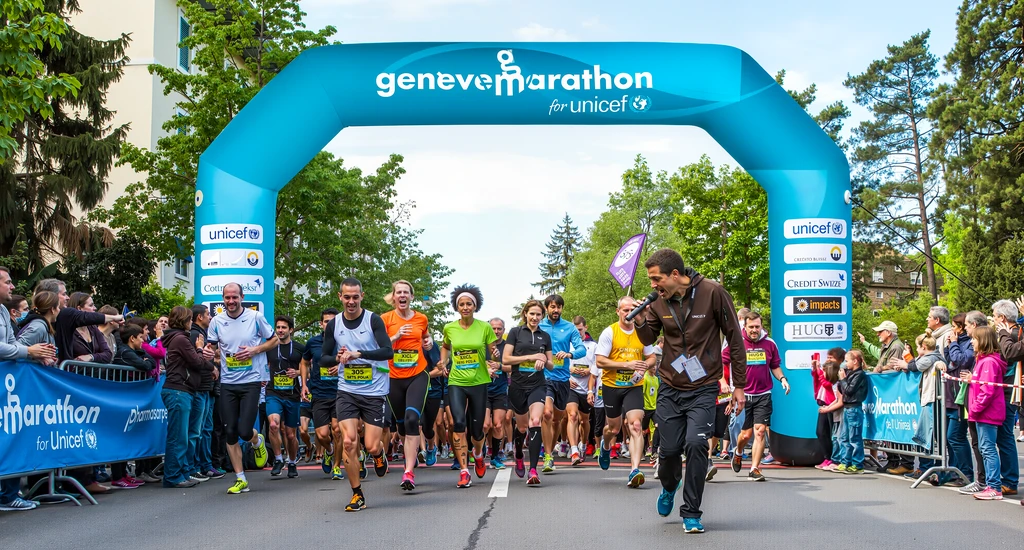
An inflatable arch can define a start, finish, or major event entrance while carrying event or sponsor branding overhead.
A marathon setup, for example, might use an inflatable arch at the finish line, with separate inflatable tents nearby for timing staff, recovery operations, or sponsor activities. Each structure performs a different job instead of forcing one area to handle everything.
4. Choose the Tent Around What Happens Inside It
A common mistake is choosing an event structure first and deciding how to use it afterward.
A better approach is to start with the activity that needs to happen inside the space.
For a registration area, consider how many staff members will operate the station, how many tables or check-in devices are needed, where participant materials will be stored, and how people will enter and leave the area.
For an athlete or team area, think about seating, equipment storage, hydration, and how many participants may use the space at the same time.
For sponsor activations, determine whether the area is mainly for brand visibility or whether visitors need space for conversations, demonstrations, product displays, or interactive experiences.
After defining the function, evaluate the complete installed footprint.
An outdoor event tent requires more than the space occupied by the structure itself. You also need room for entrances, furniture, visitor movement, anchoring, and surrounding activity.
For example, a tent may technically fit within the available area, but if the entrance faces a participant queue or a high-traffic walkway, it can create congestion instead of improving event flow.
Before selecting your setup, confirm:
- Available event space and surrounding activity areas
- Number of staff and expected visitors
- Furniture, equipment, and storage requirements
- Entrance placement and traffic flow
- Ground conditions and anchoring requirements
- Venue restrictions for temporary structures
- Required branding visibility from surrounding areas
This approach turns tent selection into an event-planning decision rather than simply choosing a size. The right structure is the one that supports how the space will actually be used.
5. Build Your Equipment Plan Zone by Zone
Once the site is mapped, build the final checklist around each functional zone.
A practical plan might look like this:
| Zone | Temporary Structure | Supporting Equipment |
|---|---|---|
| Registration | Inflatable Event Tent | Tables, chairs, check-in equipment |
| Athlete Area | Sports Event Tent | Seating, hydration, equipment storage |
| Operations | Inflatable Tent | Radios, timing equipment, power |
| Start / Finish | Inflatable Arch | Timing equipment, barriers, signage |
| Sponsor Activation | Custom Inflatable Tent | Tables, displays, promotional materials |
You may discover that some areas do not need a structure at all. A simple hydration station, for example, might only require tables, water, and waste bins.
That is exactly the point.
The goal is not to place an inflatable tent everywhere. It is to use temporary structures where they solve several event-day problems at once: shelter, organization, visibility, and branding.
Turn an Open Venue Into an Organized Event Space
Outdoor sports organizers are often working with venues that were never designed specifically for their event.
The right equipment turns that temporary space into a venue participants can understand and staff can operate efficiently.
Start by identifying what needs to happen on event day. Create functional zones around those activities. Then determine which areas need shelter, a recognizable landmark, or stronger branding.
For a small tournament, that may mean one sports event tent for check-in and staff operations. A community race may add an athlete or recovery tent. A larger marathon or cycling event may use multiple inflatable tents together with an inflatable arch to establish registration, operations, sponsor, and start/finish areas.
In each case, the inflatable structure has a specific operational purpose.
If your event needs temporary structures that combine usable space with high-visibility custom branding, explore WestShade Custom Inflatable Solutions for inflatable tents, arches, and configurations designed for outdoor events.