



Choosing an inflatable tent size is not simply about how many people can stand underneath it.
The better question is: What needs to happen inside the tent?
A 10x10 tent may be enough for a check-in table and two staff members. A product demonstration, sampling station, equipment display, or seating area will require more working space.
You also need to consider furniture, inflatable legs, visitor movement, sidewalls, equipment storage, and the additional space required for anchoring or extensions.
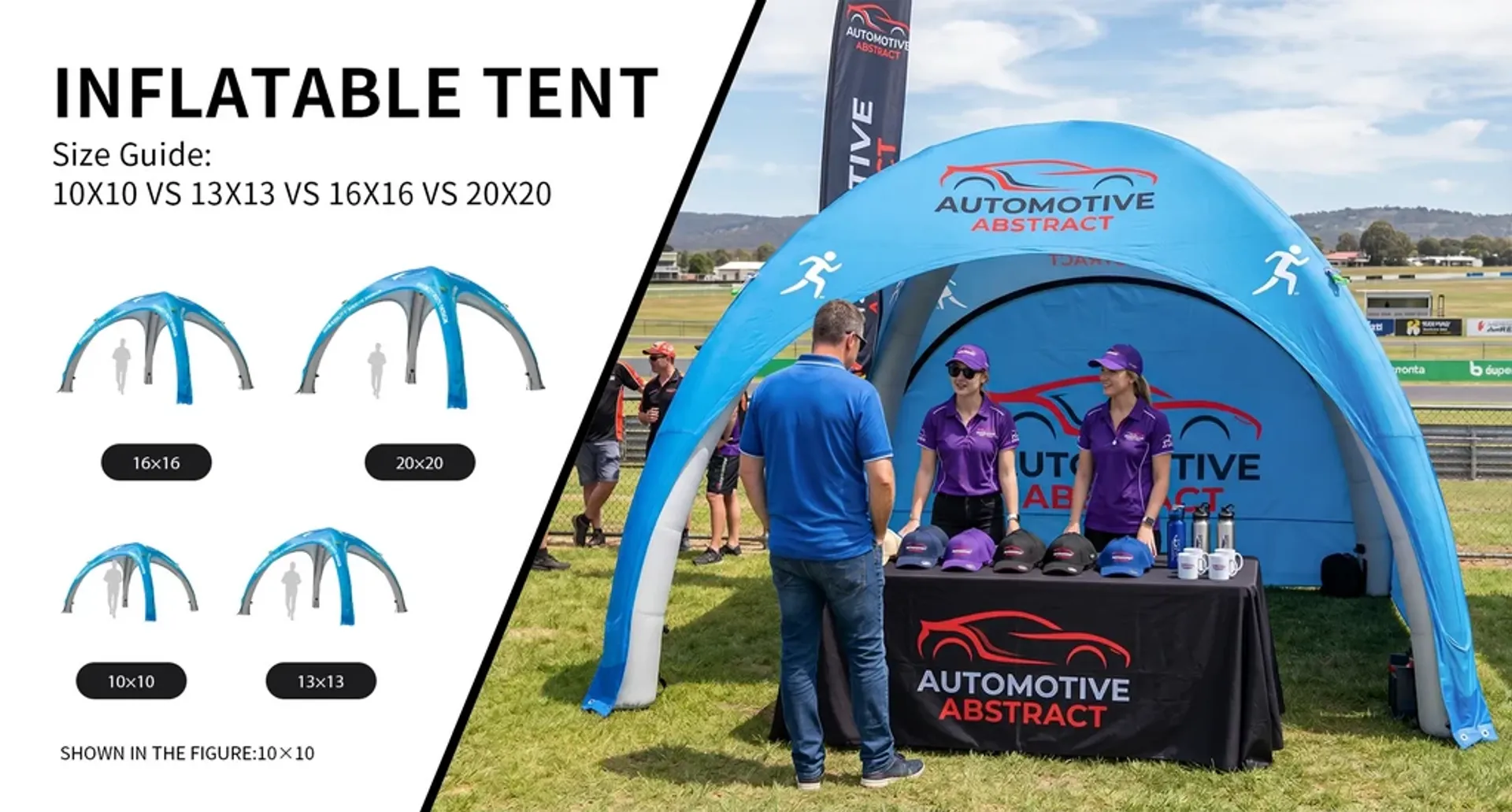
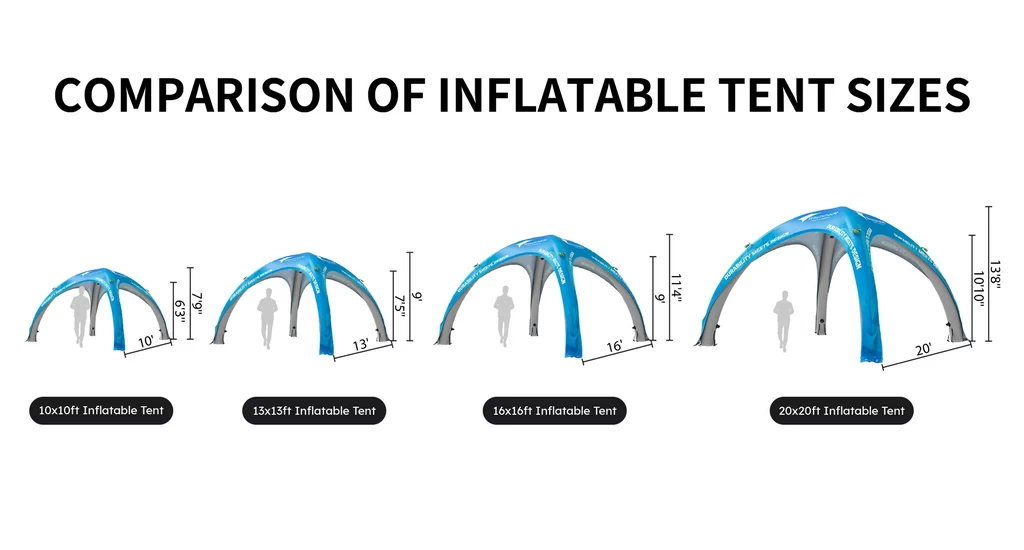
This guide compares 10x10, 13x13, 16x16, and 20x20 inflatable event tents to help you choose a size that fits your event without paying for space you will not use.
Inflatable Tent Sizes at a Glance
The following are planning examples, not official occupancy ratings. Actual usable space depends on the tent design, inflatable legs, furniture, sidewalls, and venue requirements.
| Tent Size | Nominal Area | Area vs. 10x10 | Best For |
|---|---|---|---|
| 10x10 | 100 sq. ft. | — | Check-in, information booths, compact promotions |
| 13x13 | 169 sq. ft. | +69% | Product displays, sampling, small activations |
| 16x16 | 256 sq. ft. | +156% | Demonstrations, sports events, visitor engagement |
| 20x20 | 400 sq. ft. | +300% | Large activations and multi-zone setups |
More floor area does not simply mean more people can fit inside. The extra space can separate visitors from staff, equipment, storage, and product displays.
Start With the Activity, Not the Headcount
Before choosing a size, list everything that needs to fit inside:
-
Staff members
-
Tables or counters
-
Product displays
-
Samples or merchandise
-
Monitors and electronics
-
Chairs or lounge furniture
-
Equipment and storage
-
Lead-capture or checkout stations
Then consider how visitors will use the space.
Will they interact from outside the tent, or walk inside for a demonstration? Will staff need room to move behind a counter? Will several activities happen at the same time?
A tent may technically fit all of your equipment and still feel too small if staff and visitors cannot move comfortably.
Choose your tent based on what needs to happen inside it—not simply how many people need to stand under it.
10x10 vs. 13x13 vs. 16x16 vs. 20x20 Inflatable Tents
10x10: Best for Compact Event Setups
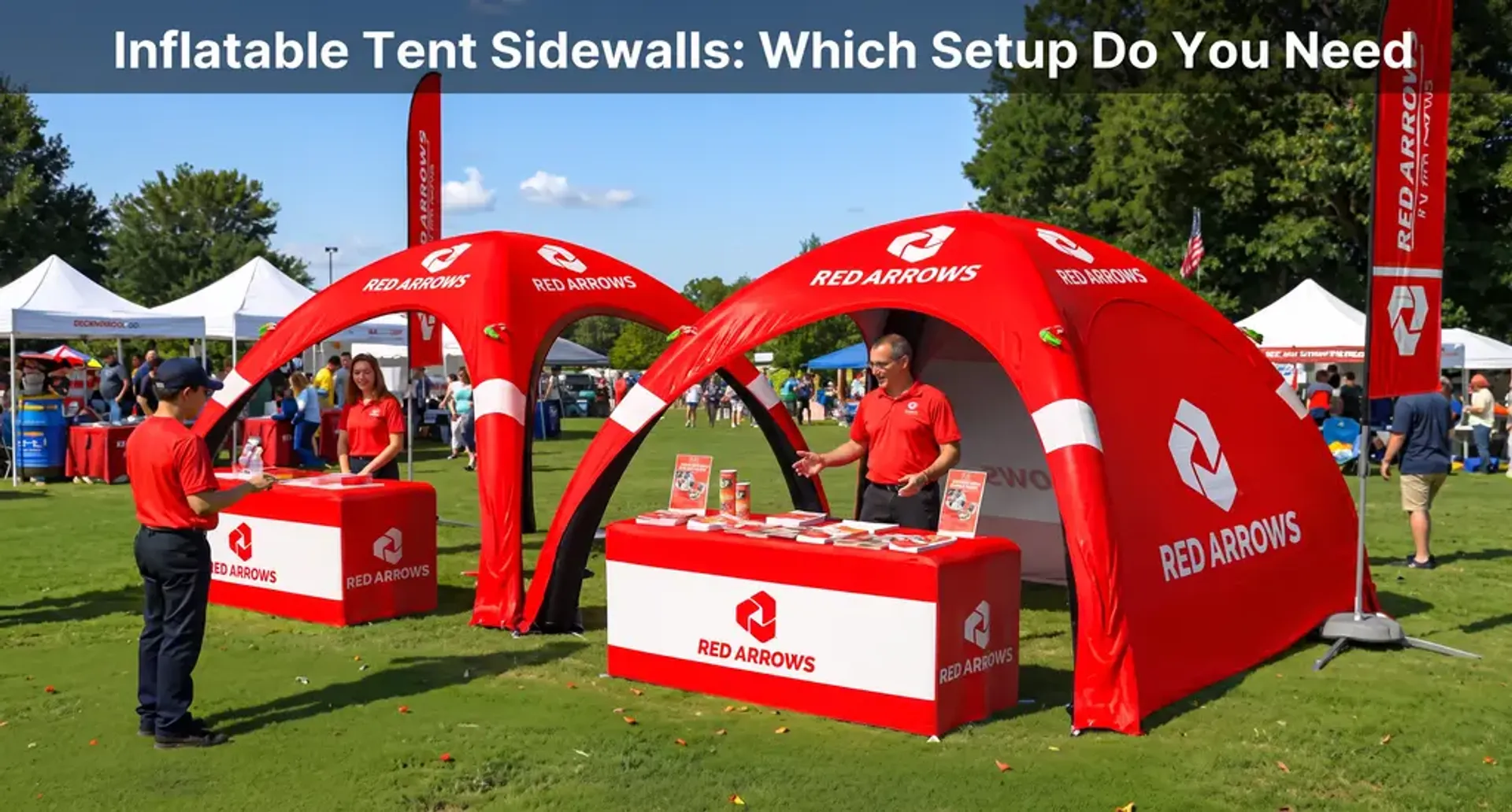
A 10x10 inflatable tent provides 100 square feet of nominal space and works best as a single service or interaction point.
Best for: event registration, information booths, small vendor setups, local promotions, and compact product sampling.
Typical setup: one 6FT table or compact counter, one or two staff members, limited equipment, and a clear visitor-facing side.
If a table is placed directly across the entrance, visitors will usually remain outside. Moving it to one side can create room for people to step inside.
Choose 10x10 if your event focuses on short interactions and does not require separate areas for demonstrations, storage, or seating.
13x13: More Room for Staff and Visitors
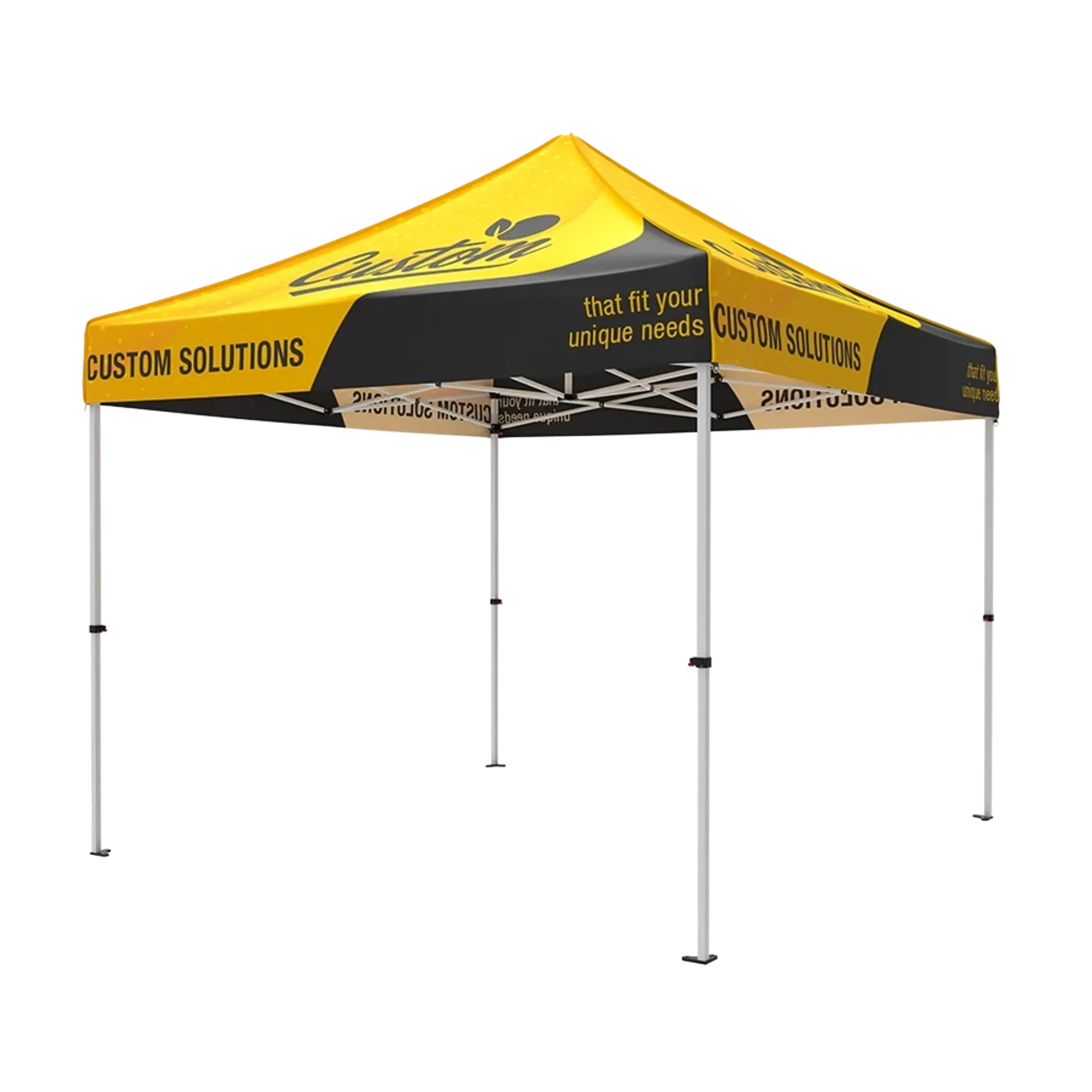
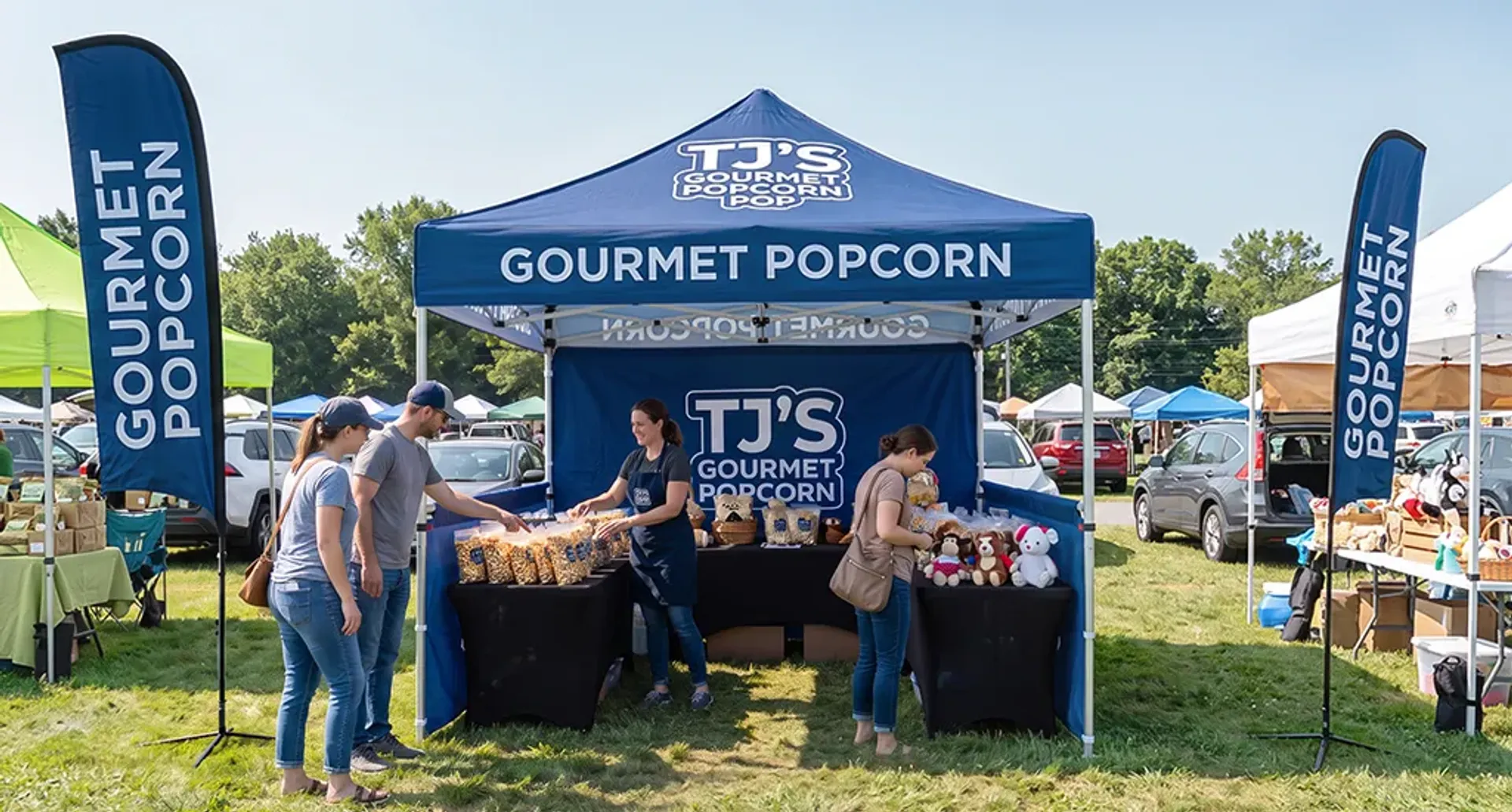
A 13x13 provides 169 square feet—approximately 69% more nominal area than a 10x10.
Best for: product displays, sampling, small brand activations, merchandise, and compact demonstrations.
Typical setup: one welcome counter, one product or display area, two or three staff members, limited storage, and room for visitors to enter.
The main advantage is not simply more capacity. It gives staff and visitors enough room to use the tent at the same time without making the entrance feel crowded.
Choose 13x13 if a 10x10 feels restrictive, but you do not need multiple activity zones.
16x16: Best for Engagement and Demonstrations
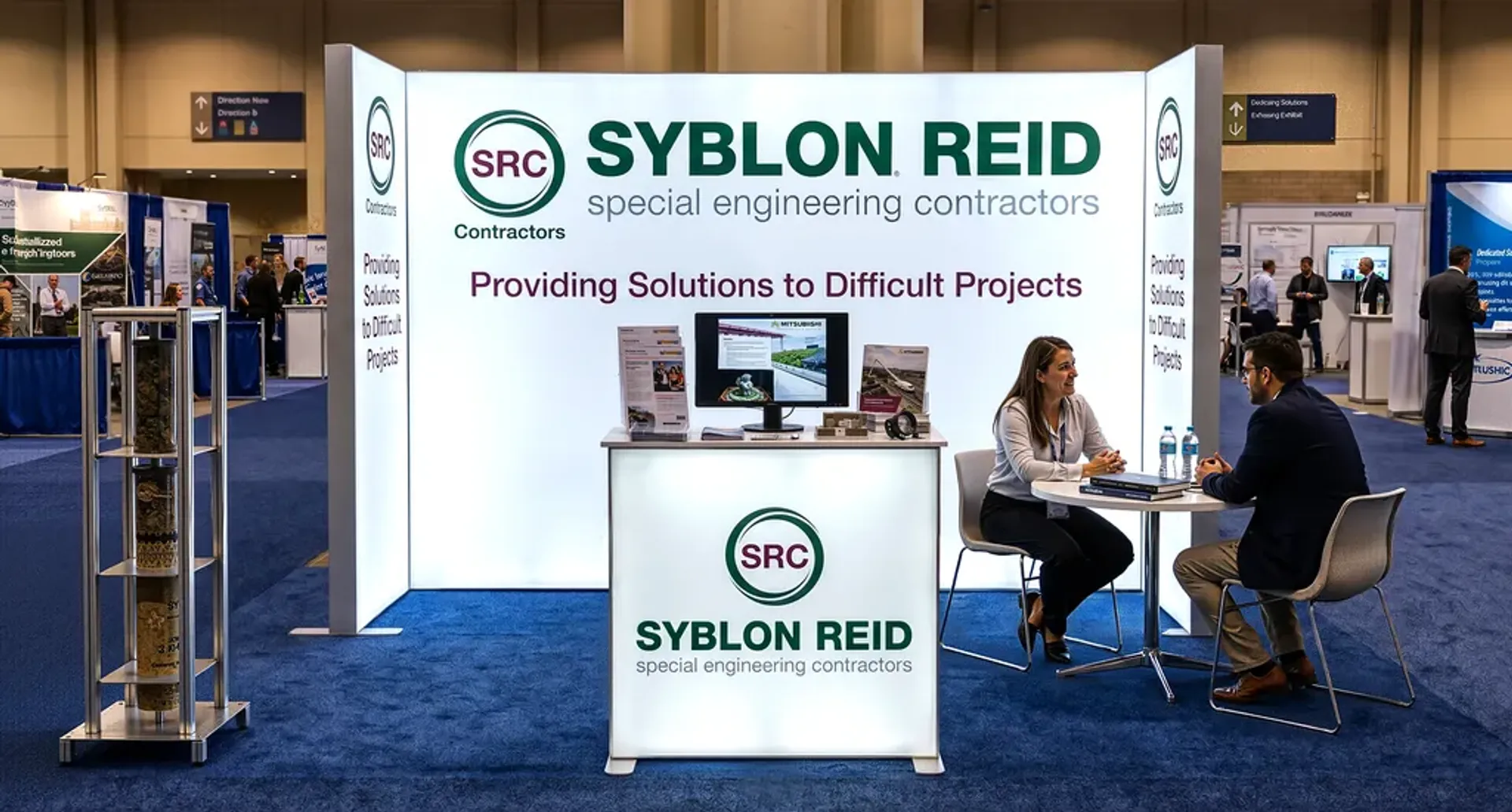
A 16x16 provides 256 square feet of nominal area—more than two and a half times the area of a 10x10.
Best for: interactive demonstrations, equipment displays, sports events, larger sampling programs, and brand experience zones.
A typical layout can include a reception station, demonstration area, product displays, and space for equipment or storage.
The key advantage is the ability to separate activities. Visitors can engage with your product while staff still have room for operations and equipment.
Choose 16x16 if visitors need to enter the tent, interact with your brand, and stay for more than a brief conversation.
20x20: Best for Multiple Activity Zones
A 20x20 provides 400 square feet of nominal area—four times the area of a 10x10.
Best for: large brand activations, product launches, hospitality areas, outdoor pop-up stores, sports events, and multi-team operations.
The space can support separate zones for reception, demonstrations, visitor conversations, merchandise, and equipment storage.
At this size, visitor circulation becomes as important as floor area. Avoid filling the entire interior with furniture. Visitors should be able to clearly understand where to enter, engage, and exit.
Choose 20x20 if several activities need to happen at the same time.
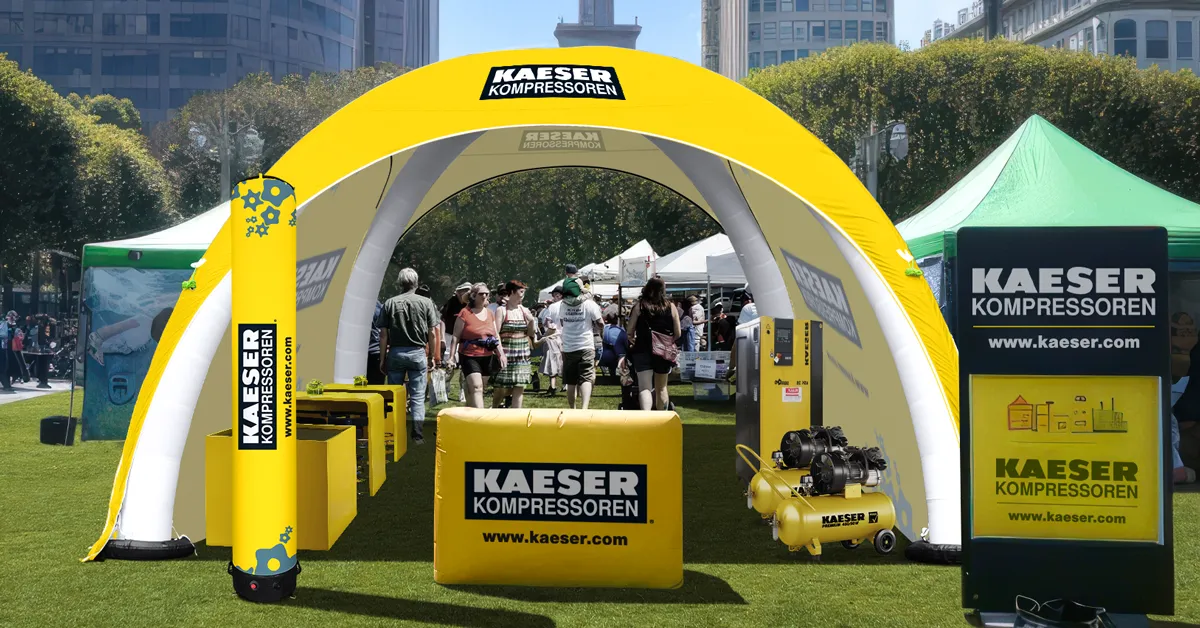
Nominal Tent Size vs. Your Actual Event Footprint
One of the most common planning mistakes is assuming the listed tent size is the only space you need.
A 10x10 inflatable tent does not necessarily mean the complete setup fits inside a 10x10 event space.
Depending on the configuration, you may also need room for:
-
Inflatable legs and structural clearance
-
Sidewalls
-
Awnings or extended sections
-
Guy ropes and anchoring points
-
Ground stakes or ballast
-
Visitor queues
-
Emergency and service access
Before ordering, confirm the complete deployed footprint, not just the nominal tent size.
Do not reserve a 10x10 event space and assume every tent labeled "10x10" will fit once extensions and anchoring are included.
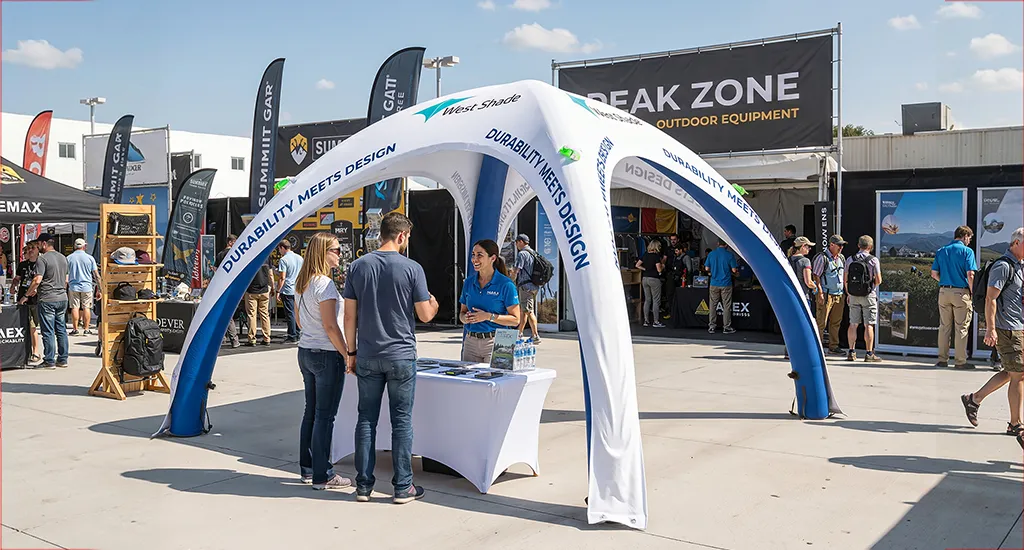
How Sidewalls and Tent Design Affect Usable Space
The listed footprint is only part of the space calculation.
Sidewalls can change how visitors enter and move through the tent. An open configuration allows access from multiple directions, while several full walls create a more enclosed space with fewer entry points.
Tent design can also affect usable space. Two tents with the same nominal dimensions may have different leg spacing, entrance widths, or roof structures.
When comparing options, check:
-
Distance between inflatable legs
-
Entrance width
-
Center height
-
Sidewall configuration
-
Available space for furniture
-
Main visitor approach direction
The same listed size does not always mean the same usable event space.
5 Things to Check Before Choosing a Size
Before ordering, ask:
1. What furniture and equipment must fit inside?
Measure tables, counters, displays, chairs, and storage.
2. Will visitors enter the tent?
A service counter requires less space than an interactive demonstration.
3. How many staff members will work inside?
Consider working and movement space, not just headcount.
4. Will you add sidewalls or extensions?
Walls affect visitor flow, while extensions increase the total footprint.
5. How much space has the venue approved?
Confirm clearance, anchoring requirements, ballast, guy ropes, and fire lanes.
Choose Your Size in 30 Seconds
Choose 10x10 if:
You need one compact service point for check-in, information, or sampling.
Choose 13x13 if:
Visitors need room to enter, browse, and interact with staff.
Choose 16x16 if:
You need a dedicated demonstration or engagement area.
Choose 20x20 if:
Several functions—such as reception, demonstrations, seating, and storage—need to operate at the same time.
If you are between two sizes, map your planned furniture and activity zones before ordering.
Find the Right Inflatable Tent Size for Your Event
The best inflatable tent is not necessarily the largest one.
It is the size that supports your event activity, fits the approved site, and gives staff and visitors enough room to move comfortably.
Start by identifying what needs to happen inside the tent. Then compare the usable space and complete event footprint—not just the size in the product name.
Explore WestShade's custom inflatable tent options in 10x10, 13x13, 16x16, 20x20, and larger configurations. Share your event requirements, planned layout, furniture, and branding needs, and our team can help recommend a suitable configuration and prepare a free custom design mockup.
Frequently Asked Questions
How Long Does It Take to Set Up an Inflatable Tent?
Setup time depends on the tent size and configuration. Inflation is usually quick, but allow additional time for positioning, securing the tent, and setting up accessories.
Can I Use an Inflatable Tent Indoors?
Yes, as long as the venue has sufficient ceiling clearance and approves the setup. Check the tent's dimensions and any venue safety requirements in advance.
Do Inflatable Tents Need Continuous Power?
Not all of them. Sealed-air tents only need power for inflation, while some designs require a blower to run continuously. Check the specifications of your chosen model.
How Far in Advance Should I Order a Custom Inflatable Tent?
We recommend ordering as early as possible, especially for custom printing. Allow enough time for artwork approval, production, shipping, and any unexpected changes before your event.