




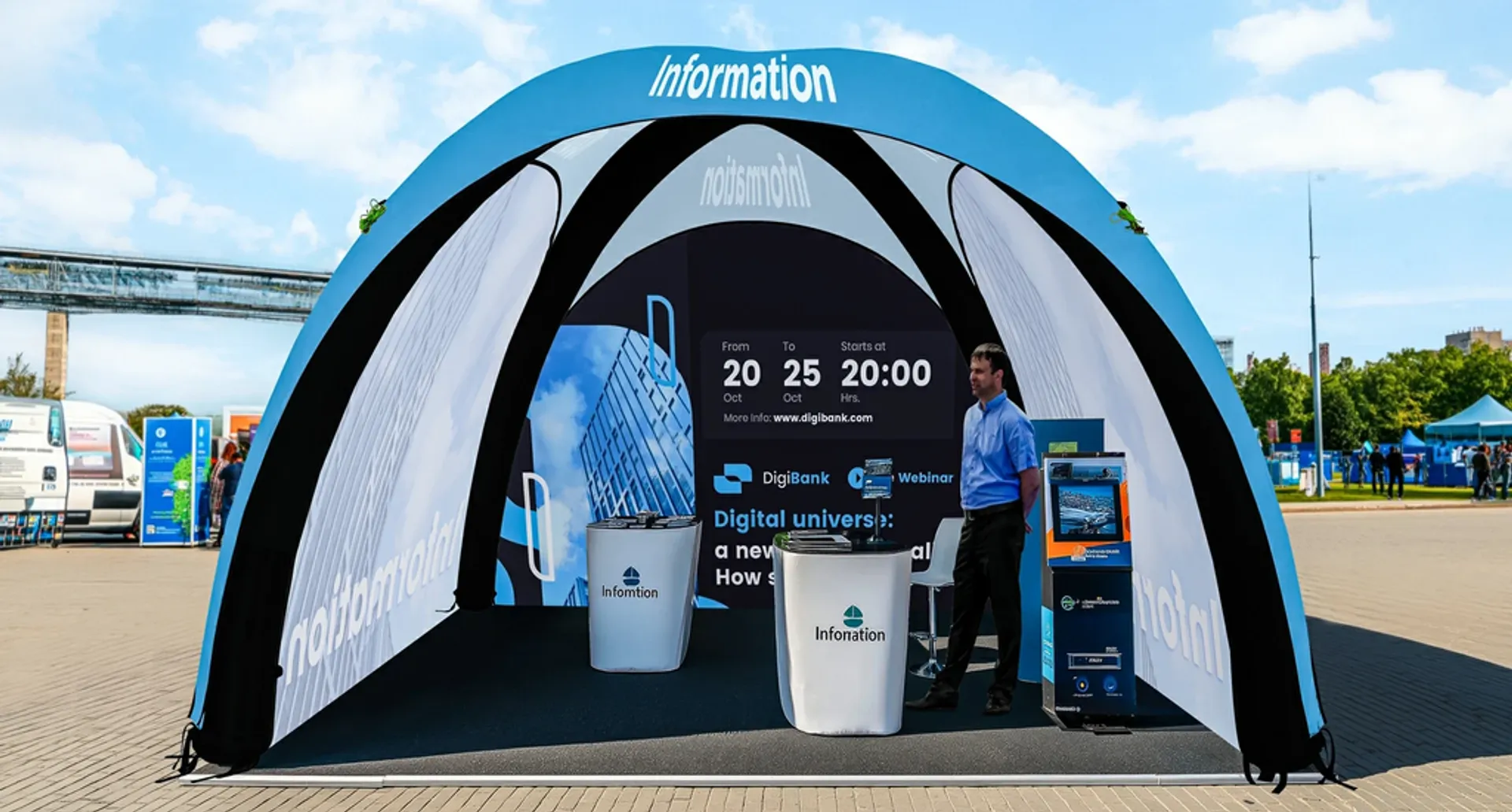
Inflatable tents have become a popular choice for outdoor events, trade shows, sporting events, brand activations, and emergency shelters because they are quick to set up and easy to transport. However, before purchasing one, you might wonder:
Do inflatable tents need constant air?
The answer depends on the inflation system used.
Currently, inflatable tents typically feature one of two system designs: sealed-air (requiring no continuous power) and constant air (requiring a blower during use).
Choosing between these systems impacts setup costs, noise levels, and the long-term user experience.
Therefore, understanding the differences between the two is crucial.
In this guide, we will analyze how these two systems work and compare their respective pros and cons, helping you choose the inflatable tent that best suits your needs.
What Determines Whether an Inflatable Tent Needs Constant Air?
There are two key factors that determine whether an inflatable tent needs continuous air: the type of inflatable tent and the material quality of the inflatable tent.
Understanding these two factors is essential when choosing between different inflatable tent designs, especially for outdoor events, trade shows, or commercial use.
Factor 1: The Type of Inflatable Tent
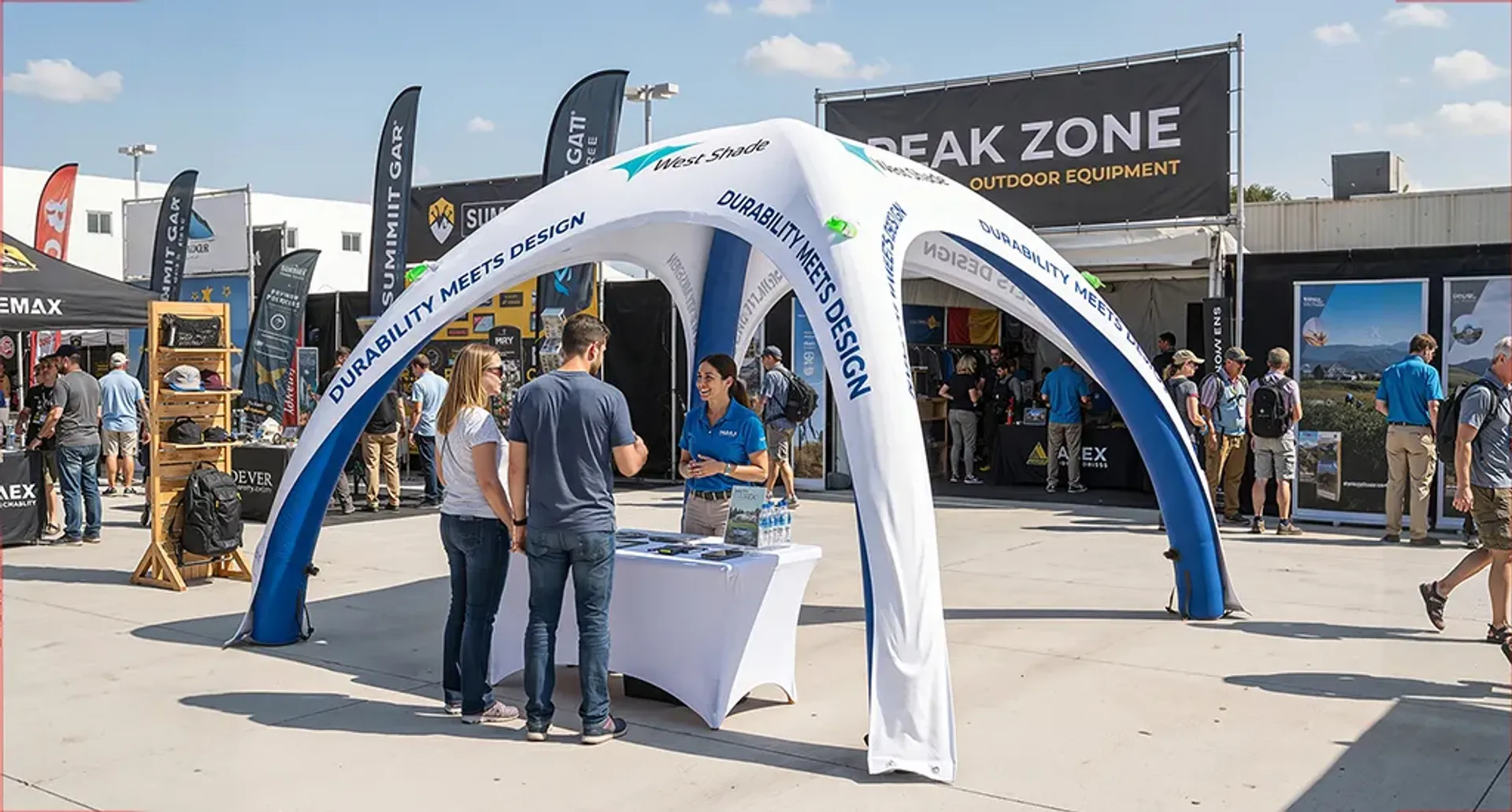
If you are purchasing an inflatable tent for trade shows, exhibitions, booths, or outdoor promotional events, the type of tent is the most critical factor. This is because setup time, noise levels, and reliability are all crucial considerations for such events.Today, inflatable tents generally fall into two categories: sealed-air inflatable tents and constant-air inflatable tents.
Sealed-Air Inflatable Tents (No Continuous Air Required)
Sealed inflatable tents feature an airtight air-beam and one-way valve design; consequently, once the tent is fully inflated, the valve closes, sealing the air inside the structure.
Because the air is sealed, the tent does not require a blower or continuous power supply to maintain its shape.
In real trade show setups, sealed-air inflatable tents typically maintain stable pressure throughout 2–5 day exhibitions without requiring re-inflation, even under temperature changes between day and night.Small pressure changes may occur due to temperature differences, but the overall structure remains stable.
Key benefits:
- No continuous power required
- Quiet operation (no blower noise)
- Easy to transport and set up
- Suitable for multi-day outdoor events
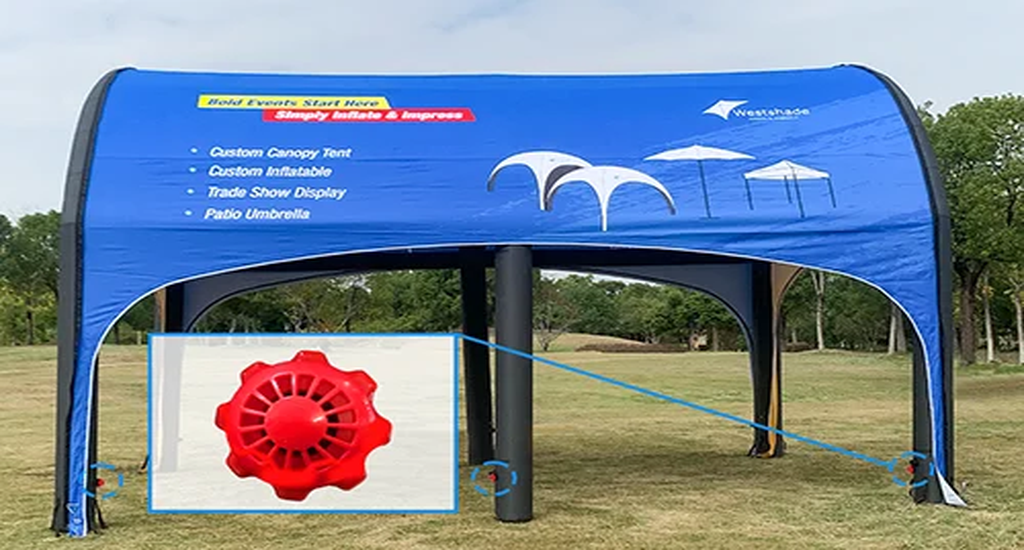
Constant-Air Inflatable Tents (Requires Continuous Airflow)
Constant-air inflatable tents require a blower system that operates continuously during use. Air is constantly supplied into the tent by the blower to maintain internal pressure.
Once the blower stops working or the power is cut off, the tent will gradually deflate.
Key benefits:
- Fast inflation process
- Stable structure under continuous airflow
- Suitable for short-term use
Constant-Air vs Sealed-Air Inflatable Tents (Key Comparison)
Choosing between these two systems depends entirely on the intended use case.
| Feature | Constant-Air System | Sealed-Air System |
|---|---|---|
| Air supply | Continuous blower required | One-time inflation |
| Power requirement | Required during use | Only during setup |
| Noise level | Noticeable | Silent |
| Setup complexity | Simple but ongoing | Simple and self-contained |
| Best use case | Short-term promotions | Commercial events |
From a commercial perspective, sealed air systems are increasingly favored by consumers due to their stable operation and low reliance on external equipment.
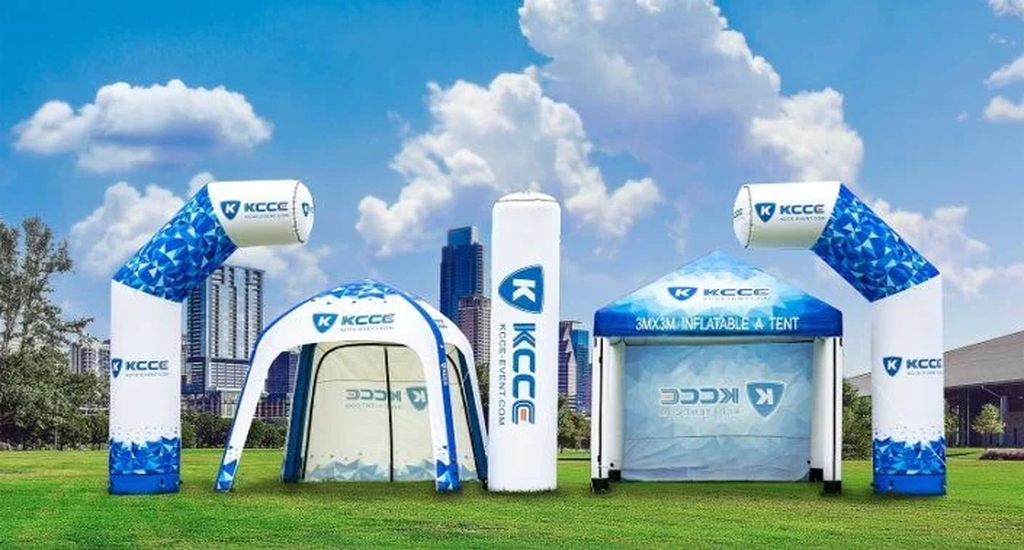
Factor 2: Air Beam Materials
Besides the inflatable tents types, material quality is another important factor that affects how long an inflatable tent can stay inflated.
Even sealed-air inflatable tents may experience slight pressure loss over time due to natural air permeability, temperature changes, and valve performance.
Why Material Quality Matters
High-quality air chamber materials can significantly enhance a tent's airtightness and overall durability, whereas low-quality materials may lead to accelerated air leakage and reduced stability.
Common high-performance materials include:
- TPU air bladders (high airtight performance and flexibility)
- Reinforced outer fabric layers
- Heat-welded seam construction for better sealing
Compared to many traditional materials, TPU air bladders offer lower gas permeability, helping inflatable tents maintain pressure and thereby extending their service life. Additionally, this material allows the tent to remain flexible across a wide temperature range, reducing stress on the air beams during repeated inflation and deflation.
Unlike stitched seams, heat-welded seams form a continuous, airtight connection and eliminate the needle-hole penetrations common in stitched constructions, significantly reducing the risk of long-term micro-leakage under repeated pressure cycles.
These materials help maintain internal pressure for longer periods and reduce the need for frequent adjustments, thereby extending the lifespan of the inflatable tent.
Therefore, understanding these materials when purchasing an inflatable tent helps ensure the acquisition of a higher-quality product and enhances the overall consumer experience. So, how can this knowledge be applied when actually purchasing a product?
How to Identify a High-Quality Inflatable Tent
Instead of focusing only on whether a tent uses a sealed-air or constant-air system, it's also important to evaluate the quality of its construction.
When comparing inflatable tents, look for features such as:
- TPU air bladders with excellent airtight performance
- Reinforced outer fabrics that resist abrasion and UV exposure
- Heat-welded seams instead of stitched air chambers
- High-quality inflation valves with reliable sealing
- Pressure-tested construction before delivery
These features directly affect how well a tent retains air, how often it requires maintenance, and how reliably it performs during multi-day events.
How Westshade Applies These Principles
Commercial inflatable tents designed for professional events typically require reinforced TPU air chambers and heat-welded seams to ensure stable performance during repeated setups. Westshade strictly adheres to this standard during production.
The material used for our inflatable tent not only helps maintain inflation but also reduces the need for maintenance and enhances structural stability during use, thereby ensuring the smooth operation of trade shows, sporting events, and other commercial applications.
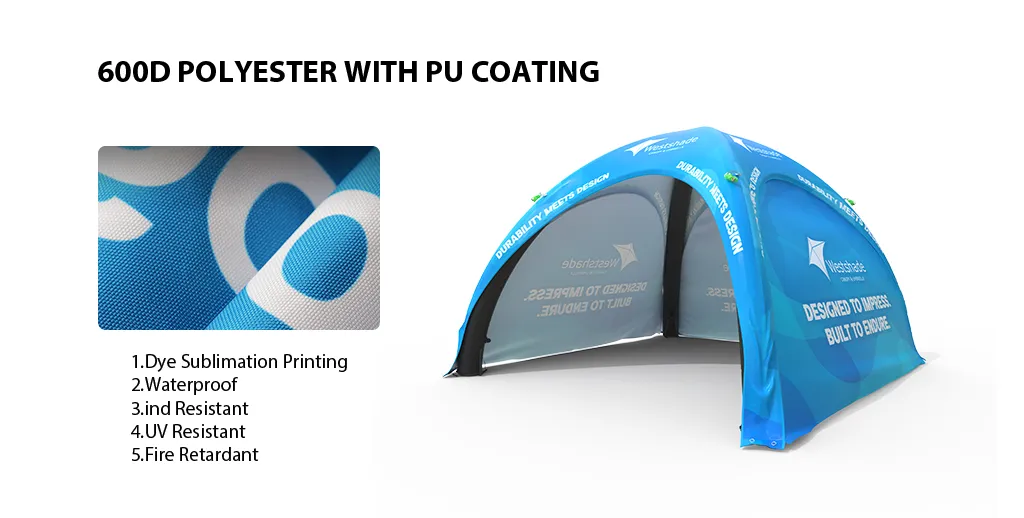
Which Inflatable Tent Should You Choose?
Selecting the right inflatable tent system depends on the conditions under which you plan to use it, particularly the duration of the event, setup requirements, and the operating environment.Many first-time buyers choose constant-air tents for outdoor exhibitions but later switch to sealed-air systems due to noise and power limitations during multi-day events.
Choose a constant-air inflatable tent if you need:
- Short-term promotional setups or roadshows
- Lightweight and cost-efficient entry-level solutions
- Fast inflation for temporary installations
- Events where continuous blower noise is not a concern
Constant-air systems are typically used for short-duration applications where ease of setup and lower initial investment are the main priorities.
Choose a sealed-air inflatable tent if you need:
- Multi-day trade shows or exhibition events
- Quiet, professional environments for customer engagement
- Minimal maintenance during operation
- Stable structures that do not require continuous power
Sealed-air systems are designed for commercial use cases where reliability, presentation quality, and operational efficiency are critical.Although sealed-air tents may experience slight pressure fluctuations under extreme temperature changes, this is a normal phenomenon for all inflatable structures.
Sealed inflatable tents are characterized by stability, quiet operation, and minimal reliance on external equipment, making them the industry standard for a wide range of commercial applications—including trade shows, corporate promotional events, sporting events, and outdoor brand exhibitions. If you have similar requirements, this type of tent is an excellent choice.
Frequently Asked Questions
Do inflatable tents need electricity?
Only constant-air inflatable tents require continuous electricity. Sealed-air inflatable tents only need power during inflation.
How long do inflatable tents stay inflated?
Sealed-air inflatable tents can remain inflated for extended periods, ranging from several hours to multiple days depending on conditions and usage.
Are inflatable tents good for commercial use?
Yes. Commercial-grade inflatable tents are widely used in trade shows, motorsports events, and outdoor brand activations due to their portability and durability.
Can inflatable tents handle outdoor weather?
Yes, when properly anchored. Performance depends on material strength, structural design, and installation quality.
Conclusion
Choosing the right inflatable tent depends on your event type, event duration, and operational requirements.
While constant-air inflatable tents remain a practical choice for short-term promotions and temporary installations, sealed-air inflatable tents have become the preferred solution for most professional commercial events. Their ability to stay inflated without continuous power, operate quietly, and maintain a clean, professional appearance makes them ideal for trade shows, exhibitions, brand activations, and other multi-day events.
For businesses that regularly participate in trade shows, exhibitions, or promotional events, investing in a high-quality sealed-air inflatable tent often provides greater long-term value. With lower maintenance requirements, simplified setup, and a more professional presentation, it helps reduce operational costs while creating a better experience for both staff and visitors.
If you're planning your next trade show, outdoor event, or brand activation, explore our custom sealed-air inflatable tents or contact our team for expert recommendations based on your project requirements.







)