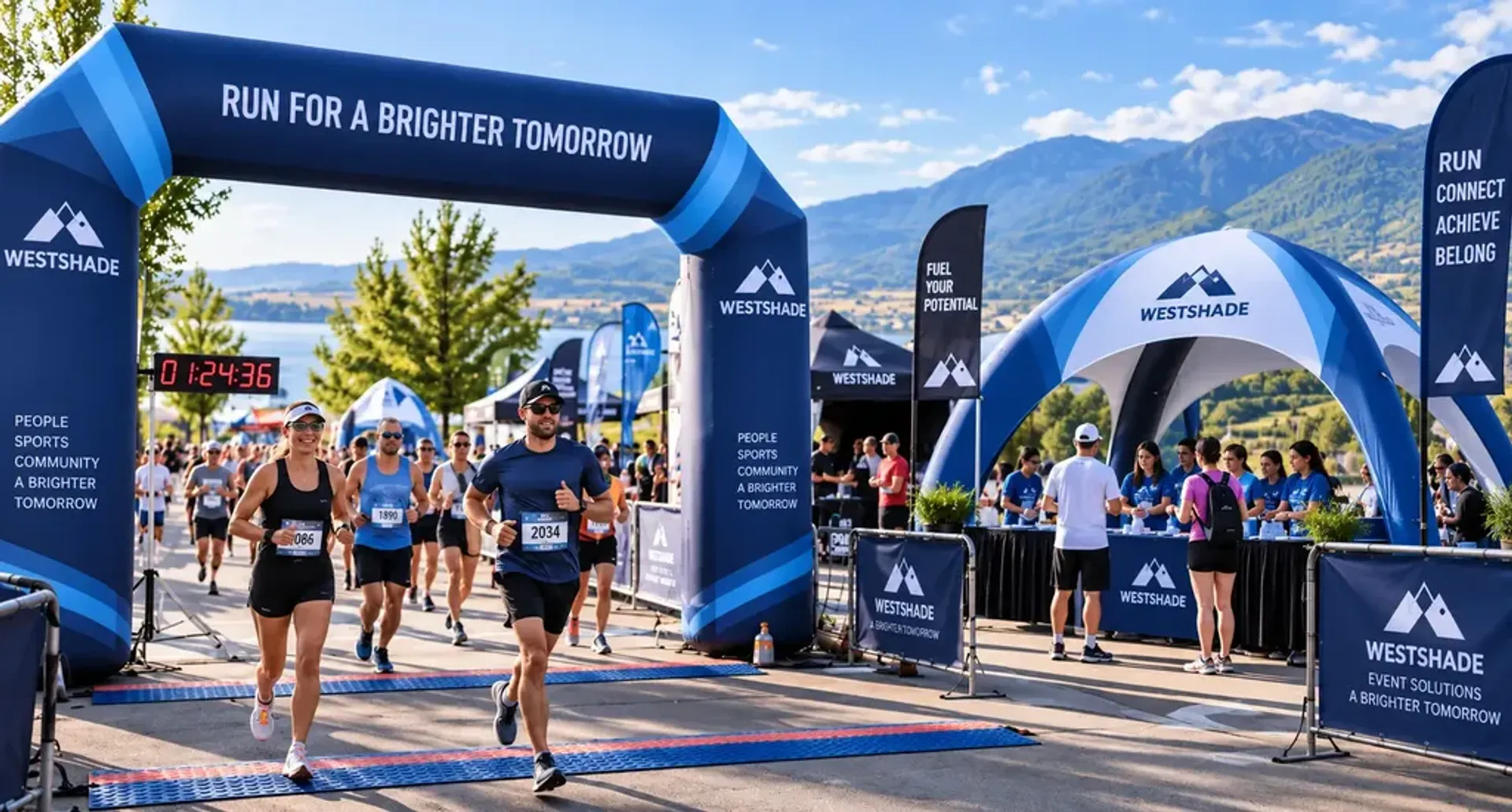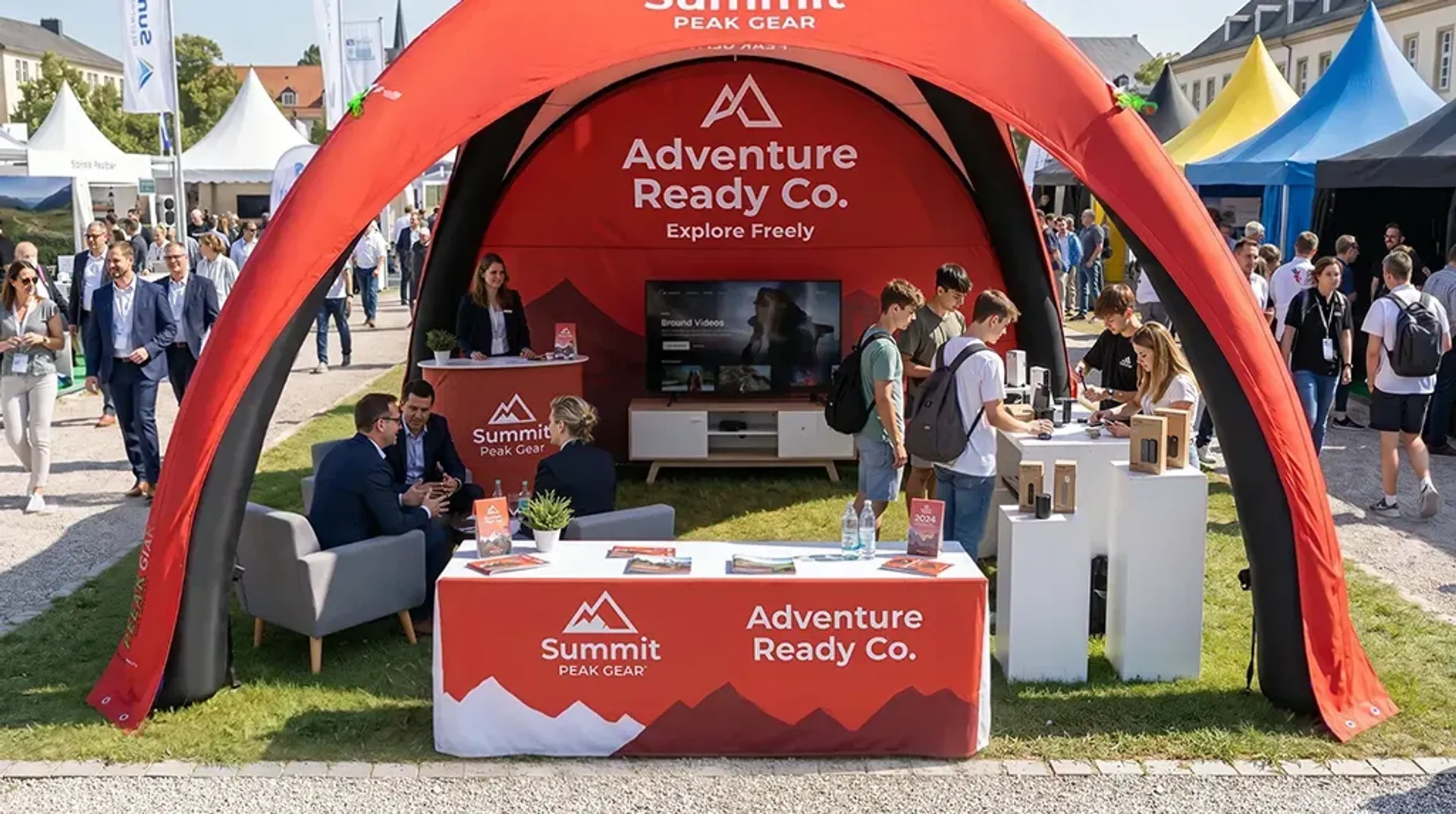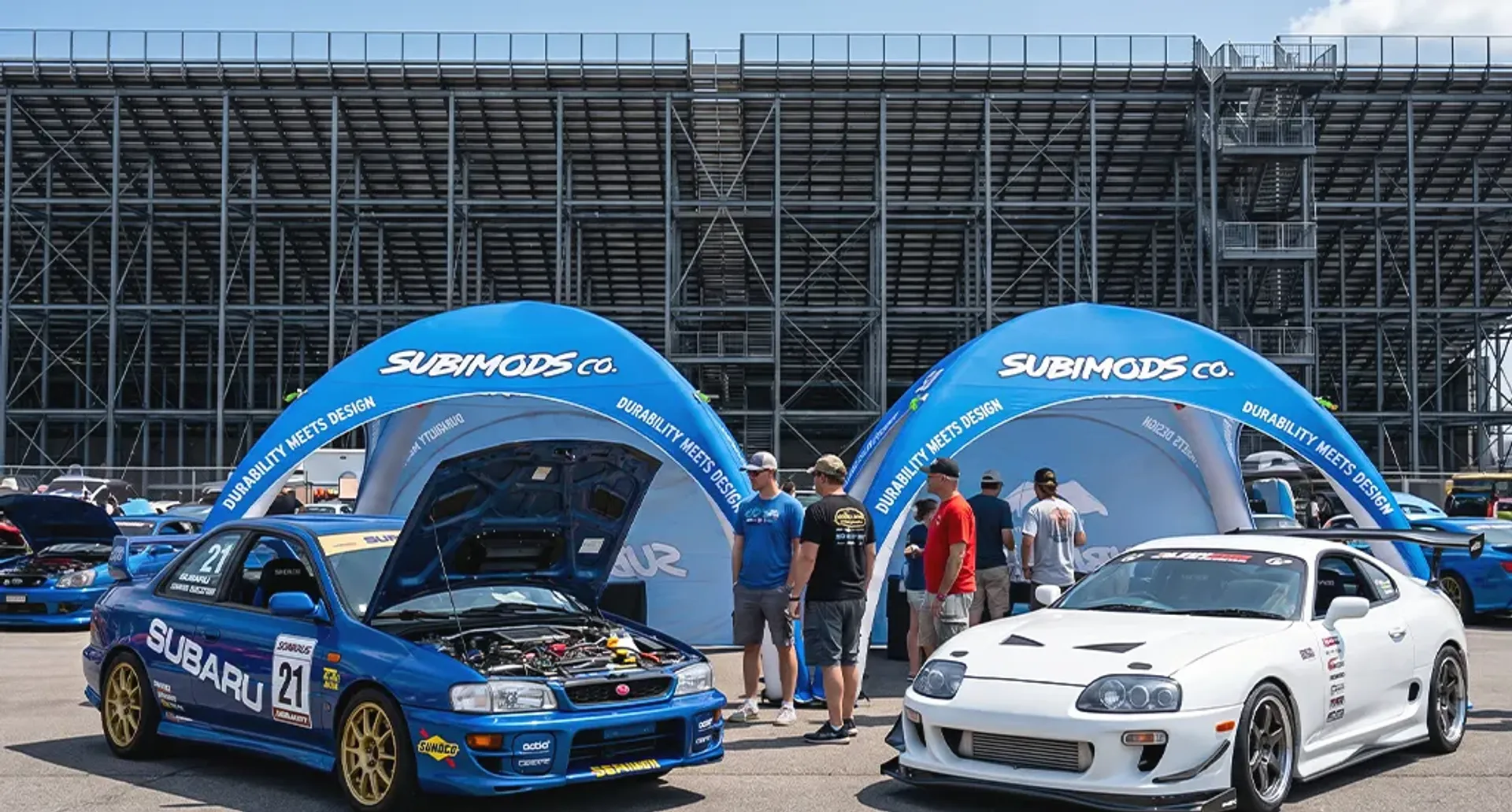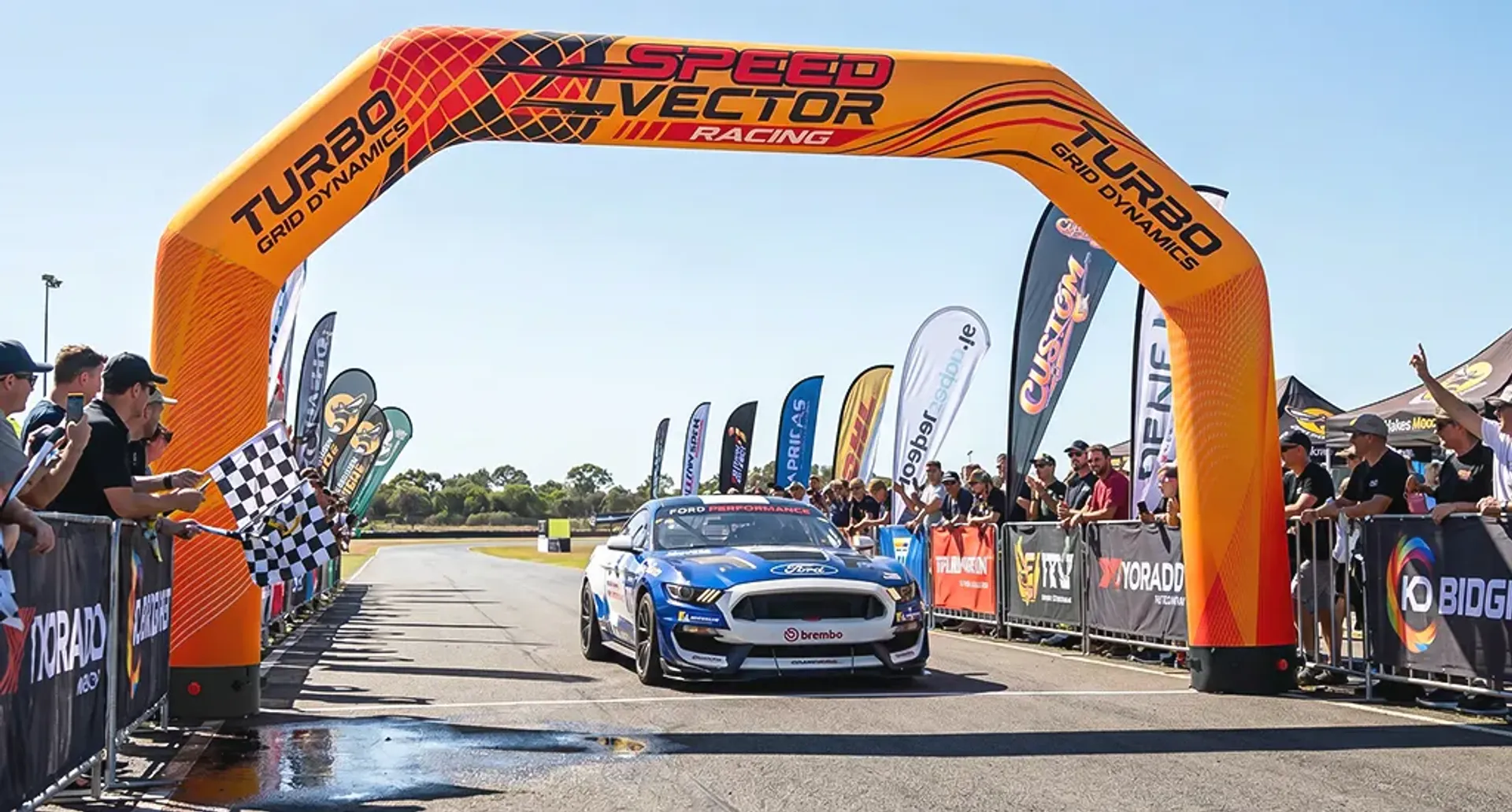






If you've spent any time in a pit lane, you know the drill. Unload the trailer, sort the frame pieces, wrestle with crossbars that never quite align, snap a plastic connector in the cold, start over. Forty minutes later, you've got a shelter that sags in the middle, blocks your workspace with center poles, and looks like every other tent in the paddock.
There's a better way. Custom inflatable tents are replacing traditional frame canopies at every level of motorsport—from grassroots club racing to international series—and the reasons go far beyond novelty.
The Pit Lane Reality
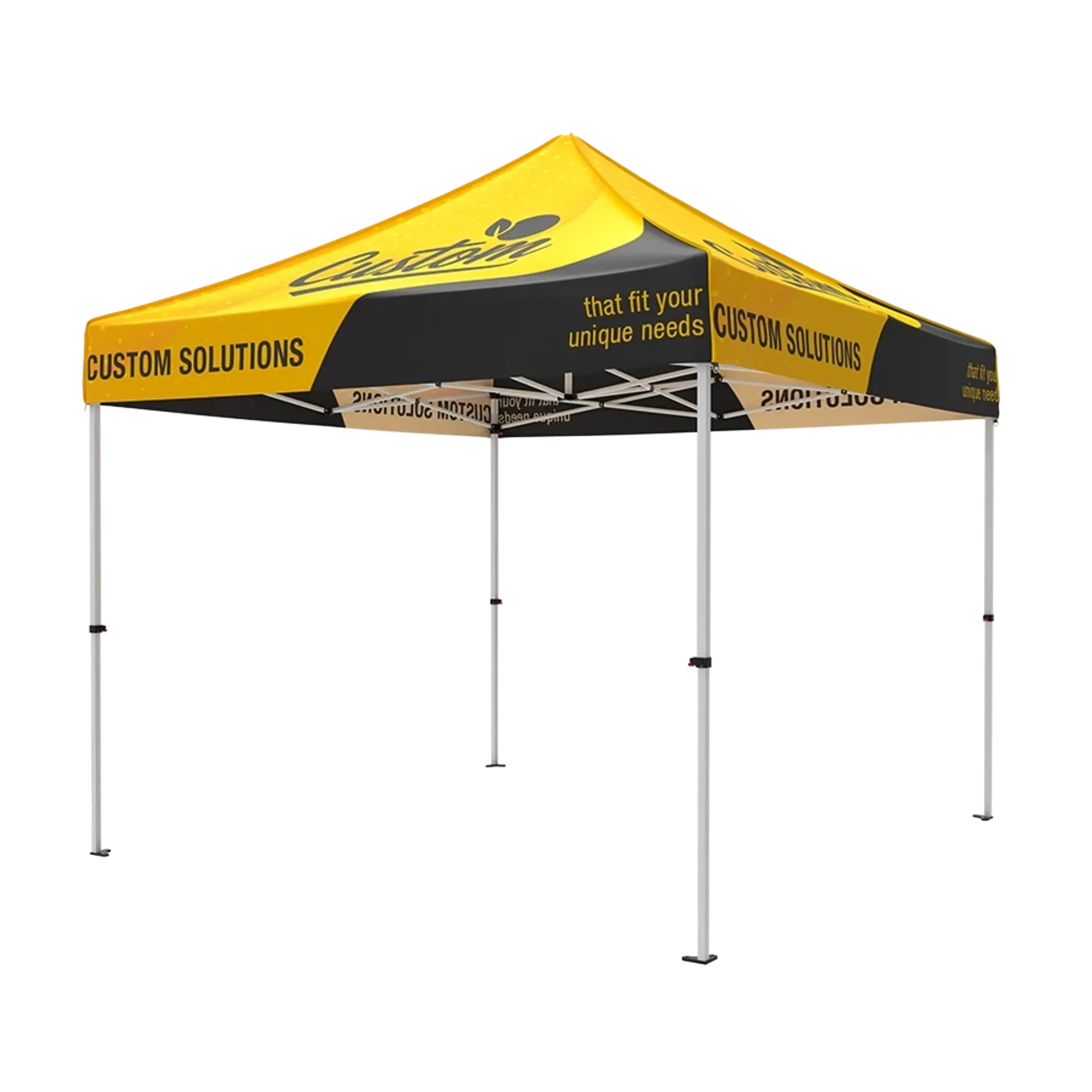
Your setup window is never as long as you want. Between practice sessions, qualifying, and races, you're working against the clock. Weather changes without warning. And your sponsors expect brand presence that looks professional on broadcast, not a popup canopy from the hardware store.
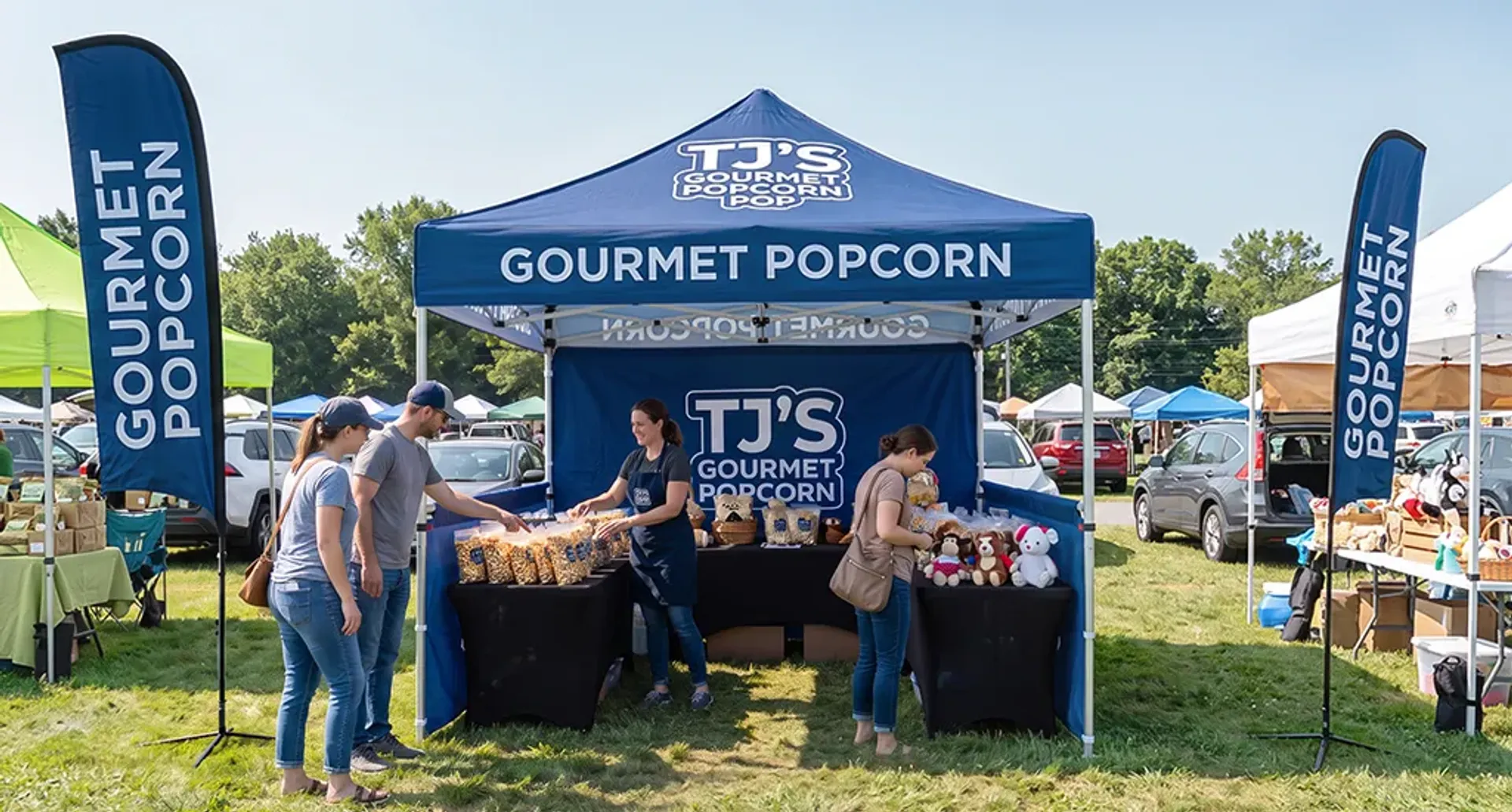
Traditional frame tents fail this test repeatedly. They need multiple people to assemble. Their center poles consume usable floor space exactly where you need to position equipment. In wind, they become sails; in rain, they leak at the seams. And when it's time to pack up for the next circuit, the breakdown is as tedious as the setup.
Inflatable printed tents for racing teams solve each of these problems systematically.
Speed: The Critical Advantage
A quality inflatable racing shelter deploys in 3 to 5 minutes with one person and an electric pump. Compare that to 30+ minutes and two or three crew members for an equivalent frame canopy.
This isn't just convenience—it's competitive advantage. Those 25 saved minutes translate directly into vehicle setup time, driver briefing, or simply a less frantic operation. When weather rolls in unexpectedly between sessions, the difference between a 5-minute emergency deployment and a 30-minute scramble can mean the difference between dry equipment and water-damaged electronics.
Breakdown is equally fast. Deflate, roll, pack. Your entire shelter system fits in compact transport bags that don't require a separate trailer.
Space: Every Square Meter Counts
Frame tents waste 15-20% of their floor area on structural elements—center poles, cross braces, guy rope footprints. In a pit lane where you're paying premium rates for every meter of space, that's unacceptable.
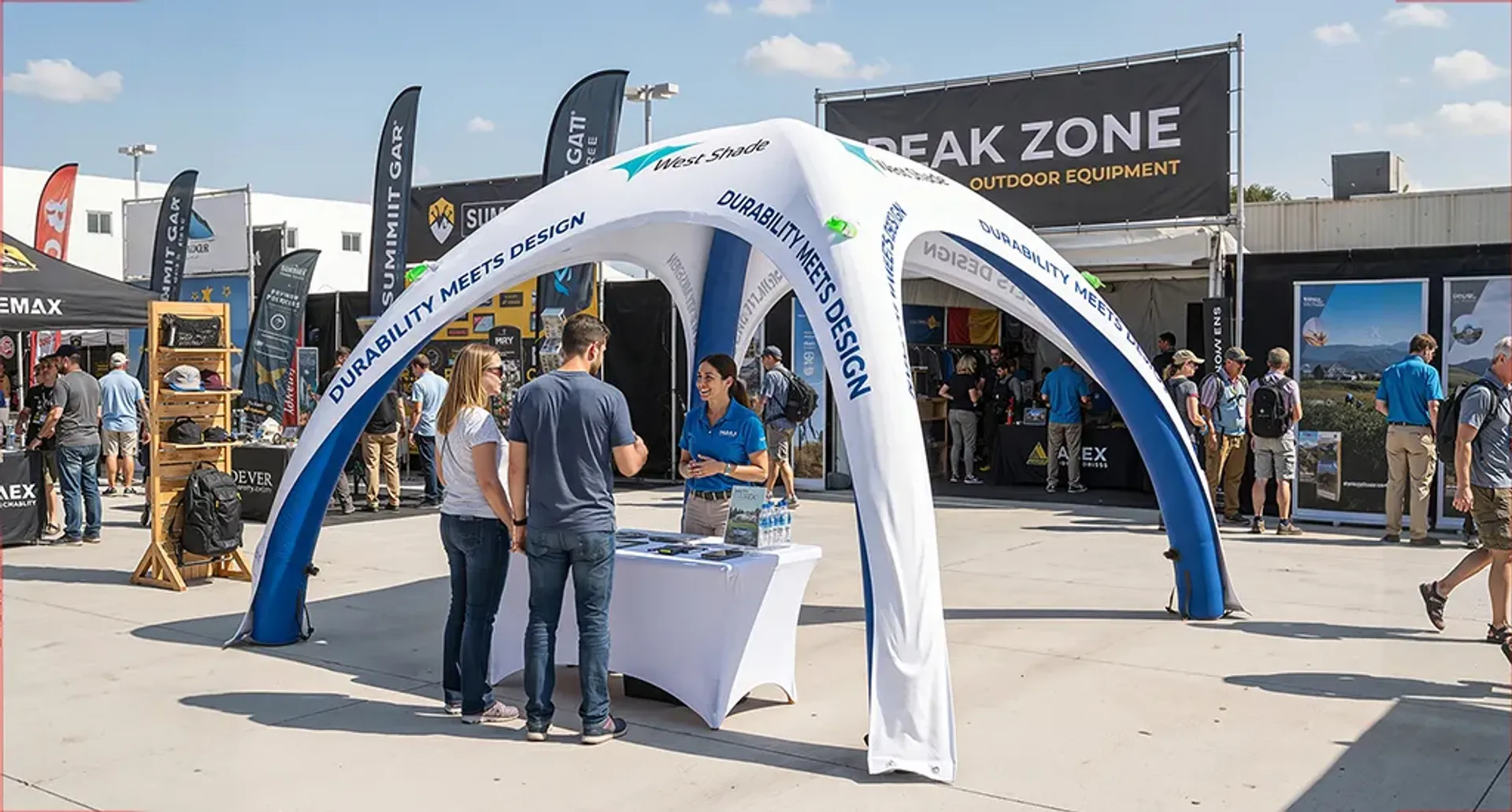
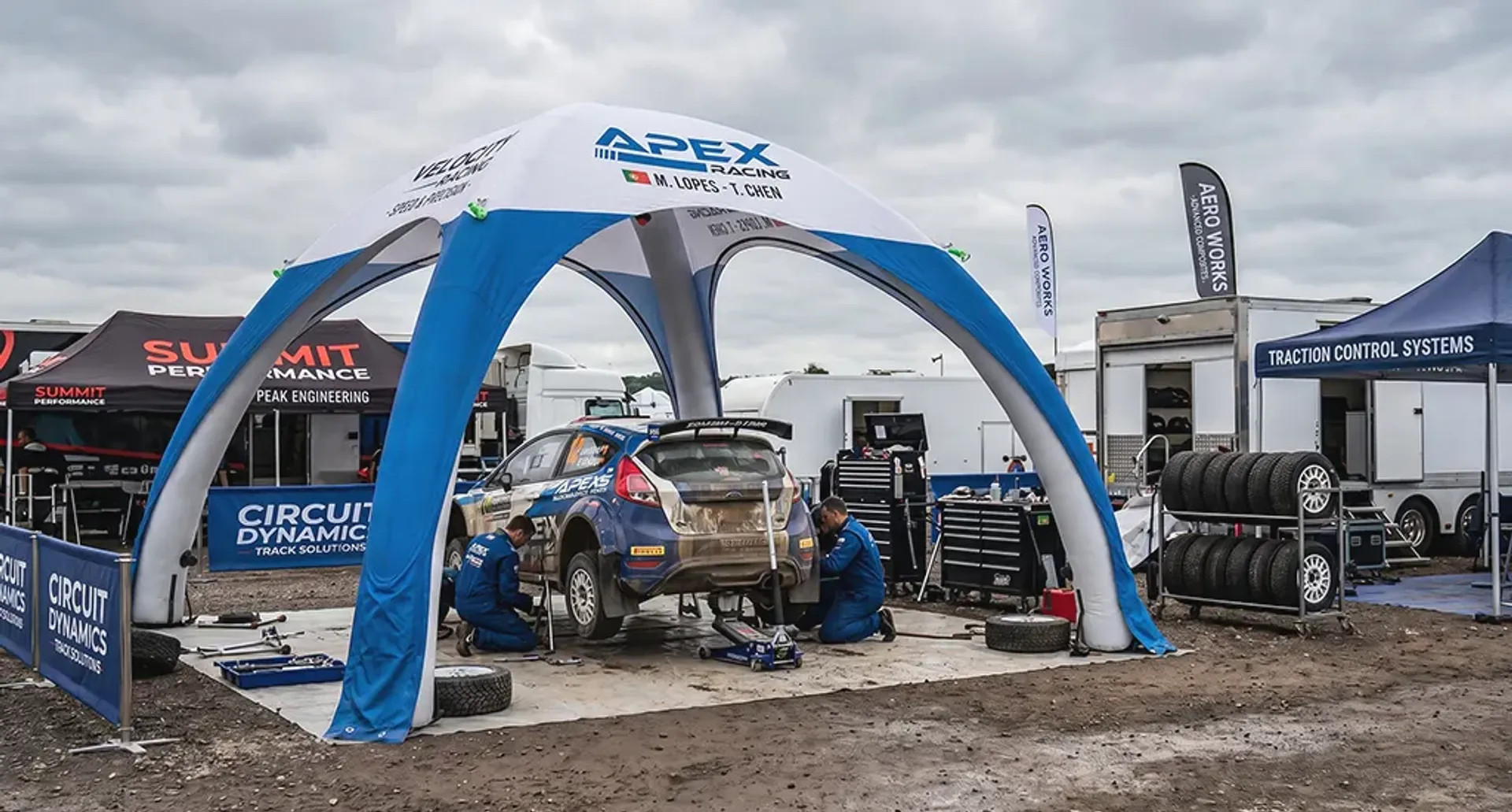
Inflatable pit tents use continuous air tube construction. No center poles. No internal supports. The entire footprint is usable workspace. Position your vehicle, layout tool stations, create driver prep areas—all without working around structural obstructions.
For teams running multiple vehicles or complex equipment setups, this efficiency gain is transformative.
Stability: When the Wind Hits
Racing circuits are exposed by design. Open straightaways create natural wind tunnels, and afternoon thermal currents can appear without warning. A frame tent in 30mph gusts becomes a liability. An inflatable racing shelter in the same conditions remains stable.
The reason is structural mechanics. Inflatable tubes distribute wind loads evenly across the entire perimeter. There's no single failure point where a gust can concentrate force. The low-profile designs typical of racing-specific models further reduce wind exposure.
We've seen teams ride out weather events in inflatable shelters while neighboring frame tents were being dismantled in panic. That reliability has real value when you're protecting half a million dollars of race equipment.

Portability: Follow the Season
Modern racing is mobile. A typical season spans multiple countries, sometimes multiple continents. Your shelter system needs to travel as efficiently as your vehicles and tools.
Deflated, an inflatable pit tent packs into bags that fit standard trailer configurations. One crew member can handle transport. There's no disassembly of frame components, no bag of connectors and brackets that always seems to lose pieces between events.
This portability also means flexibility. Need an extra shelter for a one-off event? Ship a bag by courier. Try that with a frame tent.
Branding That Works on Broadcast
Sponsor visibility isn't optional. But hanging banners on a frame tent looks exactly like what it is: an afterthought.
Custom inflatable printed tent accept full-surface custom printing. Your sponsor livery becomes integral to the structure, not an addition. Under broadcast lighting, the difference is stark. One looks like a professional team operation. The other looks like amateur hour.
And because the printing is dye-sublimated into the fabric, it doesn't peel, fade, or flap in wind. Your brand presentation remains consistent across an entire season of hard use.
What Racing Teams Should Verify
Ground anchoring options vary by venue. Concrete pit lanes need weighted ballast systems. Grass paddocks can use stake anchoring. Your shelter should include both options as standard.
Removable sidewalls let you adapt to conditions. Full enclosure for cold or wet weather. Open configuration for ventilation in heat. Quick-change capability means you respond to conditions in minutes, not hours.
Cable and hose management keeps your workspace safe. Integrated routing channels prevent trip hazards—critical when technicians are moving fast with heavy equipment.
Lighting integration points support your night session operations. Built-in mounting locations for LED fixtures eliminate improvised solutions that fail at the worst moment.
Packed dimensions should match your transport reality. Verify that the storage bags fit your trailer or vehicle configuration before ordering.
Conclusion
Transitioning from frame canopies to inflatable racing shelters isn't just buying different equipment. It's adopting a different operational philosophy—one that prioritizes speed, efficiency, and professional presentation.
Start with your primary pit lane shelter. Validate the workflow gains. Then expand to hospitality, media, and secondary operations as budget allows.
Ready to see how an inflatable pit tent would work for your team? Browse our custom inflatable tent or request a custom specification for your exact pit lane requirements. Our team can configure everything from single-vehicle shelters to full fleet operations.