




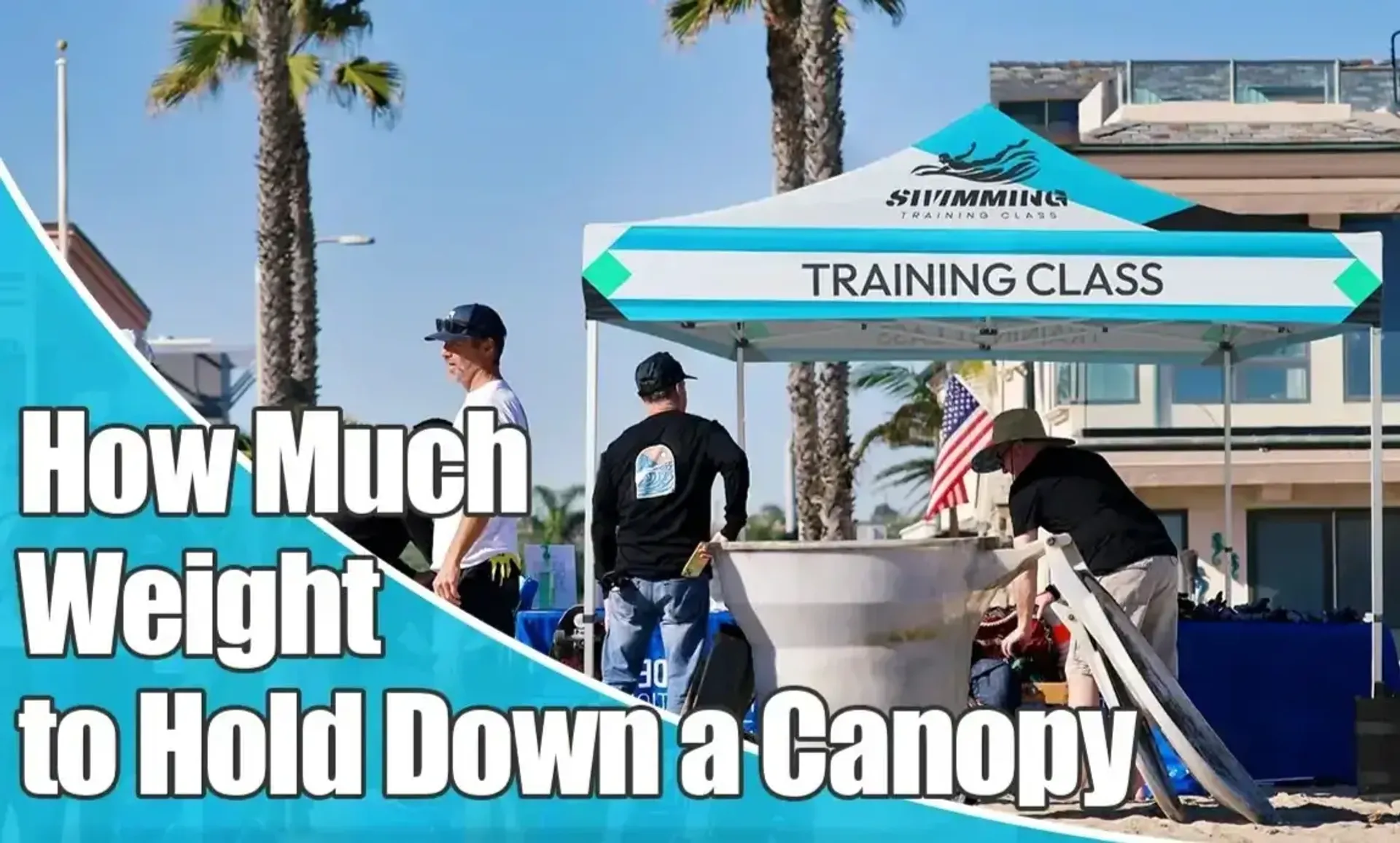
No one wants their commercial tents blown away by strong winds, so it is essential to firmly secure custom canopy tents to the ground. The weight required to stabilize tents varies according to ground surfaces, weather conditions and tent styles and sizes. Do you know how much weight is needed to secure commercial canopies of different specifications including 10×10, 10×20 and 20×20?
This guide provides the recommended weight guidelines and tips for securing the canopy. It will help you determine the optimal weights for tents and securely hold down your canopy at outdoor events.
Quick Answer: How Much Weight to Hold Down a Canopy
A 10x10 custom canopy tent is the popular choice for markets, family activities, and trade shows. This size can provide shelter for people without taking up too much space.
Generally, we recommend using weights ranging from 25 to 40 pounds per leg for a 10x10 canopy frame. You should increase the weights for canopy legs as the tent size grows or in strong winds. In heavy wind, consider adding 50 to 100 pounds to each leg.
| Wind Speed(MPH) | Per Leg Weight for 10x10 Canopy | Per Leg Weight for 10x20 Canopy | Per Leg Weight for 20x20 Canopy |
| 0–10 (Light) | 15–25 lbs | 40-60 Ibs | 80-100 Ibs |
| 10–15 (Moderate) | 30–40 lbs | 50-75 Ibs | 100-125 Ibs |
| 15–25 (Strong) | 50–75 lbs | 60-100 lbs | 125-175 Ibs |
| 25–30 (Gusty) | 75–90+ lbs | 150-200 Ibs | 250+ Ibs |
| 30+ (High Wind) | Take down canopy | Take down canopy | Take down canopy |
For the larger tents, such as 10x20 custom canopy tent, you’d better use weight bags with at least 370 lbs of weight in wind conditions(at least 60 pounds per leg). Their heavier frame and larger canopies require more weight to stay in place. As for 20x20 pop-up canopies equipped with nine support legs, it is advised to place around 100 pounds of weight on each leg under normal wind conditions for stable placement.
If you add sidewalls to your tent, you should increase the securing weight accordingly. A 10x10 tent with sides requires at least 50 pounds per leg to force the additional wind and lateral pressure. Additionally, if the wind becomes too strong, you had better remove the sidewalls to ensure safety.
Factors Affecting Weight Requirements
Several factors affect the required weights for a tent. You need to consider where the tent is set up, the weather conditions, and the type of tent you use. Let’s explore these factors in detail to ensure your tent stays secure at your events.
Weather Condition
Wind is the main factor that determines the weights to hold down canopy. Each canopy tent features a specific level of wind resistance. You need to know how much wind can a canopy tent withstand first. Generally, a 10x10 canopy can withstand 30 to 40 MPH of wind. When wind isn’t a concern, you can choose lighter weights; while in gusty winds, you’d better increase the weight to prevent the tent from blowing away.
Ground Surface
The type of ground may influence the securing weight and methods for your tent. Compared to hard surfaces, soft ground surfaces are uneven and require heavier weight to stabilize a canopy. In addition, you can use stakes to better hold down the canopy.
Types of Tent
Different tent models feature varying levels of stabilization. Smaller-sized tents, like 10x10, require less weight to stay secured. The large pop up canopy and heavy-duty models require more weight to remain in place. Also, you need to know how much does a tent weigh to determine the optimal securing weight.
Canopy Fabric
Polyester is a common material used in instant canopies because of its durability and waterproof properties. However, when selecting a canopy, it’s essential to check the fabric’s denier. A higher denier means a thicker, tougher fabric that offers greater strength and better protection against both the elements and wear-and-tear.
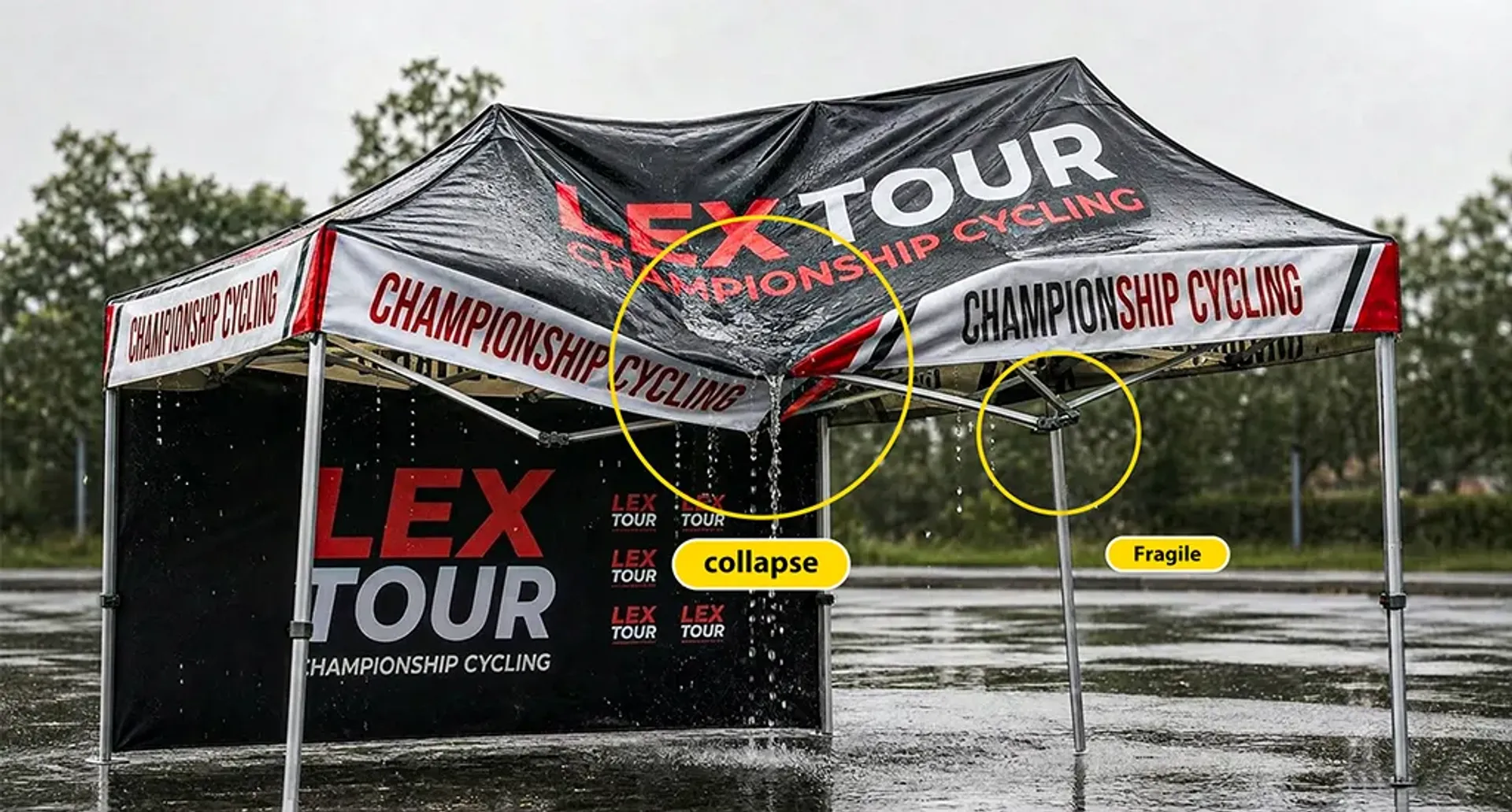
It is important to note that regular polyester is not entirely waterproof, and it can allow water to seep through after prolonged exposure to rain. Though it will provide some UV protection, the effect is minimal. So, for maximum protection, consider a higher-denier fabric or one with an additional protective coating.
WestShade’s 600D/900D polyester is an excellent choice for canopies and other outdoor cover structures. This material is specially treated to be both UV-resistant and water-resistant, ensuring that your canopy offers superior protection against the elements and is built for long-term use. With these enhanced properties, WestShade canopies provide reliable waterproofing and UV shielding.
Of course, fabric quality is only part of the equation. Waterproof performance can vary significantly between brands, especially when comparing frame strength, seam construction, and long-term weather resistance.
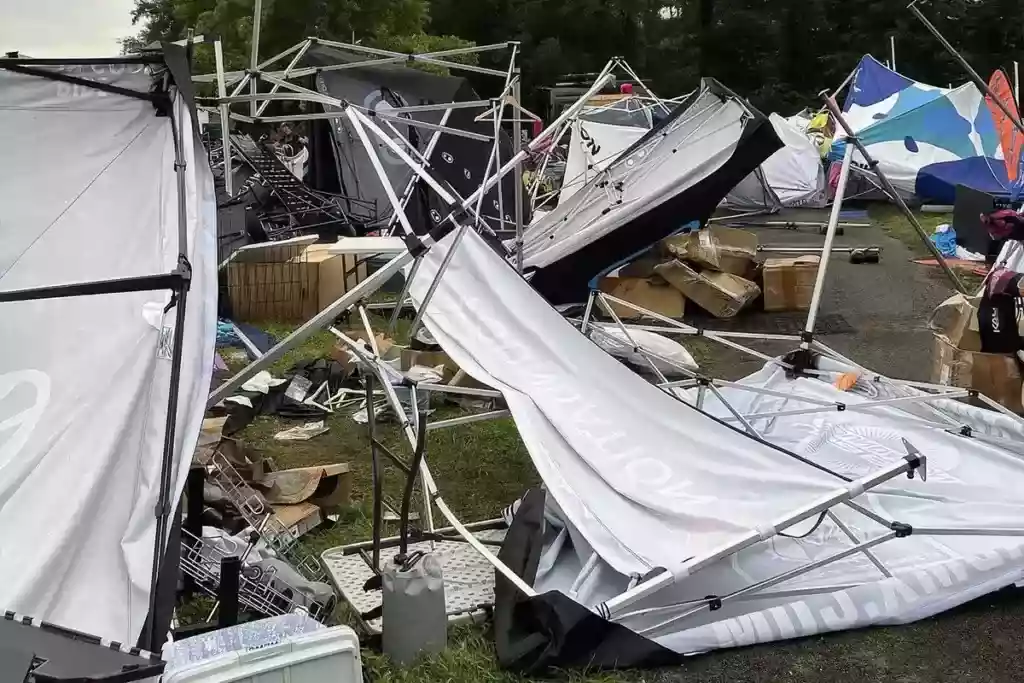
The combination of a sturdy tent frame and a durable canopy is essential for optimal wind resistance. Don’t waste time, money, or effort on cheap, low-quality canopies.
Frame Options
At WestShade, we proudly offer four outstanding frame options, each designed to withstand varying wind conditions:
-
Y5 Commercial Steel Tent: Features a 32mm cross-section with commercial-grade steel frames. Paired with a 600D/900D polyester canopy, this tent can confidently withstand winds of up to 20 MPH.
-
Y6 Light Aluminum Tent: Comes with a 45mm cross-section and commercial-grade aluminum frames for optimal durability. When combined with a 600D/900D polyester canopy, it can withstand winds of up to 30 MPH.
-
Y7 Heavy Duty Aluminum Tent: Boasts a 57mm cross-section with heavy-duty aluminum frames that can handle tough conditions. Paired with a 600D/900D polyester canopy, it can confidently endure winds of up to 40 MPH.
-
Y8 Super Aluminum Tent: Equipped with a 54mm cross-section and heavy-duty aluminum frames, engineered to withstand the harshest conditions. Enhanced with stronger legs and paired with a 600D/900D polyester canopy, it can confidently endure winds of up to 50 MPH.
How to Secure a Canopy
Securing your pop-up canopy tent is essential for ensuring stability and safety. You can use tent stakes or weights to hold down canopy. Let’s explore these methods in detail to learn how to secure your canopy effectively.
Stakes
Tent stakes are ideal for anchoring tents to grass or other soft surfaces. They are designed with a pointed end for easy insertion into the ground. You can use stakes to hold down the canopy through the following steps:
- Attach stakes to tent legs or frame with guy lines or straps.
- Insert stakes into the ground at a diagonal 45-degree angle.
- Make sure the stakes are firmly inserted into the ground.
Stakes are usually made of metal materials, which are easy to carry and relatively cheap. They are a popular choice for outdoor activities and are suitable for all weather conditions. Notably, stakes are only to be used on grass or dirt surfaces.
Weights
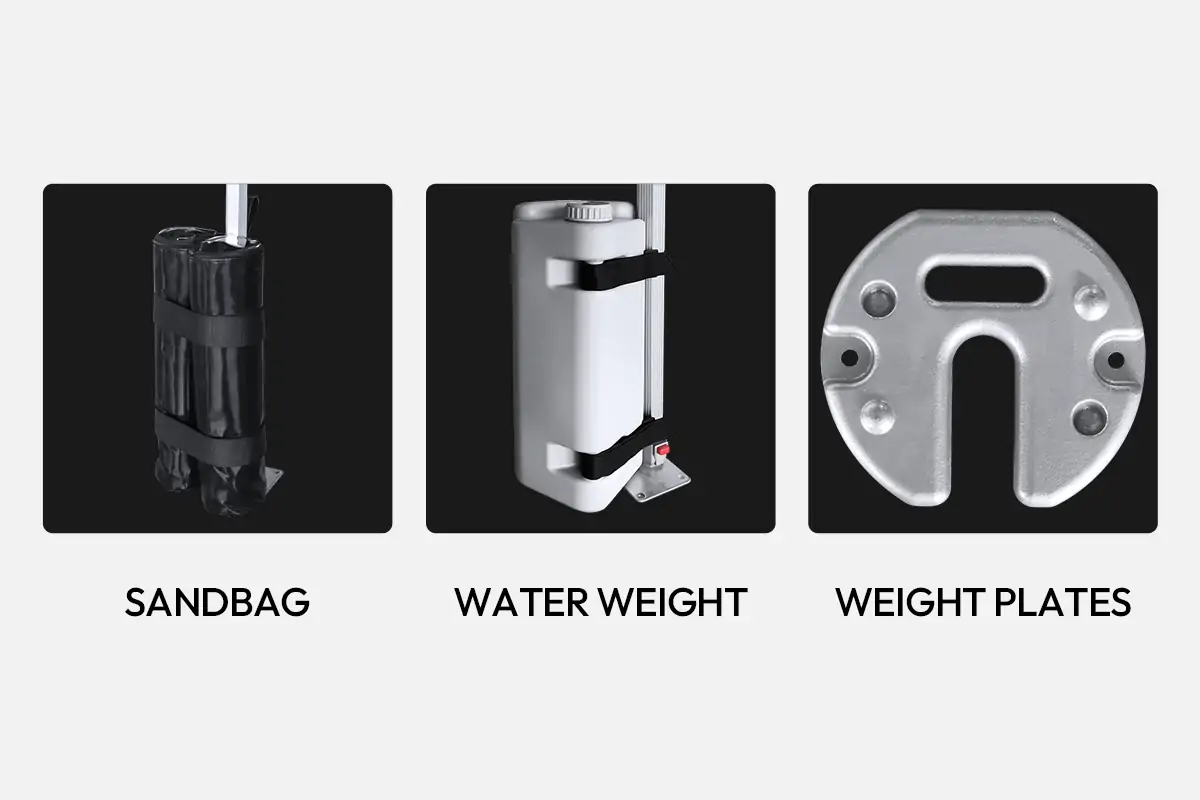
Using weight bags for canopy is another effective method for anchoring your pop up tent. You can also choose weight plates, sandbags, or water weights for canopy based on your needs. By adding weights for canopy legs, you can improve the stability and wind resistance of the tents. This makes the tent less likely to collapse or be blown away.
Additionally, you can choose professional tools or diy tent weights. Consider purchasing professional accessories. They can withstand outdoor weather conditions for a long service life.
WestShade provides high-quality anchor tools. We offer heavy-duty weight plates that weigh 30 pounds each. A 30-pound weight plate for each tent leg is sufficient to hold down a 10x10 canopy. If you need extra weight, consider our sandbags, water barrels, or stacking multiple-weight plates.
Strategically Use Sidewalls
Some people recommend removing sidewalls when the wind picks up. In certain cases, that’s a smart move. But when used strategically, canopy sidewalls can improve your tent’s stability.
The main issue with wind is that it often gets underneath the canopy, creating lift. By placing a sidewall on the wind-facing side of your tent, you can block gusts from getting underneath and reduce that lifting force.
That said, sidewalls aren’t always the perfect solution. If the wind shifts direction frequently or becomes too strong, enclosed walls can trap pressure and cause instability. But in mild, steady conditions, a well-placed sidewall can be an effective way to keep your tent grounded.
Combat Wind the Right Way
Select the Right Tent
The wind resistance of a canopy tent mostly depends on its material, design, and model. Generally speaking, a wind resistant canopy can withstand wind speeds of 30 to 40 MPH. When choosing the perfect canopy tent for a windy day, it is better to pick durable, weather-resistant fabric and a sturdy aluminum frame. Besides, select a canopy with a curved or sloping design that allows wind to pass through, reducing the risk of tip-overs. If you want to use it in all high-wind situations, you’d better choose a heavy duty wind-resistant canopy.
Check Weather Forecasts
Before you go on an outdoor activity, you should pay attention to the weather forecast for the area where you will be active that day. This can help you know the wind speeds on that day and secure your tent accordingly. If heavy winds or extreme weather are predicted, you’d better prepare reinforcement tools in advance to secure the canopy as much as possible.
Find a Safe Spot for It
Once you’ve purchased your tent and are ready to set it up on a windy day, the first step is to find a safe location. Just because it’s gusty doesn’t mean the wind is equally strong everywhere in your setup area.
If there’s a grove of trees or some tall buildings nearby, they will break the wind for you. You’ll still experience some breezes, but they won’t be as extreme as they would be if you were in the middle of an open space.
Assemble It Correctly
Once you find a spot, make sure you can set up the canopy correctly. Most canopy tents have quite a few joints you need to connect. If you don’t hear a loud click when snapping these pieces into place, the chance of the tent collapsing during the next strong gust of wind rises drastically. Also, make sure you tightly fasten all the hook-and-loop straps on the canopy. Failing to do so might cause the top to blow away without the frame, which will be much harder to catch.
Maintain Your Security Equipment
You need to keep the anchor system clean and dry to prevent rust or damage. Inspect the security equipment regularly for wear, damage, or corrosion. If you find any obvious wear or damage, replace it immediately to maintain the security of your pop up canopy.
Opt for Professional Accessories
Consider purchasing professional tools, although some tools can be self-made. Professional-grade products are rigorously tested for safety. Westshade can not only provide you with excellent canopy tents, but offer specialized securing tools. Our products are specially designed and manufactured. For example, sandbags are outfitted with sturdy PVC layers, weight plates are made of heavy-duty steel coated with silver, and water weights are made of heavy-duty HDPE and commercial-grade Velcro straps. These professional tools can withstand outdoor weather conditions for a long service life.
Maintenance and Inspection of Anchoring Systems
To ensure the ongoing stability and safety of your pop-up tent, it’s important to regularly inspect and maintain your anchoring systems. Here are some maintenance tips to keep in mind:
-
Regular Inspections: Perform regular inspections of your anchoring systems, checking for any signs of wear, damage, or corrosion. Look for loose or missing parts and replace them promptly.
-
Clean and Dry: Keep your anchoring systems clean and dry to prevent rust or deterioration. Remove any dirt, debris, or moisture that may accumulate on the anchors.
-
Retighten and Reinforce: Periodically retighten the anchors to ensure they remain securely in place. If you notice any signs of instability, reinforce the anchoring system by adding extra support, such as additional weights or stakes.
-
Replace as Needed: Over time, anchoring systems may become worn out or damaged. If you notice any significant wear or damage, replace the anchors promptly to maintain the stability and safety of your pop-up tent.
By regularly inspecting and maintaining your anchoring systems, you can prolong their lifespan and ensure that they continue to provide the necessary stability for your pop-up tent.
FAQs
How much weight does it take to hold down a 20x20 canopy?
To hold down a 20x20 custom tent, you’ll need at least 100–150 lbs per leg, depending on wind and surface conditions (soft ground or strong winds require more). That totals 400–600 lbs minimum. In high winds (20+ MPH), consider additional anchoring or taking the canopy down for safety.
What can I use to weigh down my canopy?
You can use the following items to weigh down your canopy:
- Sandbags: Durable and easy to fill.
- Water weights: Convenient for transport and filling on-site.
- Concrete blocks or plates: Heavy but stable.
- Weight plates: Durable and professional.
- Tent anchors or stakes: Ideal for grass or soil surfaces.
- Buckets filled with sand, water, or gravel: Good DIY options.
How much wind can a 10x10 canopy hold?
Generally, a 10x10 pop up tent can withstand up to 25 MPH winds. If properly anchored, its wind resistance will be enhanced. However, lightweight models (especially aluminum frames) may become unstable above 15 MPH without adequate anchoring. In conditions exceeding 25 MPH, even well-anchored canopies are at risk and should be taken down to avoid damage or injury.
Can a canopy withstand wind?
Canopies vary in their ability to withstand wind, depending on factors like their materials, design, and how they are anchored. Most canopies on the market are somewhat wind-resistant. Moreover, some are designed to be wind-resistant, with features like heavy duty frames, reinforced truss bars, and robust anchoring systems. However, even the strongest canopy tents have limits. Extremely strong winds can potentially damage or topple them. It’s not recommended to use canopy tents in severe windy conditions.
What is the best canopy for wind?
Best canopies for wind are usually those that come with heavy-duty frames and wind-resistant fabric. They are durable, sturdy, and weather-proof. Besides, they feature multiple height adjustment options, allowing you to adapt to weather changes. Meanwhile, they have reinforced frame structures and secured accessories to remain stable in high winds.
How to anchor a canopy on grass?
Grass surfaces are generally easier to secure. Ground stakes are a popular choice for grassy areas, as they can be driven into the ground to provide excellent stability. Make sure to fully insert the stakes and angle them away from the tent for maximum hold. If the ground is particularly soft, you can reinforce the stakes with additional support, such as tying them to nearby trees or using sandbags.
Conclusion
Securing the canopy in the wind is necessary for your outdoor events. You can use ropes, ground stakes, weight bags, and other securing tools to increase the stability and wind resistance of your canopy tent. Besides, choose professional tents and tools to ensure safety. You also need to be aware of the weather forecast and ground conditions when conducting activities, avoiding outdoor activities in extreme weather.
As a professional canopy retailer in the US, WestShade provides an array of pop up canopy tents and various accessories. Our canopy fabrics can withstand 35-45 mph winds.
For those who want the best canopy for wind and rain, our custom canopy tent is the perfect choice. Not only can you choose better quality fabrics, but you can also customize the printing to promote your brand through personalized graphics. Buying a canopy tent now will give you a free wheeled protective cover, straps, sandbags, and steel stakes to help you better store and secure your canopy in the wind. If you have any questions about canopy weight bags or securing methods, visit our accessory page for more information.







)